
Galaxy A53 5G vs iPhone 14 Pro Max

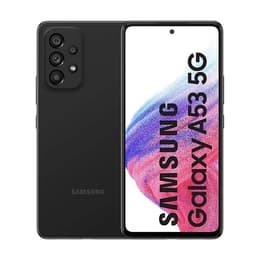
Galaxy A53 5G
Galaxy A53 5G
Starting at

Refurbished price:A$268.00

Versus A$991.00 new

See options
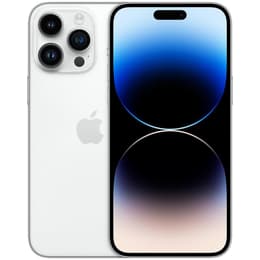
iPhone 14 Pro Max
iPhone 14 Pro Max
Starting at

Refurbished price:A$726.00

Versus A$1,899.00 new

See options

Ratings

The Samsung Galaxy A53 5G (released in March/April 2022) and the iPhone 14 Pro Max (released in September 2022) are smartphones from different ecosystems, offering distinct user experiences. While the Galaxy A53 5G operates on Android, providing a customizable interface, the iPhone 14 Pro Max runs on iOS, known for its integrated ecosystem and streamlined performance. The primary differentiators lie in their processing power, camera capabilities, and display technologies, catering to varying user priorities.

Scores

Durability

When considering the long-term usability of these devices, their release timelines and software support policies are key factors.

  • Release Timeline: The iPhone 14 Pro Max was released several months after the Galaxy A53 5G, giving it a slight advantage in terms of its initial age and potential for longer support. The Galaxy A53 5G was launched in March/April 2022, while the iPhone 14 Pro Max became available in September 2022.
  • Software Longevity: Samsung has committed to providing four generations of Android OS upgrades and five years of security updates for the Galaxy A53 5G, meaning it is expected to receive updates up to Android 16 and security patches until 2027. Apple typically offers 5-6 years of major iOS updates for its devices, suggesting the iPhone 14 Pro Max will receive software support for a comparable or potentially longer duration.
  • Durability Features: The iPhone 14 Pro Max features a Ceramic Shield front cover and an IP68 rating for dust and water resistance, allowing submersion up to 6 meters for 30 minutes. The Galaxy A53 5G comes with Corning Gorilla Glass 5 for screen protection and an IP67 rating, offering protection against dust and water submersion up to 1 meter for 30 minutes.

Release year

2022

2022

Compatible with latest Update

Yes

Yes

Operating system

Android

iOS

Foldable

No

No

Performance

The performance of these two smartphones varies significantly due to their different internal components and operating system optimizations.

  • Processing Capabilities: The iPhone 14 Pro Max is equipped with a powerful current-generation processor, enabling it to handle demanding applications, complex multitasking, and graphics-intensive games with considerable smoothness and responsiveness. The Galaxy A53 5G features a mid-range processor that capably manages everyday tasks and general usage, though some users may experience occasional minor delays or less fluid performance with very intensive applications or heavy multitasking.
  • System Responsiveness: Users of the iPhone 14 Pro Max generally report a highly responsive and fluid user experience across the operating system and applications, benefiting from its optimized hardware and software integration. The Galaxy A53 5G provides a generally smooth experience for typical smartphone activities, but its performance may not match the instantaneous feel of higher-end devices, particularly under strenuous loads.
  • Storage and Multitasking: Both devices offer various internal storage options, with the iPhone 14 Pro Max providing up to 1TB and the Galaxy A53 5G up to 256GB. The Galaxy A53 5G also includes a microSD card slot for expandable storage, a feature not present on the iPhone 14 Pro Max. The iPhone 14 Pro Max comes with 6GB of RAM, while the Galaxy A53 5G is available with 6GB or 8GB of RAM, influencing their capacity for running multiple applications simultaneously.

Memory (GB)

6 GB

6 GB

Screen quality

The display is a central feature for both devices, offering distinct visual experiences tailored to their respective designs.

  • Display Technology and Clarity: The iPhone 14 Pro Max features a 6.7-inch LTPO Super Retina XDR OLED display, known for its deep blacks, vibrant colors, and high contrast. It has a resolution of 2796 x 1290 pixels, resulting in a pixel density of approximately 460 pixels per inch (ppi), providing sharp and detailed visuals. The Galaxy A53 5G sports a 6.5-inch Super AMOLED display with a resolution of 2400 x 1080 pixels, offering a pixel density of about 405 ppi. This display also delivers rich colors and good contrast, characteristic of AMOLED panels.
  • Brightness and Refresh Rate: The iPhone 14 Pro Max offers high brightness levels, reaching up to 1000 nits typical, 1600 nits for HDR content, and a peak of 2000 nits in outdoor conditions, ensuring excellent visibility even in bright sunlight. Its ProMotion technology provides an adaptive refresh rate that can dynamically adjust from 1Hz to 120Hz, contributing to smooth scrolling and power efficiency. The Galaxy A53 5G has a peak brightness of 800 nits, which is generally good for indoor use but may require cranking up the brightness in direct sunlight. It features a fixed 120Hz refresh rate, providing a fluid visual experience for supported content.
  • Unique Display Features: The iPhone 14 Pro Max introduces the Dynamic Island, a re-imagined notch area that dynamically expands and contracts to show alerts, notifications, and background activities. It also includes an Always-On display feature. The Galaxy A53 5G offers an Always-On display feature as well, providing quick access to information without fully waking the screen.

Resolution

1080 x 2400

1290 x 2796

Screen type

Super AMOLED

LTPO Super Retina XDR OLED

Audiovisual

Both smartphones offer versatile camera systems, but they cater to different levels of photographic ambition and deliver distinct results.

  • Rear Camera System: The iPhone 14 Pro Max features a triple-camera setup, highlighted by a 48MP main sensor with sensor-shift optical image stabilization (OIS), a 12MP ultrawide lens, and a 12MP telephoto lens with 3x optical zoom and OIS. This system is designed for high detail, improved low-light performance, and advanced computational photography. The Galaxy A53 5G comes with a quad-camera array, including a 64MP main camera with OIS, a 12MP ultrawide, a 5MP macro, and a 5MP depth sensor. Its main camera captures detailed images, and the ultrawide offers a broad field of view.
  • Photography Performance: The iPhone 14 Pro Max excels in capturing detailed and vibrant photos in various lighting conditions, with significant improvements in low-light scenarios due to its larger sensor and advanced image processing. Users often praise its consistent color accuracy and dynamic range. The Galaxy A53 5G delivers capable photos for its category, with its main camera producing good results in adequate lighting. While it includes a night mode, its low-light performance and overall image processing may not match the clarity and detail of higher-end devices.
  • Video Recording and Audio: Both phones support 4K video recording at 30fps from their main cameras. The iPhone 14 Pro Max extends this to 4K at up to 60fps across its main, ultrawide, and telephoto lenses, and includes advanced features like ProRes video and Cinematic mode for professional-looking depth effects. The Galaxy A53 5G also offers 4K@30fps video recording from its main and front cameras, with gyro-EIS for stabilization. Both devices feature stereo speakers, providing a more immersive audio experience for media consumption.

Main camera

64 megapixels

48 megapixels

Front camera

32 megapixels

12 megapixels

Miscellaneous

Beyond core performance, several practical elements differentiate these two devices in daily use.

  • Connectivity and Ports: Both smartphones support 5G connectivity for fast mobile data. The iPhone 14 Pro Max supports Wi-Fi 6 and Bluetooth 5.3, and notably features a Lightning port for charging and data transfer. It also includes emergency satellite connectivity in certain regions. The Galaxy A53 5G supports Wi-Fi 5 (802.11 a/b/g/n/ac) and Bluetooth 5.1, utilizing a USB-C port for charging and data.
  • Biometric Security and Sensors: The iPhone 14 Pro Max relies on Face ID for secure facial recognition, complemented by a LiDAR scanner for enhanced depth sensing and augmented reality applications. The Galaxy A53 5G incorporates an optical fingerprint scanner embedded under its display for biometric authentication.
  • Physical Design and Handling: The iPhone 14 Pro Max has a more substantial feel, weighing 240g and featuring a stainless steel frame with a glass front and back. Its dimensions are 160.7 x 77.6 x 7.9mm. The Galaxy A53 5G is lighter at 189g and has a plastic back with a matte finish, offering a different tactile experience. Its dimensions are 159.6 x 74.8 x 8.1mm.

Weight

189 oz

120 oz

Screen size (in)

6.5

6.7

SIM card

Dual Physical SIM

Physical SIM + eSIM

Carrier compatibility

Unlocked

Unlocked

User feedback for the Samsung Galaxy A53 5G often highlights its vibrant display, reliable battery life, and capable camera system for everyday photography as strong points. However, some users have noted that its processing power can lead to occasional performance lags, especially when compared to more powerful devices. The inclusion of expandable storage and a long software support commitment are frequently praised.

For the iPhone 14 Pro Max, common praise centers on its exceptional camera capabilities, particularly its low-light performance and advanced video features, as well as its incredibly bright and fluid display. Its powerful processor ensures a consistently smooth and responsive user experience. Criticisms sometimes point to its larger size and weight, which might not suit all users, and the absence of expandable storage.

Users prioritizing a highly fluid and powerful performance for demanding applications, advanced photography and videography features, and a premium build will find the iPhone 14 Pro Max well-suited to their needs. Those who value a large, vibrant display, excellent battery life, expandable storage, and a robust software update policy for general daily use may lean towards the Galaxy A53 5G. Both devices offer a quality experience, and choosing between them often comes down to individual preferences for operating system, specific feature priorities, and handling feel. Exploring quality-assured refurbished options for either model can provide an eco-friendly alternative for making an informed choice.

See all articles

Our recent comparisons