
Motorola Edge 30 Pro vs Motorola Razr 40

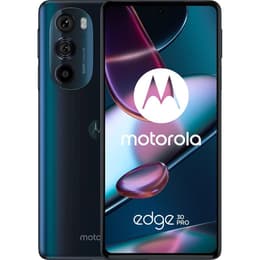
Motorola Edge 30 Pro
Starting at

Refurbished price:A$288.72

Versus A$2,709.00 new

See options
Motorola Razr 40
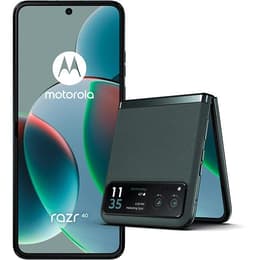
Motorola Razr 40
See options

The Motorola Edge 30 Pro, released in early 2022, is a traditional slab-style smartphone designed for robust performance. In contrast, the Motorola Razr 40, launched in mid-2023, offers a distinct foldable clamshell design, prioritizing portability and a unique user experience. Both devices operate on the Android platform, but their fundamental form factors and target user needs set them apart.

Scores

Durability

The expected practical lifespan of a smartphone is influenced by its physical resilience and ongoing software support. The Motorola Razr 40, being a newer device, generally benefits from a longer projected software support window compared to the Edge 30 Pro.

  • Software Longevity: The Motorola Razr 40 launched with Android 13 and is expected to receive three major Android OS updates, extending its software support to Android 16, along with four years of bi-monthly security updates. The Motorola Edge 30 Pro, released with Android 12, was promised two OS upgrades and three years of security updates, with its update support ending around February 2025. [1, 14, 21, 27, 29, 30]
  • Physical Durability: The Edge 30 Pro features Gorilla Glass 3 on the front and Gorilla Glass 5 on the back, offering a solid, traditional smartphone build. The Razr 40 incorporates Gorilla Glass Victus on its cover display and an aluminum frame, but its main foldable screen is made of plastic, which is inherently less resistant to scratches and can develop a visible crease over time. Both devices carry an IP52 rating for splash resistance. [2, 13, 15, 33]
  • Long-term Use: While the Edge 30 Pro offers a conventional and generally robust design, the Razr 40's folding mechanism introduces a potential point of wear over extended use, with some users reporting hinge-related issues or screen durability concerns after a year or two. [23, 33]

Release year

2022

2023

Compatible with latest Update

Yes

Yes

Operating system

Android

Android

Foldable

No

Yes

Performance

Performance capabilities differ between these two Motorola devices, largely due to their internal components and design philosophies. The Edge 30 Pro is geared towards high-end processing power, while the Razr 40 balances performance with its compact, foldable form factor.

  • Processing Power: The Motorola Edge 30 Pro is equipped with a high-tier processor, enabling it to handle demanding applications, intensive multitasking, and graphic-heavy games with smooth and responsive performance. Users often describe its operation as snappy and fluid. [13, 17, 19, 20] The Motorola Razr 40 features a current-generation processor designed for efficient everyday use, providing smooth navigation and app handling for typical smartphone tasks, though it may not offer the same level of raw power for the most intensive applications. [11, 22]
  • Multitasking and Responsiveness: Both devices offer ample RAM configurations, supporting efficient multitasking. The Edge 30 Pro's more powerful internal components provide greater headroom for keeping numerous applications open simultaneously without slowdowns. The Razr 40 also manages multitasking effectively for most users, but its processor is optimized for balancing performance with battery efficiency in a compact design. [2, 4, 5]
  • Battery Behavior: The Edge 30 Pro houses a larger 4800 mAh battery, which typically provides solid all-day power for moderate to heavy users. [13, 16] The Razr 40 has a 4200 mAh battery, and despite its smaller capacity, its less power-hungry processor and smaller external display can contribute to decent battery life for a full day of typical use. [11, 18, 23, 35]

Memory (GB)

8 GB

8 GB

Screen quality

The display experience is a primary differentiator between these two smartphones, with the Edge 30 Pro offering a large, traditional screen and the Razr 40 featuring a unique foldable main display alongside a functional external screen.

  • Display Technology and Size: The Motorola Edge 30 Pro features a 6.7-inch P-OLED display, providing deep blacks and vibrant colors in a conventional flat form factor. [3, 4, 6, 17] The Motorola Razr 40 boasts a larger 6.9-inch foldable P-OLED main display, which can be folded in half for enhanced portability. It also includes a 1.5-inch OLED cover display for quick notifications and interactions when closed. [2, 5, 8, 10, 15]
  • Clarity and Smoothness: Both devices offer high resolution (1080 x 2400 pixels for Edge 30 Pro, 1080 x 2640 pixels for Razr 40) and a high 144Hz refresh rate, ensuring sharp visuals and smooth scrolling and animations. The Razr 40's cover display also offers a smooth 120Hz touch refresh rate. [3, 4, 6, 8, 11, 17, 18]
  • Brightness and Viewing Experience: Both displays support HDR10+ for enhanced contrast and color. The Edge 30 Pro offers a typical brightness of 500 nits, with a peak of 658 nits, providing good visibility indoors and outdoors. The Razr 40's main display can reach a peak brightness of 1400 nits, offering excellent visibility even in bright outdoor conditions. [6, 11, 17, 18]

Resolution

1080 x 2400

1080 x 2640

Screen type

OLED

Foldable LTPO AMOLED

Audiovisual

The camera systems on the Motorola Edge 30 Pro and Razr 40 approach photography with different strengths and capabilities, catering to varying user preferences.

  • Main Camera Capabilities: The Edge 30 Pro features a 50 MP main camera with optical image stabilization (OIS), capable of capturing detailed images in good lighting. [3, 6, 17] The Razr 40 comes with a 64 MP main camera, also equipped with OIS, which can produce nice shots with good colors in well-lit environments. [2, 15, 18]
  • Versatility and Low-Light Performance: The Edge 30 Pro includes a 50 MP ultrawide lens that also functions for macro photography, and a high-resolution 60 MP front camera. While its camera hardware is capable, user feedback often points to its overall camera performance, particularly in low light, as being average compared to other high-end smartphones. [6, 13, 16, 19, 20] The Razr 40 offers a 13 MP ultrawide lens with autofocus and a 32 MP internal front camera. A notable feature is the ability to use the higher-quality main camera for selfies when the phone is folded, utilizing the cover screen as a viewfinder. However, its low-light photography is generally not considered high-end. [2, 15, 18, 22]
  • Video Recording and Audio: Both devices are capable of recording high-resolution video, with the Edge 30 Pro supporting up to 8K video at 24fps and 4K at 30fps, and the Razr 40 supporting 4K video at 30fps. [6, 15, 18, 22] Both phones offer stereo speakers and support for audio enhancements like Dolby Atmos, providing an immersive audio experience for media consumption. [6, 19]

Main camera

50 megapixels

64 megapixels

Front camera

60 megapixels

32 megapixels

Miscellaneous

Beyond the core features, several practical elements contribute to the overall user experience and differentiate the Motorola Edge 30 Pro and Razr 40.

  • Connectivity and Ports: Both smartphones support 5G connectivity and Wi-Fi 6E for fast wireless internet. The Razr 40 features Bluetooth 5.3, a slightly newer standard than the Edge 30 Pro's Bluetooth 5.2. For wired connections, the Edge 30 Pro uses a USB-C 3.1 port, offering faster data transfer speeds, while the Razr 40 uses a USB-C 2.0 port. [3, 4, 5, 6, 8, 12, 18]
  • Biometric Security and Handling: Both devices incorporate convenient biometric security options, including a side-mounted fingerprint sensor and face recognition for quick unlocking. [17] The Edge 30 Pro, as a traditional slab phone, has dimensions of 163.1 x 76 x 8.8 mm and weighs 196g, offering a familiar in-hand feel. The Razr 40, when unfolded, is slightly taller and thinner at 170.8 x 74 x 7.4 mm, and lighter at 188.6g. When folded, it becomes very compact at 88.2 x 74 x 15.8 mm, making it highly portable. [2, 3, 4, 5, 8, 10, 15]
  • Build Materials and Unique Features: The Edge 30 Pro features a glass front and back with a plastic frame. The Razr 40 utilizes Gorilla Glass Victus on its cover screen, an aluminum frame, and a plastic main display, with a stainless steel hinge. The Razr 40's unique folding design allows for hands-free usage in various positions and offers a distinct aesthetic. [2, 13, 15]

Weight

196 oz

189 oz

Screen size (in)

6,7

6,9

Network

5G

5G

SIM card

Dual Physical SIM

Dual Physical SIM + eSIM

Carrier compatibility

Unlocked

Unlocked

Choosing between the Motorola Edge 30 Pro and the Motorola Razr 40 depends significantly on individual priorities and how a user intends to interact with their device. The Edge 30 Pro is often praised for its robust performance, vibrant display, and solid battery life, making it a reliable choice for users who prioritize raw processing power and a consistent, traditional smartphone experience. Some users have noted its camera performance as being adequate rather than exceptional, particularly in challenging lighting conditions. [13, 16, 19, 20]

Conversely, the Motorola Razr 40 garners appreciation for its innovative and compact foldable design, which enhances portability and offers unique functionalities through its external display. Its main camera is capable in good lighting, and its battery life is generally considered sufficient for daily use. However, potential concerns revolve around the long-term durability of foldable screens and hinges, as well as its processor being more suited for everyday tasks than for intensive gaming or demanding applications. [11, 15, 18, 22, 23, 33]

Users who prioritize a powerful, traditional smartphone for demanding applications, extensive gaming, and a generally robust build may find the Motorola Edge 30 Pro well-suited to their needs. On the other hand, individuals seeking a compact, stylish, and innovative device with unique folding capabilities and a focus on portability and everyday functionality will likely lean towards the Motorola Razr 40. Both models, like many electronic products, are available as quality-assured refurbished options, providing an eco-friendly alternative for consumers.


See all articles

Our recent comparisons