
iPhone
Compare models
Differences at a glance
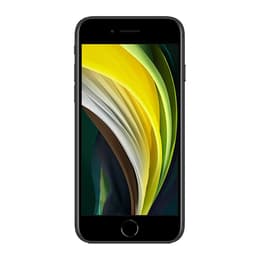
The iPhone SE 2020 and the Nokia X30 are distinct smartphone offerings, released in April 2020 and September 2022, respectively. While the iPhone SE 2020 operates on Apple's iOS ecosystem, the Nokia X30 runs on the Android platform. These devices cater to different user preferences, with the iPhone SE 2020 offering a compact design and robust internal processing, and the Nokia X30 providing a larger display and a focus on sustainable materials. Their core differences lie in their operating systems, design philosophies, and hardware capabilities.
Colour
Storage
The practical lifespan of a smartphone is influenced by its build quality and software support. The iPhone SE 2020, released in April 2020, typically receives iOS updates for approximately five to six years from its launch, extending its software longevity. Its design features a glass and aluminum construction, and it carries an IP67 rating for dust and water resistance. Repairability for the iPhone SE 2020 is considered moderate, with an iFixit score of 6 out of 10, largely due to the use of components interchangeable with the iPhone 8, making screen and battery replacements relatively straightforward. However, the glass back is noted as impractical to replace.
The Nokia X30, launched in September 2022, is built with an aluminum frame made from 100% recycled material and a plastic back using 65% recycled content, emphasizing a sustainable approach. It also boasts an IP67 rating for dust and water resistance, capable of submersion up to one meter for 30 minutes. Nokia promises three years of OS upgrades and security updates for the X30, contributing to its expected software longevity. This commitment to updates and its robust build suggest a device designed for extended use.
Release year
Compatible with latest Update
Operating system
Foldable
When evaluating smartphone performance, the focus is on how smoothly devices handle daily tasks, demanding applications, and multitasking. The iPhone SE 2020 is equipped with a powerful processor that enables fluid navigation, quick app launches, and efficient handling of graphically intensive games and augmented reality experiences. Its internal memory configuration supports smooth multitasking for most users. However, its battery capacity is relatively modest, which can lead to more frequent charging for users who engage in extensive video streaming or gaming.
The Nokia X30 features a processor designed to provide reliable performance for everyday use, including multitasking and light gaming, without significant lag or overheating. It offers various internal storage options and comes with a larger amount of RAM in its configurations, which can contribute to smoother operation when managing multiple applications simultaneously. The Nokia X30's battery has a higher capacity, generally providing a full day of use and, for some users, extending to almost two days with moderate usage. It also supports fast charging for quicker power replenishment.
The display is a primary interface for smartphone interaction, and differences in technology and specifications can significantly impact the viewing experience. The iPhone SE 2020 features a 4.7-inch Retina HD display, which is an IPS LCD panel. This display offers clear visuals and accurate color reproduction, with a resolution of 1334x750 pixels and a typical brightness of 625 nits, suitable for indoor and outdoor viewing. Its standard refresh rate provides a consistent visual experience.
In contrast, the Nokia X30 boasts a larger 6.43-inch AMOLED display. AMOLED technology typically delivers deeper blacks and higher contrast. The X30's display has a higher resolution of 1080x2400 pixels, resulting in sharper images and text. A key differentiator is its 90Hz refresh rate, providing a smoother scrolling experience and more fluid animations. It also offers a peak brightness of 700 nits, enhancing visibility in bright conditions. The display is protected by Corning Gorilla Glass Victus, offering enhanced durability.
Resolution
Screen type
Camera capabilities are a significant factor for many smartphone users, encompassing both photography and video recording, alongside audio quality. The iPhone SE 2020 features a single 12-megapixel wide-angle rear camera with optical image stabilization. It excels in everyday photography with good detail, natural skin tones, and impressive dynamic range, supported by computational photography features like Portrait mode and Smart HDR. Video recording is a strong suit, capable of 4K resolution at up to 60 frames per second with good stabilization. However, it lacks a dedicated Night mode, ultra-wide, or telephoto lenses. The front camera is a 7-megapixel sensor, suitable for selfies and video calls, also supporting Portrait mode.
The Nokia X30 comes with a dual-camera system on the rear, including a 50-megapixel main sensor with optical image stabilization and a 13-megapixel ultra-wide lens. This setup offers more flexibility for capturing different perspectives. The main camera performs well in various lighting conditions, with notable improvements in low-light photography thanks to features like Night mode 2.0. Video recording is available at 1080p resolution up to 60 frames per second, but it does not support 4K video capture. The front-facing camera is a 16-megapixel sensor, capable of capturing detailed selfies and 1080p video.
Main camera
Front camera
Beyond core performance and display, various practical elements contribute to the overall user experience, including connectivity, physical ports, and biometric security. The iPhone SE 2020 supports 4G LTE for cellular connectivity, along with Wi-Fi and Bluetooth 5.0. It utilizes Apple's proprietary Lightning port for charging and data transfer, and it does not include a 3.5mm headphone jack. For security, it features Touch ID, a reliable fingerprint sensor integrated into the home button. The device is compact and lightweight, measuring 138.4 x 67.3 x 7.3 mm and weighing 148 grams, making it comfortable for one-handed use.
The Nokia X30 offers more modern connectivity options, including 5G cellular support, Wi-Fi (802.11 a/b/g/n), and Bluetooth 5.1. It uses a USB Type-C 2.0 port for charging and data, but also lacks a 3.5mm headphone jack. For biometric security, the Nokia X30 incorporates an in-display fingerprint sensor, along with face unlock. It is a larger device compared to the iPhone SE 2020, with dimensions of 158.9 x 73.9 x 8 mm and a weight of 185 grams, providing a more expansive screen experience.
Weight
Screen size (in)
Network
SIM card
Carrier compatibility
User sentiment for the iPhone SE 2020 often praises its powerful internal components, delivering flagship-level performance in a compact form factor. Many appreciate its familiar design, including the physical home button with Touch ID, and its ability to capture high-quality photos and 4K video in good lighting conditions. Criticisms frequently revolve around its smaller display with larger bezels, which some find dated compared to modern smartphones, and its battery life, which can be a concern for heavy users. The absence of a Night mode and an ultra-wide camera is also a common point of feedback.
The Nokia X30 is generally well-regarded for its vibrant AMOLED display with a smoother refresh rate, its commitment to software updates, and its use of recycled materials in its construction. Users often highlight its reliable battery life and capable camera system, particularly its improved low-light performance and the inclusion of an ultra-wide lens. Some common concerns include its processor, which, while capable for daily tasks, might not match the raw power of higher-end chipsets for very demanding applications, and the lack of 4K video recording.
Users prioritizing a compact device with a familiar design, a powerful processor for demanding apps, and excellent video recording capabilities may find the iPhone SE 2020 well-suited to their needs. Conversely, those who value a larger, more modern display with a smoother refresh rate, longer battery life, a versatile camera system with better low-light performance, and a commitment to sustainability through recycled materials and extended software support may lean towards the Nokia X30. Both devices offer distinct advantages, and choosing between them depends on individual priorities. For those considering either model, exploring quality-assured refurbished options can provide a sustainable choice.