
iPhone 12 mini vs Motorola Edge 30 Pro

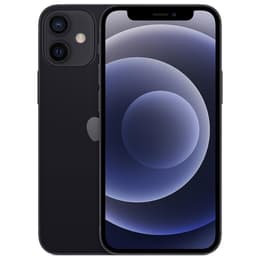
iPhone 12 mini
iPhone 12 mini
Starting at

Refurbished price:A$278.00

Versus A$929.00 new

See options
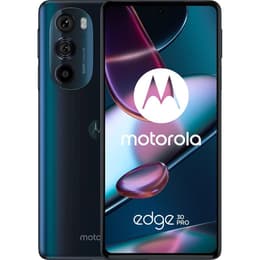
Motorola Edge 30 Pro
Starting at

Refurbished price:A$289.72

Versus A$2,709.00 new

See options

The iPhone 12 Mini, released in November 2020, and the Motorola Edge 30 Pro, launched in February 2022, represent distinct approaches to smartphone design and user experience. While the iPhone 12 Mini offers a compact form factor running on Apple's iOS ecosystem, the Motorola Edge 30 Pro provides a larger display and a near-stock Android experience with a focus on high performance. These differences cater to varying user preferences, from those prioritizing portability to those seeking a powerful, expansive device.

Scores

Durability

When considering the long-term usability of these devices, their release timelines and software support play a significant role.

  • Release Timeline: The iPhone 12 Mini was released in November 2020, making it an older device compared to the Motorola Edge 30 Pro, which launched in February 2022. This age difference impacts the remaining duration of official software updates and security patches.
  • Software Longevity: Apple typically provides iOS updates for 5-6 years from a device's release. Given its 2020 launch, the iPhone 12 Mini is expected to receive updates for a few more years, potentially until late 2026 or 2027. Motorola generally offers fewer major Android updates, with the Edge 30 Pro typically receiving two major OS upgrades and three years of security updates. This means the Edge 30 Pro's official software support might conclude around early 2025 for major Android versions and early 2027 for security patches.
  • Physical Durability: The iPhone 12 Mini features a Ceramic Shield front cover, which Apple states offers improved drop performance, along with an IP68 rating for dust and water resistance, allowing submersion up to 6 meters for 30 minutes. The Motorola Edge 30 Pro uses Gorilla Glass 3 on the front and Gorilla Glass 5 on the back, with an IP52 water-repellent design, meaning it is protected against splashes but not full submersion.

Release year

2020

2022

Compatible with latest Update

Yes

Yes

Operating system

iOS

Android

Foldable

No

No

Performance

The performance capabilities of these two smartphones differ, largely due to their respective processors and operating system optimizations.

  • Processing Power: The iPhone 12 Mini is equipped with a processor that handles demanding applications and multitasking smoothly, providing a responsive user experience for everyday tasks and gaming. The Motorola Edge 30 Pro features a newer, high-performance processor, which delivers excellent speed for intensive gaming, complex applications, and seamless multitasking.
  • Battery Behavior: The iPhone 12 Mini has a smaller battery capacity, which often translates to a need for more frequent charging for heavy users, though moderate use can typically last a full day. The Motorola Edge 30 Pro, with its larger battery, generally offers better endurance, often lasting a full day even with intensive use, and potentially longer for moderate users.
  • System Responsiveness: Both devices offer fluid navigation and quick app launches. The iPhone 12 Mini's performance is consistently strong across iOS applications. The Motorola Edge 30 Pro, running a near-stock Android, provides a very snappy and responsive feel, with apps remaining open in the background effectively.

Memory (GB)

4 GB

8 GB

Screen quality

The visual experience on these devices is shaped by their display technology, size, and refresh rates.

  • Display Technology and Clarity: Both phones feature OLED displays, offering deep blacks and vibrant colors. The iPhone 12 Mini has a 5.4-inch Super Retina XDR OLED display with a resolution of 2340 x 1080 pixels, resulting in a high pixel density for sharp images and text. The Motorola Edge 30 Pro sports a larger 6.7-inch OLED display with a resolution of 2400 x 1080 pixels, providing an expansive viewing area.
  • Brightness and Outdoor Visibility: The iPhone 12 Mini offers a typical maximum brightness of 625 nits, peaking at 1200 nits for HDR content, ensuring good visibility in various lighting conditions. The Motorola Edge 30 Pro's display has a typical brightness of 500 cd/m² (nits) and supports HDR10+, which is generally sufficient for indoor and outdoor use, though some users note it might be less bright than some competitors in direct sunlight.
  • Refresh Rate: The iPhone 12 Mini features a standard 60Hz refresh rate, providing a smooth experience for most content. The Motorola Edge 30 Pro offers a higher 144Hz refresh rate, which results in noticeably smoother scrolling and more fluid animations, particularly beneficial for gaming and fast-paced content.

Resolution

1080 x 2340

1080 x 2400

Screen type

Super Retina XDR OLED

OLED

Audiovisual

The camera systems on the iPhone 12 Mini and Motorola Edge 30 Pro offer different strengths for capturing photos and videos.

  • Rear Camera Systems: The iPhone 12 Mini features a dual 12MP camera system, including a wide and an ultra-wide lens. It excels in capturing detailed photos with accurate colors and good low-light performance, supported by features like Night mode and Deep Fusion. The Motorola Edge 30 Pro comes with a triple camera setup, featuring a 50MP main sensor with optical image stabilization, a 50MP ultrawide lens that also functions for macro shots, and a 2MP depth sensor. It can record 8K video.
  • Photography Performance: The iPhone 12 Mini consistently delivers high-quality images in various conditions, with users praising its point-and-shoot reliability and improved low-light capabilities over previous models. The Edge 30 Pro's main camera produces accurate colors and good dynamic range in daylight. However, its low-light performance can be less consistent, with some users reporting a decrease in detail and sharpness, and the lack of a telephoto lens means digital zoom quality can suffer.
  • Video Recording and Front Camera: Both phones offer strong video capabilities. The iPhone 12 Mini supports 4K video recording with Dolby Vision HDR. Its front-facing camera is a 12MP TrueDepth sensor, capable of good selfies and video calls, including Night mode. The Motorola Edge 30 Pro can record video up to 8K resolution and features a high-resolution 60MP front camera, which delivers impressive selfies with natural-looking bokeh and good detail in favorable lighting.

Main camera

12 megapixels

50 megapixels

Front camera

12 megapixels

60 megapixels

Miscellaneous

Beyond core features, several practical elements differentiate these two devices in daily use.

  • Connectivity and Ports: Both smartphones support 5G connectivity for faster mobile data speeds. The iPhone 12 Mini includes Wi-Fi 6 and Bluetooth 5.0, utilizing Apple's proprietary Lightning port for charging and data transfer. The Motorola Edge 30 Pro supports newer standards like Wi-Fi 6E and Bluetooth 5.2, and features a more universally adopted USB-C port.
  • Biometric Security: The iPhone 12 Mini relies exclusively on Face ID for secure facial recognition. The Motorola Edge 30 Pro offers a side-mounted fingerprint reader for biometric authentication, alongside face unlock.
  • Physical Characteristics: The iPhone 12 Mini is notably compact and lightweight, measuring 131.5 x 64.2 x 7.4 mm and weighing 135 grams, making it easy for one-handed use and pocketability. The Motorola Edge 30 Pro is a larger and heavier device, with dimensions of 163.1 x 76 x 8.8 mm and a weight of 196 grams, offering a more expansive screen experience. The iPhone 12 Mini features an aluminum frame and glass back, while the Edge 30 Pro has a plastic frame with glass on the front and back.

Weight

133 oz

196 oz

Screen size (in)

5.4

6,7

Network

5G

5G

SIM card

Physical SIM + eSIM

Dual Physical SIM

Carrier compatibility

Unlocked

Unlocked

The iPhone 12 Mini and Motorola Edge 30 Pro cater to distinct user needs, each offering a compelling set of features.

Users frequently praise the iPhone 12 Mini for its compact size, making it comfortable for one-handed use and easy to carry. Its consistent camera performance, especially in daylight and with Night mode, is also a common highlight. However, a frequent criticism revolves around its battery life, which many users find requires careful management or an evening top-up, particularly with heavy usage. The smaller screen size, while a benefit for portability, can be a drawback for media consumption or extensive multitasking for some.

The Motorola Edge 30 Pro is often lauded for its powerful performance, attributed to its advanced processor, making it suitable for demanding applications and gaming. Its large, high-refresh-rate OLED display also receives positive remarks for its smoothness and immersive viewing experience. On the other hand, user feedback sometimes points to the camera's performance, particularly in low-light conditions, as being less consistent than some competitors, despite high megapixel counts. Some users have also noted concerns about battery optimization, especially after certain software updates, and the device's splash resistance rather than full waterproofing.

Users prioritizing a highly portable device with a reliable camera and the iOS ecosystem will find the iPhone 12 Mini well-suited to their needs. Those who value a large, high-refresh-rate display, top-tier processing power for gaming and demanding tasks, and the flexibility of Android may lean toward the Motorola Edge 30 Pro. Both devices, whether new or as quality-assured refurbished options, offer distinct advantages depending on individual preferences and usage patterns.

See all articles

Our recent comparisons