Compare models

iPhone 8 vs iPhone X

  • 1-year warranty
  • Free standard shipping
  • Free 30-day returns
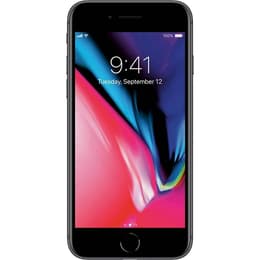
iPhone 8
iPhone 8
Starting at

Refurbished price:A$133.00

Versus A$409.00 new

See options
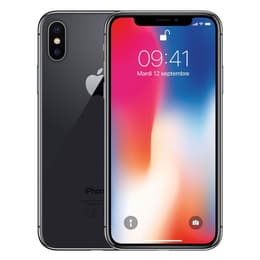
iPhone X
iPhone X
Starting at

Refurbished price:A$215.00

Versus A$619.00 new

See options

Differences at a glance

The iPhone 8 and iPhone X, both released in 2017, represent different approaches within the same generation of Apple's smartphone lineup. The iPhone 8, launched in September 2017, maintained the classic iPhone design with a physical home button and an LCD display. In contrast, the iPhone X, released in November 2017, introduced a significant redesign with an edge-to-edge OLED screen and Face ID facial recognition, marking a new direction for the iPhone series. Both devices initially operated on iOS 11.

Scores

Durability

When considering the long-term usability of these devices, several factors come into play, including their release timelines, software support, and physical resilience.

  • Release Timeline & Software Longevity: The iPhone 8 was released in September 2017, and the iPhone X followed in November 2017. Both models supported major iOS updates up to iOS 16 but did not receive iOS 17 due to hardware limitations. Security updates for both models were provided until March 2025, indicating a similar software lifespan for essential security patches.
  • Repairability & Durability: The iPhone 8 features an aluminum frame, while the iPhone X incorporates a stainless steel frame. Drop tests suggest that the iPhone 8 may exhibit greater resilience to impacts, partly due to its aluminum construction and a smaller LCD screen that is less prone to shattering. The iPhone X, with its expansive all-glass design, is generally considered more susceptible to damage from drops, despite its stainless steel band offering some structural integrity. Both devices carry an IP67 rating for water and dust resistance.
  • Expected Practical Lifespan: As of early 2026, both devices have ceased receiving major operating system updates. While they continued to receive security updates for a period, users should anticipate that new applications or features requiring more recent iOS versions may not function. The practical lifespan for daily use will depend on individual user needs and the continued compatibility of essential applications.

Release year

2017

2017

Compatible with latest Update

No

No

Operating system

iOS

iOS

Foldable

No

No

Performance

Both the iPhone 8 and iPhone X share core internal components, leading to comparable performance in many everyday scenarios, though differences exist in battery behavior and memory configuration.

  • Processor Capabilities: Both smartphones are powered by the A11 Bionic chip. This processor enables smooth handling of demanding applications, efficient multitasking, and responsive navigation. In real-world usage, the performance for general tasks, app loading, and gaming is largely similar between the two models.
  • RAM & Multitasking: The iPhone 8 is equipped with 2GB of RAM, while the iPhone X features 3GB of RAM. While the additional RAM in the iPhone X assists in managing its higher-resolution display and more complex features like Face ID, the overall responsiveness for typical multitasking remains comparable across both devices.
  • Battery Behavior: The iPhone 8 has an 1821 mAh battery, whereas the iPhone X is fitted with a larger 2716 mAh battery. Despite the iPhone X's larger battery capacity, its OLED display and the TrueDepth camera system can lead to battery life that is similar to, or in some specific tests, even slightly shorter than the iPhone 8 under heavy usage. However, many users report that the iPhone X can comfortably last a full day with moderate use. Both models support wireless charging.

Memory (GB)

2 GB

3 GB

Screen quality

The display is one of the most significant differentiating features between the iPhone 8 and iPhone X, impacting visual experience and device interaction.

  • Display Technology & Clarity: The iPhone 8 features a 4.7-inch Retina HD LCD display with IPS technology, offering a resolution of 1334x750 pixels at 326 pixels per inch (ppi). The iPhone X, on the other hand, introduced a 5.8-inch Super Retina HD OLED display with a resolution of 2436x1125 pixels at 458 ppi. The OLED technology in the iPhone X provides deeper blacks and more vibrant colors compared to the LCD panel of the iPhone 8.
  • Brightness & Contrast: Both devices offer a typical maximum brightness of 625 nits. However, the iPhone X's OLED display boasts a significantly higher contrast ratio of 1,000,000:1, compared to the iPhone 8's 1400:1, resulting in a more dynamic visual experience, especially when viewing content with high contrast.
  • Design & Interaction: The iPhone X features an edge-to-edge display design with a notch at the top housing the TrueDepth camera system, which eliminated the traditional home button. This design shift means navigation on the iPhone X relies on gestures. The iPhone 8 retains the classic iPhone design with bezels and a physical home button that integrates Touch ID. Both displays include True Tone technology, which adjusts the screen's white balance to match ambient lighting conditions.

Resolution

750 x 1334

1125 x 2436

Screen type

Retina IPS LCD

Super Retina OLED

Audiovisual

The camera systems on the iPhone 8 and iPhone X offer distinct capabilities, particularly in terms of hardware configuration and advanced features.

  • Rear Camera System: The iPhone 8 is equipped with a single 12-megapixel wide-angle rear camera with an f/1.8 aperture and optical image stabilization (OIS). The iPhone X features a dual 12-megapixel rear camera setup, including a wide-angle lens (f/1.8 aperture) and a telephoto lens (f/2.4 aperture), both benefiting from OIS. This dual-camera configuration on the iPhone X enables 2x optical zoom and enhanced Portrait Mode capabilities, which are not present on the iPhone 8.
  • Front Camera & Advanced Features: Both phones have a 7-megapixel front-facing camera with an f/2.2 aperture. However, the iPhone X's TrueDepth front camera supports Portrait Mode and Portrait Lighting effects for selfies, as well as Animoji, features that the iPhone 8's front camera does not offer. Both devices are capable of recording 4K video at up to 60 frames per second and 1080p slow-motion video at 240 frames per second.
  • Photography Performance: In well-lit conditions, both phones capture good quality images. The iPhone X provides greater versatility for photography due to its telephoto lens, which is beneficial for zoomed shots and more advanced portrait effects. The dual OIS on the iPhone X's rear cameras also contributes to more stable video recording, especially when zooming.

Main camera

12 megapixels

12 megapixels

Front camera

7 megapixels

7 megapixels

Miscellaneous

Beyond the core features, several practical elements distinguish the user experience and functionality of the iPhone 8 and iPhone X.

  • Connectivity & Ports: Both devices support modern connectivity standards, including Wi-Fi (802.11ac), Bluetooth 5.0, and NFC for contactless payments. For physical connections, both models utilize the Lightning connector for charging and data transfer, and neither includes a traditional 3.5mm headphone jack.
  • Biometric Security: A key difference lies in their biometric authentication methods. The iPhone 8 features Touch ID, a fingerprint sensor integrated into its physical home button. The iPhone X, with its all-screen design, replaces Touch ID with Face ID, a facial recognition system that uses the TrueDepth camera to securely unlock the device and authorize payments.
  • Physical Design & Handling: The iPhone 8 measures 138.4 x 67.3 x 7.3 mm and weighs 148 grams, featuring an aluminum frame and a glass back. The iPhone X is slightly larger and heavier at 143.6 x 70.9 x 7.7 mm and 174 grams, constructed with a stainless steel frame and a glass back. The iPhone X's design allows for a larger screen in a form factor that is not significantly bigger than the iPhone 8, but its increased weight and glass construction can affect handling and perceived durability.

Weight

148 oz

174 oz

Screen size (in)

4.7

5.8

Network

4G

4G

SIM card

Physical SIM

Physical SIM

Carrier compatibility

Unlocked

Unlocked

Connector

Lightning

Lightning

What the community thinks

The iPhone 8 and iPhone X, while released in the same year, cater to different user preferences through their distinct designs and feature sets. The iPhone 8 is often praised for its familiar design, reliable performance, and a camera system that delivers good results for general photography. Some users appreciated its traditional home button and compact size. However, its design was considered less modern compared to the iPhone X upon release.

The iPhone X garnered acclaim for its innovative, immersive OLED display, advanced Face ID biometric security, and a more versatile dual-camera system with enhanced portrait capabilities. Criticisms sometimes pointed to its increased fragility due to the extensive glass construction and battery life that, despite a larger battery, did not always significantly outperform the iPhone 8 in all usage scenarios.

Users prioritizing a classic iPhone experience with a physical home button, a compact form factor, and proven reliability may find the iPhone 8 well-suited to their needs. Conversely, those who value a modern, expansive display, advanced facial recognition technology, and more sophisticated camera features, particularly for creative photography and optical zoom, will likely lean towards the iPhone X. Both models are available as quality-assured refurbished options, providing an eco-friendly alternative for consumers seeking these features.