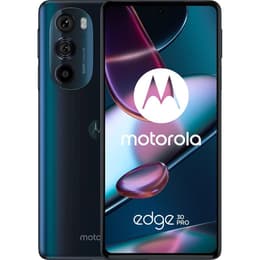

iPhone 16 Pro vs Motorola Edge 30 Pro

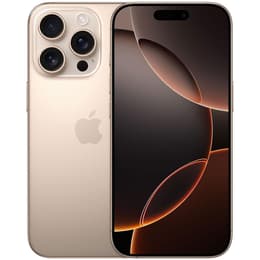
iPhone 16 Pro
iPhone 16 Pro
Starting at

Refurbished price:A$1,148.00

Versus A$1,999.00 new

See options
Motorola Edge 30 Pro
Starting at

Refurbished price:A$288.72

Versus A$2,709.00 new

See options

The iPhone 16 Pro, released in September 2024, and the Motorola Edge 30 Pro, launched in February 2022, represent different generations and operating systems within the smartphone market. While both devices offer advanced features, the iPhone 16 Pro introduces a more recent hardware platform and Apple's iOS ecosystem, contrasting with the Motorola Edge 30 Pro's Android experience and its earlier release timeline. Key differentiators include their respective processing power and camera system capabilities.

Scores

Durability

The expected practical lifespan of a smartphone is influenced by its release date, software support, and physical durability features.

  • Release Timeline: The iPhone 16 Pro was released in September 2024, making it a more recent device compared to the Motorola Edge 30 Pro, which launched in February 2022. This difference in release year directly impacts the duration of future software and security updates.
  • Software Longevity: Apple typically provides major iOS updates for approximately five to seven years and security updates for seven to eight years from a device's release. The Motorola Edge 30 Pro, having launched with Android 12, typically received two major Android OS updates and around three years of security updates, meaning its official software support period has largely concluded.
  • Durability Features: The iPhone 16 Pro features a Ceramic Shield front and a titanium frame, along with an IP68 rating for water and dust resistance, allowing submersion up to 6 meters for 30 minutes. The Motorola Edge 30 Pro uses Corning Gorilla Glass 3 for its display and has an IP52 rating, indicating splash resistance but not full water immersion protection.

Release year

2024

2022

Compatible with latest Update

Yes

Yes

Foldable

No

No

Performance

Performance in smartphones is determined by the internal processing unit, influencing how smoothly applications run and how efficiently the device handles demanding tasks.

  • Processing Capabilities: The iPhone 16 Pro is powered by Apple's A18 Pro chip, designed for enhanced performance, particularly in tasks involving artificial intelligence and complex computations. The Motorola Edge 30 Pro features the Qualcomm Snapdragon 8 Gen 1 processor, which was a high-end chip at its release, capable of handling demanding applications and multitasking.
  • System Responsiveness: Users of the iPhone 16 Pro can expect fluid navigation and rapid application loading, benefiting from the optimized integration of its hardware and software. The Motorola Edge 30 Pro also offers a responsive experience for everyday use, with applications launching quickly and smooth transitions between tasks.
  • Multitasking and Storage: Both devices offer various storage configurations, with the iPhone 16 Pro starting at 128GB and offering up to 1TB, typically paired with 8GB of memory. The Motorola Edge 30 Pro provides storage options up to 512GB and comes with 8GB or 12GB of memory, supporting efficient multitasking.

Memory (GB)

8 GB

8 GB

Screen quality

The display is a primary interface for user interaction, with technology, resolution, and refresh rate contributing to the visual experience.

  • Display Technology and Clarity: The iPhone 16 Pro features a 6.3-inch Super Retina XDR OLED display with a resolution of 2622x1206 pixels, offering sharp visuals and vibrant colors. The Motorola Edge 30 Pro has a larger 6.7-inch P-OLED display with a resolution of 2400x1080 pixels, providing deep blacks and good color reproduction.
  • Brightness and Refresh Rate: The iPhone 16 Pro's display can reach up to 2000 nits peak brightness, enhancing visibility in bright outdoor conditions, and features ProMotion technology for an adaptive refresh rate up to 120Hz, ensuring smooth scrolling and animations. The Motorola Edge 30 Pro offers a 144Hz refresh rate for a smooth visual experience, though its brightness levels are generally lower than the iPhone 16 Pro, which may affect outdoor legibility.
  • Viewing Experience: Both devices provide an immersive viewing experience for media consumption. The iPhone 16 Pro's display supports HDR and True Tone, adjusting color and intensity to ambient light. The Motorola Edge 30 Pro also supports HDR10+, contributing to a dynamic visual range.

Resolution

1206 x 2622

1080 x 2400

Screen type

LTPO Super Retina XDR OLED

OLED

Audiovisual

Camera systems are crucial for capturing moments, with differences in sensor capabilities, lens configurations, and software processing affecting image and video quality.

  • Rear Camera System: The iPhone 16 Pro is equipped with a versatile triple-camera setup, including a 48MP main sensor with advanced optical image stabilization, a 48MP ultrawide lens, and a 12MP telephoto lens offering 5x optical zoom. The Motorola Edge 30 Pro features a 50MP main camera with optical image stabilization, a 50MP ultrawide camera that also functions for macro shots, and a 2MP depth sensor. It does not include a dedicated telephoto lens.
  • Photography Performance: The iPhone 16 Pro excels in various lighting conditions, offering features like enhanced Night mode, Apple ProRAW, and improved low-light performance across its lenses. The Motorola Edge 30 Pro's main camera performs well in good lighting, producing images with natural color reproduction and good dynamic range. However, its low-light performance and digital zoom capabilities are less refined compared to devices with dedicated telephoto lenses.
  • Video Recording and Front Camera: The iPhone 16 Pro supports 4K Dolby Vision video recording at various frame rates, including up to 120fps, and ProRes video recording up to 4K at 120fps with external recording, along with Spatial video capabilities. Its front camera is 12MP with autofocus and OIS. The Motorola Edge 30 Pro can record video up to 8K resolution at 30fps and features a 60MP front camera.

Main camera

48 megapixels

50 megapixels

Front camera

12 megapixels

60 megapixels

Miscellaneous

Beyond core features, several practical elements contribute to the overall user experience, including connectivity, physical design, and additional functionalities.

  • Connectivity and Ports: Both devices support 5G connectivity for fast mobile data. The iPhone 16 Pro includes Wi-Fi 7 and Bluetooth 5.3, along with a USB-C port. The Motorola Edge 30 Pro supports Wi-Fi 6 (ax) and Bluetooth 5.2, also featuring a USB-C 3.1 port.
  • Biometric Security: The iPhone 16 Pro utilizes Face ID for secure facial recognition. The Motorola Edge 30 Pro incorporates a fingerprint sensor, typically integrated into the power button, for biometric authentication.
  • Design and Handling: The iPhone 16 Pro has a titanium frame and a refined design, measuring 149.6 x 71.5 x 8.25 mm and weighing 199 grams. The Motorola Edge 30 Pro features a glass front and back with a plastic frame, measuring 163.1 x 75.95 x 8.8 mm and weighing 196 grams. The iPhone 16 Pro is slightly more compact, while the Motorola Edge 30 Pro offers a larger screen in a slightly taller and wider body.

Weight

199 oz

196 oz

Screen size (in)

6.3

6,7

Network

5G

5G

SIM card

Physical SIM + eSIM

Dual Physical SIM

Carrier compatibility

Unlocked

Unlocked

User feedback for the iPhone 16 Pro often highlights its advanced camera capabilities, particularly the improved low-light performance and versatile zoom options, as well as its powerful processing for demanding applications. Users also appreciate the extended software support and the robust build quality. Some discussions indicate that while battery life is improved over previous Pro models, heavy users might still monitor their usage.

For the Motorola Edge 30 Pro, common praise points include its smooth 144Hz OLED display and its strong performance for its release era, making it suitable for gaming and general use. Its fast charging capabilities are also frequently noted as a significant advantage. Criticisms often center on its camera performance, especially in challenging lighting conditions and the absence of a telephoto lens, as well as its more limited software update policy compared to newer devices.

Users prioritizing a device with the latest processing power, a highly versatile camera system with optical zoom, and a longer period of software updates will find the iPhone 16 Pro well-suited to their needs. Conversely, users who value a large, high-refresh-rate display, fast charging, and a capable device for everyday tasks and gaming, and are comfortable with an Android ecosystem that has reached the end of its major software update cycle, may lean toward the Motorola Edge 30 Pro. Both devices offer distinct advantages, and choosing between them depends on individual priorities and usage patterns. Exploring quality-assured refurbished options for either model can provide a sustainable choice for consumers.


See all articles

Our recent comparisons