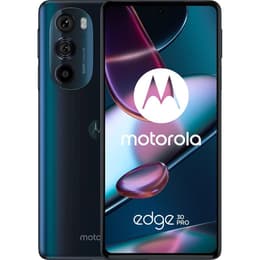

iPhone 16 vs Motorola Edge 30 Pro

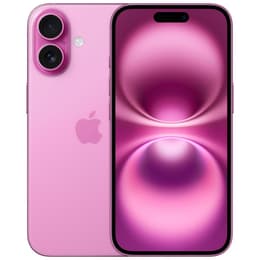
iPhone 16
iPhone 16
Starting at

Refurbished price:A$952.00

Versus A$1,399.00 new

See options
Motorola Edge 30 Pro
Starting at

Refurbished price:A$291.72

Versus A$2,709.00 new

See options

The iPhone 16, released in September 2024, and the Motorola Edge 30 Pro, launched in February 2022, represent different generations and ecosystems within the smartphone market. While both devices offer robust performance and capable features, their primary distinctions lie in their release timelines, software support philosophies, and the generational advancements in their core hardware. The iPhone operates on Apple's iOS, known for its long-term software commitment, whereas the Motorola device runs on Android, offering a more customizable experience.

Scores

Durability

The expected lifespan of a smartphone is significantly influenced by its release date and the manufacturer's commitment to software updates and hardware support.

  • Software Longevity: The iPhone 16, having been released in September 2024, benefits from Apple's extensive software support, typically receiving major iOS updates for five to seven years, with security patches often extending beyond that period. This suggests a practical software lifespan well into the early 2030s. In contrast, the Motorola Edge 30 Pro, launched in February 2022 with Android 12, was part of a series that typically received two major Android OS upgrades and three years of bi-monthly security patches. This means its major OS update cycle concluded around early 2024, and security updates likely ended around early 2025.
  • Physical Durability: The iPhone 16 features an IP68 rating, indicating a high level of resistance to dust and water immersion (up to 6 meters for 30 minutes), along with a Ceramic Shield front cover for enhanced drop protection. The Motorola Edge 30 Pro carries an IP52 rating, providing protection against dust and splashes, but not full water immersion. Both devices utilize glass for their displays, with the Edge 30 Pro featuring Gorilla Glass 3 on the front and Gorilla Glass 5 on the back.
  • Repairability: While specific repairability scores can vary, Apple generally maintains a consistent approach to internal design, which can influence the availability of parts and repair services over time. The Motorola Edge 30 Pro's design also allows for repairs, though the availability of official parts and service may vary as the device ages.

Release year

2024

2022

Compatible with latest Update

Yes

Yes

Foldable

No

No

Performance

Performance is a key differentiator, with the newer iPhone 16 offering a more advanced processing foundation compared to the Motorola Edge 30 Pro.

  • Processing Power: The iPhone 16 is equipped with a more recent generation processor, designed to handle demanding applications, complex multitasking, and advanced computational tasks with efficiency. This translates to smoother app launches, fluid navigation, and enhanced capabilities for graphics-intensive games and creative applications. The Motorola Edge 30 Pro, powered by a flagship processor from 2022, delivers strong performance for everyday use and most applications. However, when faced with the latest high-demand software or intensive gaming, the generational gap in processing power becomes more apparent.
  • Multitasking and Storage: The iPhone 16 comes with 8GB of RAM, providing ample capacity for running multiple applications simultaneously without significant slowdowns. It offers storage options up to 512GB. The Motorola Edge 30 Pro was available with 8GB or 12GB of RAM, and storage options up to 512GB, allowing for efficient multitasking and sufficient space for files and applications.
  • Battery Behavior: The iPhone 16 features a 3561 mAh battery (standard model) or 4674 mAh (Plus model), optimized for efficient power consumption with its integrated hardware and software. The Motorola Edge 30 Pro includes a 4800 mAh battery, which generally provides solid all-day usage, though heavy use, especially with the high refresh rate display, may necessitate an evening charge.

Memory (GB)

8 GB

8 GB

Screen quality

Both devices feature OLED display technology, but they differ in resolution, refresh rate, and overall visual experience.

  • Display Technology and Clarity: The iPhone 16 features a Super Retina XDR OLED display, offering deep blacks, vibrant colors, and high contrast. Its resolution of 2556 x 1179 pixels on the 6.1-inch model results in a pixel density of approximately 460 ppi, providing sharp and detailed visuals. The Motorola Edge 30 Pro sports a 6.7-inch FHD+ OLED display with a resolution of 1080 x 2400 pixels, delivering good clarity for its size.
  • Refresh Rate and Brightness: The Motorola Edge 30 Pro stands out with its 144Hz refresh rate, contributing to exceptionally smooth scrolling and fluid animations, which is particularly noticeable during gaming or fast-paced content. Its typical brightness is around 658 nits. The iPhone 16's display also offers a high refresh rate, contributing to a responsive user experience. While specific peak brightness figures for the iPhone 16 vary, Apple's Super Retina XDR displays are known for excellent outdoor visibility and HDR content consumption.
  • Viewing Experience: Both displays support HDR10+, enhancing the dynamic range and color accuracy for compatible content. The larger screen of the Motorola Edge 30 Pro might appeal to users who prioritize screen real estate for media consumption, while the iPhone 16 offers a slightly more compact form factor in its standard model.

Resolution

1179 x 2556

1080 x 2400

Screen type

Super Retina XDR OLED

OLED

Audiovisual

The camera systems on both smartphones offer distinct capabilities, catering to different photography and videography preferences.

  • Rear Camera System: The iPhone 16 features a dual-camera setup with a 48MP wide-angle main sensor and a 12MP ultra-wide sensor. Apple's computational photography excels in processing images for detail, color accuracy, and dynamic range, particularly in varied lighting conditions. The Motorola Edge 30 Pro is equipped with a triple camera array, including two 50MP sensors for wide and ultra-wide shots, alongside a 2MP depth sensor. Its main 50MP sensor includes optical image stabilization (OIS) and uses pixel binning to produce 12.5MP images with good color reproduction in well-lit environments.
  • Low-Light and Video: The iPhone 16 generally offers strong low-light performance, capturing more detail and reducing noise in challenging conditions, and is known for its high-quality video recording capabilities. The Motorola Edge 30 Pro's low-light photography is not its strongest suit, often exhibiting more digital noise and less detail compared to higher-end flagships. However, it is capable of 8K video recording.
  • Front Camera and Features: The iPhone 16 includes a 12MP front camera, optimized for clear selfies and video calls. The Motorola Edge 30 Pro boasts a high-resolution 60MP front-facing camera, which also utilizes pixel binning for detailed 15MP selfies. The iPhone 16 also introduces a dedicated Camera Control button for enhanced photography interaction.

Main camera

48 megapixels

50 megapixels

Front camera

12 megapixels

60 megapixels

Miscellaneous

Beyond core performance, several practical features and design elements differentiate these two devices.

  • Connectivity and Ports: The iPhone 16 supports Wi-Fi 7 and Bluetooth 5.3, offering the latest in wireless communication standards for faster and more reliable connections. It features a USB-C port, though with USB 2.0 speeds. The Motorola Edge 30 Pro supports Wi-Fi 6E and Bluetooth 5.2, providing robust wireless performance. Its USB-C port supports USB 3.1 speeds and DisplayPort 1.4, allowing for external display output. Both devices offer 5G connectivity.
  • Biometrics and User Interface: The iPhone 16 relies on Face ID for secure facial recognition and authentication. The Motorola Edge 30 Pro features a side-mounted fingerprint sensor integrated into the power button for quick unlocking. The iPhone 16 also includes an Action button, offering customizable shortcuts.
  • Build and Handling: The iPhone 16 (standard model) weighs 170g, while the iPhone 16 Plus is 199g. The Motorola Edge 30 Pro weighs 196g. Both devices feature glass construction, with the Edge 30 Pro having a plastic frame. The iPhone 16's IP68 rating offers superior dust and water resistance compared to the Edge 30 Pro's IP52 rating.

Weight

170 oz

196 oz

Screen size (in)

6.1

6,7

Network

5G

5G

SIM card

Physical SIM + eSIM

Dual Physical SIM

Carrier compatibility

Unlocked

Unlocked

The iPhone 16 and Motorola Edge 30 Pro cater to different user priorities, largely due to their respective release dates and underlying ecosystems. Users often praise the iPhone 16 for its seamless integration within the Apple ecosystem, consistent software updates, and advanced camera capabilities, particularly in challenging lighting. Its newer processor ensures long-term performance and access to the latest features, including Apple Intelligence. Some users, however, might find the iOS ecosystem less customizable than Android.

The Motorola Edge 30 Pro, while an older device, was well-regarded at its launch for its high refresh rate OLED display and a near-stock Android experience, which many users appreciate for its simplicity and lack of bloatware. Its 144Hz display was a significant draw for gamers and those who value smooth visual fluidity. Criticisms often centered on its camera performance in low light and Motorola's historical software update policy, which offered fewer major Android upgrades compared to some competitors. By April 2026, its major software support has concluded, which is a key consideration for longevity.

Users prioritizing the latest technology, extended software support, and a highly refined camera system, especially for video and low-light photography, may find the iPhone 16 better suited to their needs. Conversely, individuals who value a high refresh rate display, a clean Android interface, and are comfortable with an older device whose software update cycle has ended, might still find the Motorola Edge 30 Pro a capable option for daily tasks. For those seeking a more sustainable choice, both models are available as quality-assured refurbished options, offering an eco-friendly alternative to purchasing new.

See all articles

Our recent comparisons