iPhone 12 vs Motorola Moto E13

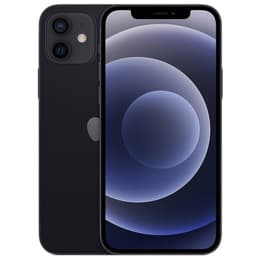
iPhone 12
iPhone 12
Starting at

Refurbished price:A$303.00

Versus A$1,129.00 new

See options
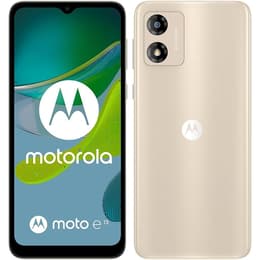
Motorola Moto E13
Motorola Moto E13
Starting at

Refurbished price:A$121.29

Versus A$244.00 new

See options

Ratings

The iPhone 12, released in October 2020, and the Motorola Moto E13, launched in early 2023, represent distinct approaches to smartphone design and functionality. While the iPhone 12 operates on Apple's iOS ecosystem, the Moto E13 runs on Android 13 Go Edition, catering to different user preferences and performance expectations. These devices differ significantly in their core specifications, offering varied experiences for everyday use.

Scores

Durability

The expected lifespan and ongoing support for these two smartphones vary due to their release timelines and operating systems.

  • Release Timeline: The iPhone 12 was released in October 2020, making it an older model compared to the Motorola Moto E13, which launched in early 2023. This difference in age directly impacts their remaining software support.
  • Software Longevity: The iPhone 12, having shipped with iOS 14, is expected to receive major iOS updates for approximately 6-7 years from its release, with compatibility extending to iOS 26 as of September 2025. The Moto E13 runs on Android 13 Go Edition, a version optimized for devices with more modest hardware, and its update longevity will depend on Motorola's support cycle for its E-series devices.
  • Repairability: The iPhone 12 initially received an iFixit repairability score of 6 out of 10, later adjusted to 4 out of 10, with some repair challenges noted for third-party repairs due to software locks. The Motorola Moto E13 has a repairability score of 6.5 out of 10, with accessible battery and cable, though screen replacement requires more extensive disassembly.

Release year

2020

2023

Compatible with latest Update

Yes

No

Operating system

iOS

Android

Foldable

No

No

Performance

Performance capabilities differ considerably between these two devices, influencing how smoothly they handle various tasks.

  • Processing Power: The iPhone 12 is equipped with a powerful processor that, at its release, demonstrated strong performance, handling demanding applications and multitasking efficiently. The Moto E13 features a processor that performs adequately for basic tasks but may experience lagging when numerous applications are running simultaneously or with more intensive usage.
  • System Responsiveness: Users of the iPhone 12 generally experience a fluid and responsive interface, suitable for a wide range of applications and mobile gaming. The Moto E13, running Android Go Edition, is optimized for devices with less powerful hardware, meaning its responsiveness is geared towards essential smartphone functions and lighter applications.
  • Battery Behavior: The iPhone 12 has a battery capacity that provides a generally acceptable daily usage experience, though heavy use, particularly with 5G connectivity, can lead to more frequent charging. The Moto E13 features a larger battery capacity, which typically allows for extended use throughout a full day under moderate conditions.

Memory (GB)

4 GB

4 GB

Screen quality

The visual experience on these devices is shaped by their distinct display technologies and specifications.

  • Display Technology and Clarity: The iPhone 12 features a 6.1-inch Super Retina XDR OLED display, offering deep blacks, vibrant colors, and high clarity with a resolution of 2532x1170 pixels. The Motorola Moto E13 comes with a 6.5-inch IPS LCD display, providing a clear viewing experience with a resolution of 720x1600 pixels.
  • Brightness and Refresh Rate: The iPhone 12's OLED panel delivers strong brightness levels, enhancing visibility in various lighting conditions. Both devices feature a standard 60Hz refresh rate, which provides a smooth experience for typical smartphone interactions.
  • Viewing Experience: The iPhone 12's display is well-suited for consuming high-quality media due to its OLED technology and pixel density. The Moto E13's larger screen size offers an expansive viewing area, which can be beneficial for general browsing and video consumption, though with a lower pixel density.

Resolution

1170 x 2532

720 x 1600

Screen type

Super Retina XDR OLED

IPS LCD

Audiovisual

The camera systems and audio capabilities present notable differences between the two smartphones.

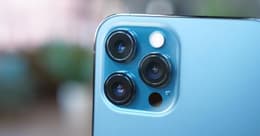
  • Camera System: The iPhone 12 is equipped with a dual 12 MP camera system, including wide and ultra-wide lenses, known for producing detailed photos with good color accuracy. The Motorola Moto E13 features a single 13 MP rear camera and a 5 MP front camera.
  • Photography Performance: The iPhone 12 offers strong low-light performance and advanced computational photography features, contributing to consistent image quality across various scenarios. The Moto E13's camera performs adequately for everyday photography in good lighting, but users have noted that its performance, particularly in challenging conditions or for fast-moving subjects, may not meet higher expectations.
  • Video Recording and Audio: The iPhone 12 supports 4K video recording at up to 60 frames per second with Dolby Vision HDR, providing high-quality video capture. The Moto E13 records video at 1080p at 30 frames per second. For audio, the Moto E13 includes Dolby Atmos support for an enhanced listening experience.

Main camera

12 megapixels

13 megapixels

Front camera

12 megapixels

5 megapixels

Miscellaneous

Beyond core features, several practical elements distinguish these two devices in daily use.

  • Connectivity: The iPhone 12 supports 5G cellular networks, along with Wi-Fi 6 and Bluetooth 5.0, offering fast wireless data speeds and efficient connections. The Motorola Moto E13 supports 4G LTE, Wi-Fi 5, and Bluetooth 5.0, but does not include 5G connectivity or NFC.
  • Ports and Sensors: The iPhone 12 uses a Lightning port for charging and data transfer and relies on Face ID for secure authentication. The Moto E13 features a USB-C port for charging and a 3.5mm headphone jack, offering broader compatibility with wired audio accessories. It uses face unlock for authentication but lacks a fingerprint sensor.
  • Design and Handling: The iPhone 12 has a compact design with flat edges, measuring 146.7 x 71.5 x 7.4 mm and weighing 164 grams, featuring an aluminum frame and Ceramic Shield front. It also boasts an IP68 rating for water and dust resistance. The Moto E13 is slightly larger and heavier at 164.2 x 75 x 8.5 mm and 179.5 grams, with a plastic construction and an IP52 water-repellent design.

Weight

164 oz

179 oz

Screen size (in)

6.1

6.5

Network

5G

4G

SIM card

Physical SIM + eSIM

Dual Physical SIM

Carrier compatibility

Unlocked

Unlocked

Connector

Lightning

USB-C

The iPhone 12 and Motorola Moto E13 cater to different user needs and priorities. Users often praise the iPhone 12 for its robust performance, high-quality OLED display, and capable camera system, which continues to hold up well years after its release. However, some users note that its battery life, while acceptable, is not exceptional, especially with 5G usage.

The Motorola Moto E13 is frequently recognized for its large battery capacity, offering extended usage on a single charge. Its design is also generally well-received. Common criticisms, however, point to its performance, which can be slow with multiple applications, and its camera quality, which may not satisfy users prioritizing photography.

Users prioritizing a powerful and consistently smooth experience, a high-resolution OLED display, and advanced camera features, along with longer software support, may find the iPhone 12 more aligned with their needs. Conversely, individuals seeking a device primarily for essential communication, web browsing, and media consumption, with a focus on extended battery life and a larger screen, might lean towards the Motorola Moto E13. Both devices are available as quality-assured refurbished options, providing an eco-friendly alternative for consumers.


See all articles

Our recent comparisons