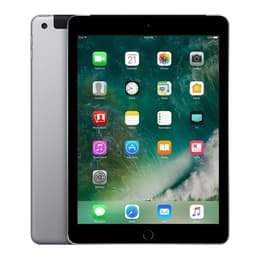
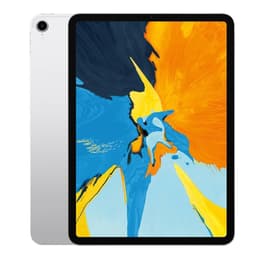

iPad 5 (2017, A9 series) vs iPad Pro (2018, A12 series)

iPad 5 (2017, A9 series)
Starting at

Refurbished price:A$144.00

Versus A$559.00 new

See options
iPad Pro (2018, A12 series)
Starting at

Refurbished price:A$466.00

Versus A$949.00 new

See options

Ratings

The iPad 2017, released in March 2017, and the iPad Pro 2018, launched in November 2018, represent distinct tiers within Apple's tablet lineup. While both devices operate on Apple's iPadOS, they cater to different user needs through significant differences in their internal components, display technology, and overall design. The iPad Pro 2018 introduced a more modern aesthetic and advanced capabilities, setting it apart from the more traditional iPad 2017.

Scores

Durability

The longevity of a tablet is influenced by its release date, software support, and physical design. These two models offer differing expectations for their practical lifespan.

  • Release Timeline: The iPad 2017, being released in March 2017, is an older device compared to the iPad Pro 2018, which launched in November 2018. This difference in release year directly impacts the duration of software support each device can expect.
  • Software Support: The iPad 2017 supports up to iPadOS 16, but does not receive iPadOS 17, indicating its software update cycle is nearing its end. The iPad Pro 2018, being a newer and more powerful device, is expected to receive software updates for a longer period, extending its functional life for users who rely on the latest features and security patches.
  • Practical Lifespan: While both iPads are built with durable aluminum bodies, the iPad Pro 2018's more advanced internal components and features like USB-C connectivity contribute to a longer practical lifespan for demanding applications. The iPad 2017 remains suitable for basic tasks, but its performance headroom for future software and apps is more limited.

Release year

2017

2018

Compatible with latest Update

No

Yes

Operating system

iPadOS

iPadOS

Minimum system requirements (iPadOS)

iPadOS 16

iPadOS 18

Performance

Performance is a key differentiator between these two iPad models, impacting how smoothly applications run and how efficiently demanding tasks are handled.

  • Processing Power: The iPad 2017 is equipped with a capable processor that handles everyday tasks such as web browsing, email, and casual gaming with responsiveness. The iPad Pro 2018 features a significantly more advanced processor, delivering a substantial boost in speed and efficiency. This allows for seamless multitasking, rapid app loading, and smooth performance in graphics-intensive games and professional applications.
  • Multitasking and Responsiveness: With 2GB of RAM, the iPad 2017 can manage several applications simultaneously, though users might experience occasional reloads when switching between more memory-intensive apps. The iPad Pro 2018 typically comes with 4GB or 6GB of RAM, providing ample capacity for extensive multitasking and ensuring applications remain active in the background for quicker access.
  • Storage Options: The iPad 2017 was available with 32GB or 128GB of internal storage. The iPad Pro 2018 offers a wider range of storage configurations, starting from 64GB and extending up to 1TB, accommodating users with larger storage needs for media, documents, and applications.

Memory (GB)

2 GB

4 GB

Processor

Apple A9

Apple A12X Bionic

Screen quality

The display is a primary interface for tablets, and both models offer a Retina display, but with notable differences in technology and features.

  • Display Technology and Clarity: The iPad 2017 features a 9.7-inch IPS LCD Retina display with a resolution of 2048 x 1536 pixels, providing clear and detailed visuals. The iPad Pro 2018 boasts an 11-inch or 12.9-inch Liquid Retina IPS LCD display, offering a larger viewing area and a resolution of 2388 x 1668 pixels for the 11-inch model, maintaining a sharp 264 pixels per inch.
  • Advanced Display Features: A key distinction is that the iPad 2017's display is not fully laminated and lacks an anti-reflective coating, which can lead to more noticeable reflections, especially in bright environments. The iPad Pro 2018's display is fully laminated, includes an anti-reflective coating, and features ProMotion technology, which enables an adaptive refresh rate up to 120Hz for smoother scrolling and more responsive interactions. It also supports Wide Color (P3) and True Tone for more accurate and dynamic color representation.
  • Design and Viewing Experience: The iPad 2017 retains a traditional iPad design with thicker bezels. The iPad Pro 2018 features a more modern, edge-to-edge display design with significantly thinner bezels, providing a more immersive viewing experience.

Resolution

2048 x 1536

2388 x 1668

True Tone

No

Yes

Promotion

No

Yes

Screen type

Retina display

Liquid Retina display

Pixel density

264ppp

264ppp

Brightness

500 nits brightness

600 nits brightness

Sound quality

Speakers

Stereo speakers

Four speaker audio

Audiovisual

While tablets are not typically primary photography devices, their cameras are important for video calls, document scanning, and casual photography. These two iPads offer different camera capabilities.

  • Rear Camera System: The iPad 2017 includes an 8-megapixel rear camera with an f/2.4 aperture, capable of recording 1080p HD video. It is suitable for capturing everyday moments and scanning documents in good lighting conditions. The iPad Pro 2018 features a more advanced 12-megapixel rear camera with an f/1.8 aperture, offering improved low-light performance and the ability to record 4K video at up to 60 frames per second.
  • Front Camera and Authentication: For video calls and selfies, the iPad 2017 has a 1.2-megapixel front-facing camera with an f/2.2 aperture, supporting 720p video recording. The iPad Pro 2018 is equipped with a 7-megapixel TrueDepth front camera with an f/2.2 aperture, which not only provides higher quality 1080p video for calls but also enables Face ID for secure facial authentication and supports features like Portrait mode and Smart HDR.
  • Additional Camera Features: The iPad Pro 2018's camera system benefits from a more powerful image signal processor, contributing to better image quality and advanced features like Smart HDR. The iPad 2017's camera is more basic, focusing on functional use rather than advanced photographic capabilities.

Miscellaneous

Beyond core performance and display, several other features contribute to the overall user experience and utility of these tablets.

  • Connectivity and Ports: Both iPads support Wi-Fi 802.11ac with dual-band capabilities. The iPad 2017 uses Bluetooth 4.2, while the iPad Pro 2018 upgrades to Bluetooth 5.0, offering improved range and speed for wireless accessories. A significant difference lies in their physical ports: the iPad 2017 retains the traditional Lightning port and a 3.5mm headphone jack. The iPad Pro 2018 transitions to a versatile USB-C port, which allows for broader connectivity with external displays and accessories, but it removes the 3.5mm headphone jack.
  • Biometric Security and Design: The iPad 2017 features Touch ID, an integrated fingerprint sensor within its physical home button, for secure unlocking and purchases. The iPad Pro 2018 replaces the home button with Face ID, utilizing its TrueDepth camera system for secure facial recognition. This change contributes to its modern, all-screen design.
  • Dimensions, Weight, and Accessories: The iPad 2017 measures 240 x 169.5 x 7.5 mm and weighs around 469g (Wi-Fi model). The 11-inch iPad Pro 2018 is slightly larger but thinner and lighter at 247.6 x 178.5 x 5.9 mm and 468g (Wi-Fi model), offering a more streamlined profile. The iPad Pro 2018 also supports the second-generation Apple Pencil and the Smart Keyboard Folio, enhancing its utility for creative and productivity tasks, whereas the iPad 2017 does not support any Apple Pencil.

Weight

478 oz

468 oz

Width

16.95 in

17.85 in

Height

24 in

24.76 in

Depth

0.75 in

0.59 in

Screen size (in)

9.7

11

Network

Wi-Fi + 4G

Wi-Fi

Carrier compatibility

Unlocked

Without SIM Port

Wi-Fi version

Wi-Fi 6 802.11a/b/g/n/ac

Wi-Fi 6 802.11a/b/g/n/ac

Bluetooth version

Bluetooth 4.2

Bluetooth 5.0

Face ID

No

Yes

Touch ID

Yes

No

Connector

Lightning connector

USB Type-C

Choosing between the iPad 2017 and the iPad Pro 2018 depends heavily on individual needs and priorities. Users often praise the iPad 2017 for its straightforward functionality and reliable performance for everyday tasks, making it a solid choice for general media consumption, web browsing, and light productivity. However, some users note its screen's reflectivity and the absence of advanced display features as minor drawbacks.

The iPad Pro 2018, on the other hand, consistently receives acclaim for its powerful performance, stunning Liquid Retina display with ProMotion, and modern design. Its advanced capabilities make it a favorite among professionals and creatives. Criticisms sometimes include the removal of the headphone jack and the shift from Touch ID to Face ID, which some users find less convenient in certain tablet use cases.

Users prioritizing a device for casual use, educational purposes, or basic entertainment will find the iPad 2017 well-suited to their needs. It offers a dependable experience for common applications and content viewing. Conversely, users who require a tablet for demanding creative work, extensive multitasking, or who value the latest display technology and accessory support will likely prefer the iPad Pro 2018. Its enhanced processing power and features are designed for more intensive workflows. Both models are available as quality-assured refurbished options, providing a sustainable choice for consumers looking to extend the life cycle of electronic products.

See all articles

Our recent comparisons