
Compare models

iPhone 12 mini vs iPhone XR

  • 1-year warranty
  • Free standard shipping
  • Free 30-day returns
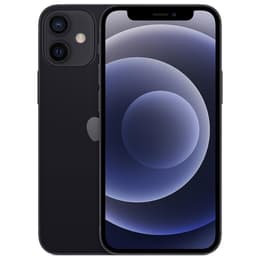
iPhone 12 mini
iPhone 12 mini
Starting at

Refurbished price:A$235.00

Versus A$929.00 new

See options
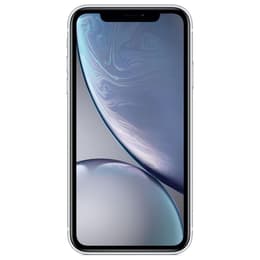
iPhone XR
iPhone XR
Starting at

Refurbished price:A$194.00

Versus A$589.00 new

See options

Differences at a glance

The iPhone 12 Mini (released in November 2020) and the iPhone XR (released in October 2018) represent different approaches to Apple's smartphone lineup. While both devices run on Apple's iOS operating system, the 12 Mini offers a more compact form factor with a newer display technology and enhanced camera capabilities, whereas the XR provides a larger screen experience from an earlier generation.

Scores

Durability

When considering the practical lifespan of these devices, their release timelines and software support are key factors. The iPhone 12 Mini, being a newer model, benefits from a longer expected period of software updates compared to the iPhone XR.

  • Software Longevity: The iPhone 12 Mini, launched in late 2020, is expected to receive iOS updates for a longer duration than the iPhone XR, which debuted in late 2018. This means the 12 Mini will likely support the latest features and security patches for an extended period.
  • Physical Durability: The iPhone 12 Mini features a Ceramic Shield front cover, offering improved drop performance compared to the iPhone XR's strengthened glass. Both devices have aluminum frames and glass backs, with the 12 Mini boasting an IP68 rating for water and dust resistance (up to 6 meters for 30 minutes) versus the XR's IP67 rating (up to 1 meter for 30 minutes).
  • Repairability: Both models generally receive a moderate repairability score, typically around 6 out of 10, indicating that common repairs like display and battery replacements are feasible due to modular components. However, the glass back on both devices can be challenging to replace independently.

Release year

2020

2018

Compatible with latest Update

Yes

Yes

Operating system

iOS

iOS

Foldable

No

No

Performance

The performance of these two iPhones varies due to their different internal components, impacting how smoothly they handle daily tasks and demanding applications.

  • Processing Power: The iPhone 12 Mini incorporates a newer generation processor, providing a noticeable boost in speed and efficiency for launching apps, navigating the interface, and handling intensive tasks like gaming or video editing. The iPhone XR, while still capable for everyday use, relies on an older generation processor.
  • Multitasking and Responsiveness: With 4GB of RAM, the iPhone 12 Mini offers more headroom for multitasking, allowing users to switch between multiple applications more fluidly without experiencing slowdowns. The iPhone XR comes with 3GB of RAM, which is sufficient for general use but may show limitations with a higher number of active applications.
  • Storage Options: Both devices are available with similar internal storage configurations, typically including 64GB, 128GB, and 256GB options, catering to different user needs for apps, photos, and media.

Memory (GB)

4 GB

3 GB

Screen quality

The display is a significant differentiator between the iPhone 12 Mini and the iPhone XR, influencing the visual experience for users.

  • Display Technology and Clarity: The iPhone 12 Mini features a 5.4-inch Super Retina XDR OLED display, which delivers deep blacks, high contrast, and vibrant colors. Its resolution of 2340 x 1080 pixels results in a sharp 476 pixels per inch (ppi). In contrast, the iPhone XR has a larger 6.1-inch Liquid Retina HD LCD display with a resolution of 1792 x 828 pixels, offering 326 ppi.
  • Brightness and Viewing Experience: The 12 Mini's OLED screen can achieve a typical brightness of 625 nits and a peak brightness of 1200 nits for HDR content, making it well-suited for outdoor visibility and HDR media consumption. The iPhone XR also offers a typical brightness of 625 nits, providing good visibility in most conditions, but lacks the peak HDR brightness of the 12 Mini.
  • Physical Size and Handling: The iPhone 12 Mini's 5.4-inch display is designed for users who prefer a more compact device that is easy to operate with one hand. The iPhone XR's 6.1-inch display offers a larger viewing area, which can be beneficial for media consumption and productivity, though it results in a physically larger device.

Resolution

1080 x 2340

828 x 1792

Screen type

Super Retina XDR OLED

Liquid Retina IPS LCD

Audiovisual

The camera systems on the iPhone 12 Mini and iPhone XR offer distinct capabilities, particularly in terms of hardware and computational photography features.

  • Rear Camera System: The iPhone 12 Mini is equipped with a dual 12-megapixel camera system, including a wide (f/1.6) and an ultrawide (f/2.4) lens, both supporting Night Mode, Deep Fusion, and Smart HDR 3. The iPhone XR features a single 12-megapixel wide (f/1.8) camera with optical image stabilization and Smart HDR. The 12 Mini's ultrawide lens provides more versatility for capturing broader scenes.
  • Low-Light Performance and Video: The iPhone 12 Mini excels in low-light conditions due to its wider aperture on the main lens and the inclusion of Night Mode across all cameras, including the front-facing one. It also supports HDR video recording with Dolby Vision up to 4K at 30fps. The iPhone XR offers good low-light performance for its generation and records 4K video up to 60fps, but lacks the advanced Night Mode and HDR video capabilities of the 12 Mini.
  • Front Camera: The iPhone 12 Mini features a 12-megapixel front camera with Night Mode, while the iPhone XR has a 7-megapixel front camera. Both support Portrait mode and video recording, but the 12 Mini offers higher resolution and improved low-light selfies.

Main camera

12 megapixels

12 megapixels

Front camera

12 megapixels

7 megapixels

Miscellaneous

Beyond core performance and display, several practical elements differentiate the user experience of the iPhone 12 Mini and iPhone XR.

  • Size and Handling: The iPhone 12 Mini is significantly smaller and lighter, measuring 131.5 x 64.2 x 7.4 mm and weighing 135 grams, making it ideal for one-handed use and pocketability. The iPhone XR is larger and heavier at 150.9 x 75.7 x 8.3 mm and 194 grams, offering a more substantial feel and a larger screen footprint.
  • Connectivity and Charging: The iPhone 12 Mini supports 5G cellular connectivity, offering faster download and upload speeds in compatible areas, alongside Wi-Fi 6. The iPhone XR is limited to LTE connectivity and Wi-Fi 5 (802.11ac). Both devices support wireless charging, but the 12 Mini introduces MagSafe for enhanced magnetic attachment of accessories and faster wireless charging with compatible MagSafe chargers.
  • Biometric Security and Ports: Both models utilize Face ID for secure facial recognition. They both feature a Lightning port for charging and data transfer, and neither includes a traditional 3.5mm headphone jack.

Weight

135 oz

194 oz

Screen size (in)

5.4

6.1

Network

5G

4G

SIM card

Physical SIM + eSIM

Physical SIM + eSIM

Carrier compatibility

Unlocked

Unlocked

Connector

Lightning

Lightning

What the community thinks

The iPhone 12 Mini and iPhone XR cater to different user preferences, primarily distinguished by their size, display technology, and camera capabilities. Users often praise the iPhone 12 Mini for its compact form factor, making it comfortable for one-handed use and easy to carry. Its OLED display and advanced camera features, including Night Mode, are frequently highlighted as significant advantages. However, some users note that its smaller battery capacity can lead to more frequent charging, especially with heavy use.

The iPhone XR is generally appreciated for its larger screen size, which provides a more expansive viewing experience for media and browsing. Its battery life is often considered robust for its generation, offering reliable all-day usage for many. Criticisms sometimes point to its LCD display technology, which, while good, does not offer the same contrast and deep blacks as OLED screens, and its single rear camera system, which lacks the ultrawide lens and advanced low-light features of newer models.

Users prioritizing a highly portable device with a vibrant OLED display, advanced camera features, and future-proof 5G connectivity will find the iPhone 12 Mini well-suited to their needs. Conversely, users who prefer a larger screen for media consumption and a generally reliable battery life, and who do not require the latest camera innovations or 5G, may lean toward the iPhone XR. Both devices offer a quality-assured refurbished option, providing an eco-friendly alternative for those seeking to make a sustainable choice.