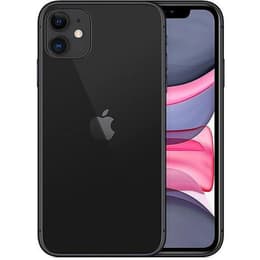

iPhone 11 vs Oppo Reno 8 Pro

iPhone 11
iPhone 11
Starting at

Refurbished price:A$246.00

Versus A$769.00 new

See options
Oppo Reno 8 Pro
Oppo Reno 8 Pro
Starting at

Refurbished price:A$327.00

Versus A$1,741.00 new

See options

The iPhone 11, released in September 2019, and the Oppo Reno 8 Pro, launched in July 2022, represent different approaches to smartphone design and functionality from their respective manufacturers. While the iPhone 11 operates on Apple's iOS ecosystem, the Oppo Reno 8 Pro runs on Android with Oppo's ColorOS overlay. Key distinctions between these two devices include their display technology, camera systems, and overall performance capabilities, reflecting the technological advancements over their differing release timelines.

Scores

Durability

The practical lifespan of a smartphone is often influenced by its release date and the manufacturer's commitment to software updates and security patches.

  • Release Timeline: The iPhone 11 was released in September 2019, making it an older device compared to the Oppo Reno 8 Pro, which launched in July 2022. This difference in age impacts their expected software support.
  • Software Longevity: Apple typically provides major iOS updates for iPhones for approximately five to seven years. The iPhone 11 is expected to receive major iOS updates until late 2026, likely with iOS 26 being its final major version, followed by security updates for at least another year or two. In contrast, Oppo has committed to two operating system updates and four years of security updates for its Reno 8 series, meaning the Reno 8 Pro, launched with Android 12, would likely receive Android 13 and 14, with security patches extending until around 2026.
  • Practical Lifespan: Users of the iPhone 11 can expect continued functionality and security for several more years, though new features might be limited after its final major OS update. The Oppo Reno 8 Pro, being newer, offers a more current software experience and will continue to receive updates for a comparable period from its release.

Release year

2019

2022

Operating system

iOS

Android

Foldable

No

No

Performance

Performance in smartphones is determined by the internal components working together to handle daily tasks, from simple browsing to more demanding applications and multitasking.

  • Storage Options: The iPhone 11 was available with 64 GB, 128 GB, or 256 GB of internal storage. The Oppo Reno 8 Pro typically comes with 256 GB of internal storage, often paired with higher RAM configurations. Neither device offers expandable storage via a microSD card.
  • Battery Behavior: The iPhone 11 features a 3110 mAh battery, which generally provides a full day of moderate use, with some users reporting around 5-7 hours of screen-on time depending on usage intensity. The Oppo Reno 8 Pro is equipped with a larger 4500 mAh battery, often lasting a full day of heavy use or even up to two days with lighter usage, and supports rapid charging.
  • System Responsiveness: The iPhone 11's processor, while older, still handles everyday applications, web browsing, and casual gaming smoothly. For more intensive tasks or future applications, its performance may show its age compared to newer devices. The Oppo Reno 8 Pro features a more recent-generation processor designed for efficient performance, allowing for smooth multitasking, demanding gaming, and quick app loading.

Memory (GB)

4 GB

8 GB

Screen quality

The display is a primary interface for smartphone interaction, and differences in technology and specifications can significantly impact the visual experience.

  • Display Technology: The iPhone 11 features a 6.1-inch Liquid Retina HD LCD display. The Oppo Reno 8 Pro boasts a 6.7-inch AMOLED display. AMOLED technology typically offers deeper blacks and higher contrast compared to LCD.
  • Resolution and Clarity: The iPhone 11 has a resolution of 1792 x 828 pixels at 326 pixels per inch (PPI). The Oppo Reno 8 Pro offers a higher resolution of 2400 x 1080 pixels, resulting in a sharper image with approximately 394 PPI.
  • Brightness and Refresh Rate: The iPhone 11 has a typical maximum brightness of 625 nits. The Oppo Reno 8 Pro can reach a peak brightness of 950 nits, improving visibility in bright outdoor conditions. The iPhone 11 has a standard 60Hz refresh rate, while the Oppo Reno 8 Pro features a 120Hz refresh rate, providing a smoother scrolling and viewing experience.

Resolution

828 x 1792

1080 x 2412

Audiovisual

Camera capabilities are a significant factor for many users, with both devices offering distinct features for photography and videography.

  • Rear Camera System: The iPhone 11 includes a dual 12 MP camera system with a wide and an ultra-wide lens, featuring Night mode for improved low-light photography on the wide lens. The Oppo Reno 8 Pro has a triple rear camera setup, typically consisting of a 50 MP main sensor, an 8 MP ultra-wide lens, and a 2 MP macro lens. The Oppo Reno 8 Pro's main camera often uses a larger sensor for better light capture.
  • Low-Light and Video Performance: The iPhone 11 offers 4K video recording at up to 60 frames per second (fps) and includes optical image stabilization (OIS) on its wide lens, with good video stabilization across lenses. Its Night mode significantly enhances still photos in dim environments. The Oppo Reno 8 Pro supports 4K video recording at 30 fps and features an imaging chip designed to enhance low-light video performance, though it relies on electronic image stabilization (EIS) for its main camera.
  • Front Camera: The iPhone 11 has a 12 MP front camera capable of 4K video recording. The Oppo Reno 8 Pro features a 32 MP front camera, which is noted for capturing detailed selfies and performing well in low-light conditions.

Miscellaneous

Beyond core performance and display, several practical elements contribute to the overall user experience and device utility.

  • Connectivity: The iPhone 11 supports 4G LTE networks, Wi-Fi 6, and Bluetooth 5.0. The Oppo Reno 8 Pro offers 5G connectivity, along with Wi-Fi 6 and Bluetooth 5.3, providing faster mobile data speeds where available.
  • Ports and Biometrics: The iPhone 11 uses Apple's proprietary Lightning port for charging and data transfer and relies on Face ID for secure authentication. The Oppo Reno 8 Pro features a USB-C port and an in-display fingerprint sensor for unlocking and security. Neither device includes a traditional 3.5mm headphone jack.
  • Design and Handling: The iPhone 11 has dimensions of 150.9 x 75.7 x 8.3 mm and weighs 194 g, featuring an aluminum frame and glass back. It has an IP68 rating for water and dust resistance. The Oppo Reno 8 Pro is thinner and lighter at 161.2 x 74.2 x 7.34 mm and 183 g, with a sleek design and Gorilla Glass 5 protection for the display.

Weight

194 oz

183 oz

Screen size (in)

6.1

6,7

Network

4G

5G

SIM card

Physical SIM + eSIM

Dual Physical SIM

Carrier compatibility

Unlocked

Unlocked

The iPhone 11 and Oppo Reno 8 Pro cater to different user preferences, largely due to their distinct ecosystems and release periods. Users often praise the iPhone 11 for its consistent software experience, reliable camera performance, particularly its Night mode, and its robust build quality. Some common criticisms include its LCD display, which lacks the vibrancy and contrast of OLED, and its 4G-only connectivity in an increasingly 5G world. The Oppo Reno 8 Pro is frequently lauded for its vibrant AMOLED display with a high refresh rate, rapid charging capabilities, and its strong performance for daily tasks and gaming. User feedback sometimes points to its camera system, while capable, not always matching the consistency of some higher-end competitors, and its software update policy, while improved, still offering fewer major OS updates than some other brands.

Users prioritizing a long-term software support commitment within the Apple ecosystem and a familiar user experience may find the iPhone 11 well-suited to their needs, especially if 5G connectivity is not a primary concern. Those who value a modern, high-refresh-rate AMOLED display, faster charging, and 5G capabilities, along with the flexibility of the Android operating system, may lean towards the Oppo Reno 8 Pro. Both devices offer a solid smartphone experience, and choosing between them often comes down to individual priorities regarding operating system preference, display technology, and connectivity. For those considering either device, exploring quality-assured refurbished options can provide an eco-friendly alternative to new purchases.


See all articles

Our recent comparisons