iPhone 11 vs iPhone 14

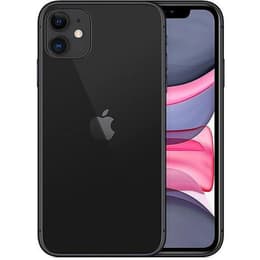
iPhone 11
iPhone 11
Starting at

Refurbished price:A$246.00

Versus A$769.00 new

See options
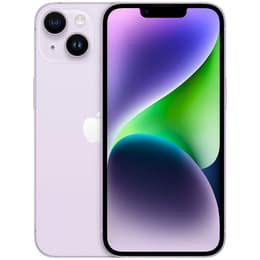
iPhone 14
iPhone 14
Starting at

Refurbished price:A$467.00

Versus A$1,049.00 new

See options

Ratings

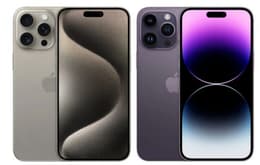
The iPhone 11, released in September 2019, and the iPhone 14, launched in September 2022, represent different generations of Apple's smartphone lineup. While both devices operate on Apple's iOS platform, the iPhone 14 introduces notable advancements in display technology, camera capabilities, and internal performance compared to its predecessor. These differences cater to varying user needs and expectations from a modern smartphone.

Scores

Durability

The practical lifespan of a smartphone is often determined by its software support and physical durability. The iPhone 11, released in 2019, and the iPhone 14, released in 2022, have different timelines for receiving updates and their physical resilience varies.

  • Software Longevity: The iPhone 11 is expected to receive major iOS updates until approximately 2026, with security updates potentially extending beyond that. The iPhone 14, being three years newer, is anticipated to receive major iOS updates until around 2034, offering a significantly longer period of access to new features and security enhancements.
  • Physical Durability: Both models feature an IP68 rating for water and dust resistance, meaning they can withstand submersion. However, the iPhone 14 can endure greater depths (up to 6 meters for 30 minutes) compared to the iPhone 11 (up to 2 meters for 30 minutes). The iPhone 14 also incorporates Apple's Ceramic Shield on its front display, which offers enhanced drop protection compared to the glass on the iPhone 11.
  • Repairability: While specific repairability scores can vary, both devices are designed with Apple's ecosystem in mind. Users considering a quality-assured refurbished option will find that both models, when professionally restored, offer renewed longevity and performance.

Release year

2019

2022

Compatible with latest Update

Yes

Yes

Operating system

iOS

iOS

Foldable

No

No

Performance

Performance is a key differentiator between these two iPhone models, primarily due to the advancements in their internal processing units and memory configurations.

  • Processing Power: The iPhone 14 features a more advanced processor compared to the iPhone 11. This translates to noticeably faster app loading times, smoother multitasking, and more fluid performance in demanding applications and games. Users will experience fewer animation stutters and quicker overall responsiveness on the newer device.
  • Multitasking and Responsiveness: The iPhone 14 includes more RAM than the iPhone 11, which contributes to improved multitasking capabilities. This means the device can handle more applications open simultaneously without needing to reload them as frequently, leading to a more seamless user experience.
  • Battery Behavior: While the battery capacities are numerically similar, the iPhone 14's more efficient processor and optimized software generally result in better real-world battery life and screen-on time for typical usage. This efficiency allows the iPhone 14 to maintain power for longer periods, even with its more demanding display.

Memory (GB)

4 GB

6 GB

Screen quality

The visual experience on these two iPhones presents a significant contrast, largely due to advancements in display technology over their respective release years.

  • Display Technology: The iPhone 11 utilizes a Liquid Retina IPS LCD panel, which provides good color reproduction and viewing angles. In contrast, the iPhone 14 features a Super Retina XDR OLED display. This OLED technology allows for deeper blacks, higher contrast ratios, and more vibrant colors, offering a more immersive viewing experience.
  • Resolution and Clarity: Both phones have a 6.1-inch display. However, the iPhone 14 boasts a significantly higher resolution of 2532 x 1170 pixels at 460 pixels per inch (PPI), resulting in much sharper images and clearer text. The iPhone 11 has a resolution of 1792 x 828 pixels at 326 PPI.
  • Brightness and Viewing Experience: The iPhone 14 offers superior brightness, reaching up to 800 nits typical brightness and 1200 nits peak brightness for HDR content, making it more comfortable to view in bright outdoor conditions. The iPhone 11 has a typical maximum brightness of 625 nits. Both displays maintain a standard 60Hz refresh rate.

Resolution

828 x 1792

1170 x 2532

Screen type

Liquid Retina IPS LCD

Super Retina XDR OLED

Audiovisual

The camera systems on the iPhone 11 and iPhone 14 both offer dual lenses, but the newer model incorporates significant enhancements for improved photography and videography.

  • Main Camera Performance: Both devices feature 12-megapixel main cameras. However, the iPhone 14's main sensor is larger with a wider aperture (f/1.5 compared to the iPhone 11's f/1.8), allowing it to capture more light. This results in sharper photos, especially in low-light conditions, and a shallower depth of field. The iPhone 14 also benefits from sensor-shift optical image stabilization, which is more advanced than the optical image stabilization found in the iPhone 11.
  • Low-Light and Image Processing: The iPhone 14 includes Apple's Photonic Engine, which applies Deep Fusion earlier in the image processing pipeline, leading to a substantial improvement in low-light performance across all cameras. While the iPhone 11 introduced Night mode, the iPhone 14's overall low-light capabilities are more refined.
  • Front Camera and Video Quality: The iPhone 14's 12-megapixel front camera features a wider f/1.9 aperture and autofocus, leading to better low-light selfies and group shots compared to the iPhone 11's f/2.2 aperture front camera. Both phones support 4K video recording at up to 60 frames per second, but the iPhone 14 offers enhanced video stabilization and features like Cinematic mode.

Main camera

12 megapixels

12 megapixels

Front camera

12 megapixels

12 megapixels

Miscellaneous

Beyond core performance and display, several practical elements contribute to the overall user experience and differentiate the iPhone 11 and iPhone 14.

  • Connectivity: A significant upgrade in the iPhone 14 is its support for 5G cellular networks, offering faster download and upload speeds in supported areas compared to the iPhone 11's 4G LTE connectivity. Both devices support Wi-Fi 6, but the iPhone 14 features Bluetooth 5.3, an improvement over the iPhone 11's Bluetooth 5.0.
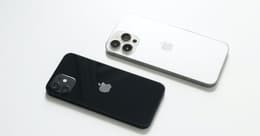
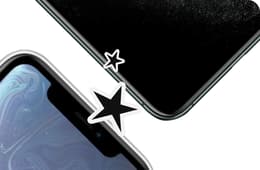
  • Design and Handling: The iPhone 14 adopts a flat-edged design, a departure from the iPhone 11's more rounded edges. The iPhone 14 is also slightly smaller, thinner, and lighter (146.7 x 71.5 x 7.8mm, 172g) than the iPhone 11 (150.9 x 75.7 x 8.3mm, 194g), which can impact how each device feels in hand. The notch housing the front camera and sensors is also noticeably smaller on the iPhone 14.
  • Other Features: Both models rely on Face ID for biometric authentication. The iPhone 14, in some regions, exclusively uses eSIM, removing the physical SIM tray. Both devices retain the Lightning port for charging and data transfer. The iPhone 11 was the first to include an Ultra Wideband chip for spatial awareness.

Weight

194 oz

172 oz

Screen size (in)

6.1

6,1

Network

4G

5G

SIM card

Physical SIM + eSIM

Physical SIM + eSIM

Carrier compatibility

Unlocked

Unlocked

Connector

Lightning

Lightning

The iPhone 11 and iPhone 14, while both capable smartphones, cater to different user priorities due to the technological advancements introduced over their three-year gap. Users frequently praise the iPhone 11 for its robust performance for everyday tasks and its reliable camera system, especially considering its age. Common criticisms often revolve around its LCD display, which some users find less vibrant than newer OLED panels, and its 4G LTE-only connectivity.

The iPhone 14, on the other hand, is often lauded for its significantly improved OLED display with enhanced brightness and clarity, its more powerful processor that ensures smooth operation for demanding applications, and its advanced camera system that excels in various lighting conditions. Users appreciate the addition of 5G connectivity and the enhanced durability features like Ceramic Shield. Some users, however, note that while a substantial upgrade from the iPhone 11, it shares some design elements with its immediate predecessors.

Users prioritizing a modern visual experience, superior low-light photography, and future-proof connectivity with 5G will find the iPhone 14 well-suited to their needs. Its extended software support also makes it a compelling choice for those seeking a device with a longer practical lifespan. Conversely, users who primarily need a reliable smartphone for general use, communication, and casual photography, and who may not require the absolute latest in display or camera technology, might find the iPhone 11 still meets their requirements. For those looking to make an informed and sustainable choice, considering a quality-assured refurbished option for either model can provide excellent value while contributing to a more eco-friendly approach to technology consumption.

See all articles

Our recent comparisons