
iPhone 11 vs Oppo Reno 8

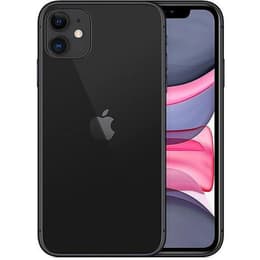
iPhone 11
iPhone 11
Starting at

Refurbished price:A$246.00

Versus A$769.00 new

See options
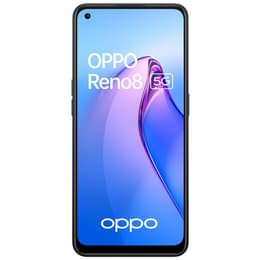
Oppo Reno 8
Oppo Reno 8
Starting at

Refurbished price:A$246.00

Versus A$1,159.00 new

See options

The iPhone 11, released in September 2019, and the Oppo Reno 8, launched globally in mid-2022, represent different approaches to smartphone design and functionality from their respective manufacturers. While the iPhone 11 operates on Apple's iOS ecosystem, the Oppo Reno 8 runs on Android with Oppo's ColorOS overlay. Key distinctions lie in their display technology, camera capabilities, and overall software experience, catering to varied user preferences.

Scores

Durability

When considering the long-term usability of these devices, their release timelines and software support are important factors.

  • Software Longevity: The iPhone 11, having been released in 2019, has received consistent iOS updates, with compatibility extending to iOS 26 as of September 2025, indicating a long support cycle from Apple. The Oppo Reno 8, released in 2022, typically receives two years of Android OS updates and three years of security updates, which is a standard offering for many Android devices.
  • Build and Durability: The iPhone 11 features a glass front and back with an aluminum frame, offering IP68 water and dust resistance, meaning it can withstand submersion in water up to 2 meters for 30 minutes. The Oppo Reno 8 has a Gorilla Glass 5 protected display and a plastic back, which can be more robust against certain types of impact, though it lacks an official IP rating for water and dust resistance.
  • Repairability: Both devices are designed with modern smartphone construction, which can make user-level repairs challenging. Professional repair services are generally recommended for both models to ensure proper functionality and maintain water resistance where applicable.

Release year

2019

2022

Operating system

iOS

Android

Foldable

No

No

Performance

The performance of a smartphone is crucial for daily tasks, app usage, and multitasking. Both the iPhone 11 and Oppo Reno 8 offer capable performance for their respective platforms.

  • Everyday Responsiveness: The iPhone 11 handles demanding applications and multitasking smoothly, providing a fluid user experience across its operating system. Users generally report consistent performance for common tasks and gaming. The Oppo Reno 8 also delivers a snappy experience for most tasks, including gaming, with users noting its ability to run demanding applications effectively.
  • Multitasking and Storage: The iPhone 11 comes with 4GB of RAM, which is optimized by iOS to manage applications efficiently. It offers storage options of 64GB, 128GB, or 256GB, which are not expandable. The Oppo Reno 8 typically features 8GB or 12GB of RAM, with an option to virtually expand RAM using internal storage, aiding in seamless app switching. It offers 128GB or 256GB of internal storage, also without expandable memory.
  • Battery Behavior: The iPhone 11 is equipped with a 3110 mAh battery, providing sufficient power for a full day of moderate use, and supports fast charging. The Oppo Reno 8 has a larger 4500 mAh battery, which users report reliably lasts through a day of use, even with higher refresh rate settings. It also features very fast 80W charging technology, capable of significantly recharging the device in a short period.

Memory (GB)

4 GB

8 GB

Screen quality

The display is a primary interface for smartphone interaction, and both devices offer distinct viewing experiences.

  • Display Technology and Clarity: The iPhone 11 features a 6.1-inch Liquid Retina HD display, which is an IPS LCD panel. It provides accurate color reproduction and clear images with a resolution of 1792 x 828 pixels. The Oppo Reno 8 boasts a 6.4-inch AMOLED display with a higher resolution of 2400 x 1080 pixels, offering deeper blacks and more vibrant colors.
  • Brightness and Outdoor Visibility: The iPhone 11 has a typical maximum brightness of 625 nits, which provides good visibility in most lighting conditions. The Oppo Reno 8 can reach up to 800 nits typical brightness and up to 1700 nits peak brightness in High Brightness Mode (HBM), making it highly visible even in bright outdoor environments.
  • Refresh Rate and Smoothness: The iPhone 11 features a standard 60Hz refresh rate, which is common for many smartphones. The Oppo Reno 8 offers a 90Hz refresh rate, resulting in smoother scrolling and a more fluid visual experience, particularly noticeable during gaming or navigating the user interface.

Resolution

828 x 1792

1080x2400

Audiovisual

Both smartphones offer capable camera systems, though with different configurations and strengths in photography and videography.

  • Rear Camera System: The iPhone 11 features a dual 12MP camera system, comprising a wide-angle lens with optical image stabilization (OIS) and an ultra-wide-angle lens. It excels in everyday photography and includes a Night mode for improved low-light performance. The Oppo Reno 8 comes with a triple camera setup, including a 50MP main sensor, an 8MP ultra-wide lens, and a 2MP macro lens. Its main camera performs well in good lighting and offers good color and dynamic range.
  • Low-Light and Video Capabilities: The iPhone 11's Night mode significantly enhances low-light photos, and its video recording supports 4K resolution at up to 60 frames per second with cinematic video stabilization. The Oppo Reno 8's main camera also performs well in low-light conditions, with users noting impressive night shots. It supports 4K video recording at 30 frames per second and includes Electronic Image Stabilization (EIS).
  • Front Camera and Audio: The iPhone 11 has a 12MP TrueDepth front camera capable of 4K video recording. The Oppo Reno 8 features a 32MP front camera, which captures detailed selfies. Both devices offer stereo audio recording for videos, but the iPhone 11 has stereo speakers, while the Oppo Reno 8 typically features a single down-firing speaker.

Miscellaneous

Beyond core features, several other aspects contribute to the overall user experience and practical utility of these smartphones.

  • Connectivity and Ports: The iPhone 11 supports Gigabit-class LTE and Wi-Fi 6, along with Bluetooth 5.0. It uses Apple's proprietary Lightning port for charging and data transfer. The Oppo Reno 8 offers 5G connectivity, Wi-Fi 6, and Bluetooth 5.3, providing faster network speeds and more modern wireless standards. It uses a USB-C port for charging and data, but lacks a traditional 3.5mm headphone jack.
  • Biometric Security: The iPhone 11 relies on Face ID for secure facial recognition. The Oppo Reno 8 features an in-display fingerprint sensor and also supports face recognition for unlocking the device.
  • Design and Handling: The iPhone 11 measures 150.9 x 75.7 x 8.3 mm and weighs 194 grams, offering a comfortable in-hand feel for many users. The Oppo Reno 8 is slightly taller and narrower at 160 x 73.4 x 7.67 mm and lighter at 179 grams. Some users have noted its angular design can feel less comfortable during extended use.

Weight

194 oz

200 oz

Screen size (in)

6.1

6,43

Network

4G

5G

SIM card

Physical SIM + eSIM

Dual Physical SIM

Carrier compatibility

Unlocked

Unlocked

Connector

Lightning

USB-C + Jack 3.5mm

User feedback for the iPhone 11 often praises its reliable performance, consistent camera quality, especially with the introduction of Night mode, and its long-term software support. Common criticisms include the LCD display technology compared to OLED panels found in newer devices and the absence of 5G connectivity.

For the Oppo Reno 8, users frequently highlight its vibrant AMOLED display, very fast charging capabilities, and solid battery life as strong advantages. Some users have expressed that the secondary cameras (ultrawide and macro) are less impressive than the main sensor, and the angular design can affect handling comfort. The lack of an official IP rating and optical image stabilization on the main camera are also noted.

Users prioritizing a long-term software experience within the Apple ecosystem, coupled with a dependable camera for general use and strong video capabilities, may find the iPhone 11 well-suited to their needs. Conversely, those who value a modern, high-refresh-rate AMOLED display, faster charging speeds, 5G connectivity, and the flexibility of the Android operating system might lean towards the Oppo Reno 8.

Both devices offer distinct advantages, and choosing between them often comes down to individual priorities regarding operating system preference, display characteristics, and specific camera features. Exploring quality-assured refurbished options for either model can provide a sustainable choice for consumers.


See all articles

Our recent comparisons