
Compare models

iPhone 11 vs iPhone 13 Pro Max

  • 1-year warranty
  • Free standard shipping
  • Free 30-day returns
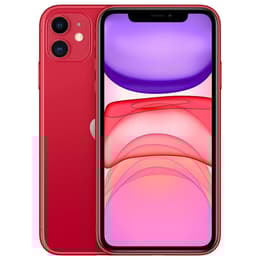
iPhone 11
iPhone 11
Starting at

Refurbished price:A$250.00

Versus A$769.00 new

See options
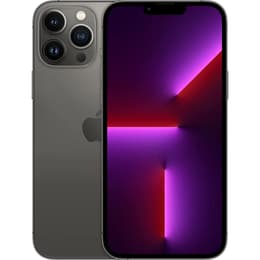
iPhone 13 Pro Max
iPhone 13 Pro Max
Starting at

Refurbished price:A$579.00

Versus A$1,689.00 new

See options

Differences at a glance

The iPhone 11, released in September 2019, and the iPhone 13 Pro Max, launched in September 2021, represent different tiers and generations within Apple's smartphone lineup. While both devices operate on Apple's iOS platform, the iPhone 13 Pro Max introduces significant advancements in display technology, camera capabilities, and overall performance, reflecting its 'Pro' designation and newer release. These differences cater to distinct user needs, from everyday functionality to advanced creative and power-user demands.

Available Models

Colour

Storage (GB)

Scores

Durability

When considering the longevity of these devices, several factors come into play, including their release timelines, software support, and physical resilience.

  • Release Timeline: The iPhone 11 was released in September 2019, making it an older model compared to the iPhone 13 Pro Max, which debuted in September 2021. This two-year difference directly impacts their expected software support lifespan.
  • OS Support: The iPhone 11 launched with iOS 13 and has received updates up to iOS 18 as of September 2024, with potential for iOS 19 in 2025. The iPhone 13 Pro Max, starting with iOS 15, is expected to receive software updates for a longer period, likely until iOS 20 or 21, extending its functional life by at least two years compared to the iPhone 11.
  • Physical Durability: Both models feature an IP68 rating for water and dust resistance. The iPhone 11 can withstand submersion up to 2 meters for 30 minutes, while the iPhone 13 Pro Max offers enhanced protection, capable of handling depths up to 6 meters for the same duration. The iPhone 13 Pro Max also incorporates a Ceramic Shield front cover, which provides increased drop performance compared to the iPhone 11's dual-ion exchange-strengthened glass.

Release year

2019

2021

Compatible with latest Update

Yes

Yes

Operating system

iOS

iOS

Foldable

No

No

Performance

The performance of a smartphone is crucial for daily operations, from launching applications to handling demanding tasks. The iPhone 11 and iPhone 13 Pro Max offer different levels of responsiveness and power.

  • System Responsiveness: The iPhone 13 Pro Max, with its newer internal components, delivers a noticeably faster and more fluid user experience. Applications launch more quickly, and transitions between tasks are smoother. The iPhone 11 still provides capable performance for general use, but it may exhibit slower loading times for more intensive applications or games.
  • Multitasking and Storage: The iPhone 13 Pro Max is equipped with 6GB of RAM, allowing it to manage more applications simultaneously without needing to reload them as frequently. The iPhone 11 features 4GB of RAM, which is sufficient for most users but may lead to more frequent app refreshes when switching between many active applications. Storage options for the iPhone 11 include 64GB, 128GB, and 256GB, while the iPhone 13 Pro Max offers larger capacities starting from 128GB, up to 1TB, catering to users with extensive storage needs for photos, videos, and applications.
  • Battery Behavior: The iPhone 13 Pro Max is known for its extended battery life, often lasting through a full day of heavy use and sometimes into a second day, thanks to its larger battery capacity (4352 mAh) and more power-efficient processor and display. The iPhone 11, with a 3110 mAh battery, provides reliable all-day power for moderate use, but heavy users may find themselves needing to recharge before the day ends.

Screen quality

The visual experience is a key differentiator between these two iPhone models, with the iPhone 13 Pro Max offering a more advanced display.

  • Display Technology and Clarity: The iPhone 11 features a 6.1-inch Liquid Retina IPS LCD display with a resolution of 1792 x 828 pixels, resulting in a pixel density of 326 pixels per inch (ppi). The iPhone 13 Pro Max boasts a larger 6.7-inch Super Retina XDR OLED display with a higher resolution of 2778 x 1284 pixels, yielding a sharper 458 ppi. The OLED technology on the 13 Pro Max provides deeper blacks and more vibrant colors compared to the LCD panel on the iPhone 11.
  • Brightness and Refresh Rate: For outdoor visibility, the iPhone 13 Pro Max offers superior brightness, with a typical maximum of 1000 nits and a peak of 1200 nits for HDR content. The iPhone 11 has a maximum typical brightness of 625 nits. A significant upgrade on the 13 Pro Max is its ProMotion technology, offering an adaptive refresh rate that can scale from 10Hz to 120Hz, providing smoother scrolling and more responsive interactions. The iPhone 11 maintains a standard 60Hz refresh rate.
  • Viewing Experience: The larger screen size and higher resolution of the iPhone 13 Pro Max make it more immersive for media consumption and detailed work, while the iPhone 11 offers a comfortable viewing experience for everyday tasks in a slightly more compact form factor.

Resolution

828 x 1792

1284 x 2778

Screen type

Liquid Retina IPS LCD

Super Retina XDR OLED

Audiovisual

Both devices offer capable camera systems, but the iPhone 13 Pro Max introduces professional-grade features and enhanced performance.

  • Camera System Configuration: The iPhone 11 features a dual 12MP camera system, including a wide and an ultra-wide lens. The iPhone 13 Pro Max elevates this with a triple 12MP camera system, adding a telephoto lens to the wide and ultra-wide, along with a LiDAR scanner.
  • Photography Performance: The iPhone 13 Pro Max excels in various lighting conditions, particularly low light, due to larger sensors and wider apertures on its main and ultra-wide cameras. It also introduces macro photography capabilities and a 3x optical zoom via its telephoto lens. Both phones feature Night mode and Deep Fusion for improved image processing, but the 13 Pro Max's implementation is more advanced. The iPhone 11 still delivers strong everyday photography with its Night mode and Smart HDR.
  • Video Recording and Audio: Both models support 4K video recording at up to 60 frames per second. The iPhone 13 Pro Max introduces Cinematic mode, which adds a shallow depth of field effect to videos, and supports ProRes video recording for professional workflows. Both devices offer stereo audio recording and playback, with the 13 Pro Max generally providing a richer audio experience.

Main camera

12 megapixels

12 megapixels

Front camera

12 megapixels

12 megapixels

Miscellaneous

Beyond core features, several practical elements distinguish the iPhone 11 and iPhone 13 Pro Max, impacting daily usability and connectivity.

  • Connectivity and Ports: A key difference is 5G connectivity, which is present on the iPhone 13 Pro Max but absent on the iPhone 11. Both support Wi-Fi 6 and Bluetooth 5.0. Both devices utilize the Lightning port for charging and data transfer.
  • Biometric Security and Sensors: Both models feature Face ID for secure authentication. The iPhone 13 Pro Max includes a LiDAR scanner, which enhances augmented reality experiences and improves autofocus in low-light photography. Both phones also incorporate Apple's U1 Ultra-Wideband chip for improved spatial awareness and device finding.
  • Physical Design and Handling: The iPhone 11 has dimensions of 150.9 x 75.7 x 8.3 mm and weighs 194 grams, featuring an aluminum frame and glass back. The iPhone 13 Pro Max is larger and heavier at 160.8 x 78.1 x 7.65 mm and 240 grams, with a stainless steel frame and a textured matte glass back, contributing to a more substantial in-hand feel.

Weight

194 oz

238 oz

Screen size (in)

6.1

6.7

Network

4G

5G

SIM card

Physical SIM + eSIM

Physical SIM + eSIM

Carrier compatibility

Unlocked

Unlocked

Connector

Lightning

Lightning

What the community thinks

User sentiment for the iPhone 11 often praises its balanced performance for everyday tasks, reliable battery life, and capable camera system, especially considering its position in the market. Common criticisms have included its LCD display compared to OLED alternatives and the absence of 5G connectivity. The iPhone 13 Pro Max, on the other hand, is frequently lauded for its exceptional battery life, advanced camera features including Cinematic mode and ProMotion display, and robust performance. Users sometimes note its larger size and weight as a potential drawback for one-handed use.

For users prioritizing a larger, more vibrant display with smoother scrolling, advanced photography and videography capabilities, and future-proof 5G connectivity, the iPhone 13 Pro Max is well-suited. Its extended software support and superior performance make it ideal for power users, content creators, or those who keep their devices for many years. Conversely, users seeking a more compact device for essential smartphone functions, reliable performance for social media, browsing, and casual photography, and who do not require the latest display or camera innovations, will find the iPhone 11 to be a practical choice.

Both models offer a gateway into the Apple ecosystem, and choosing a quality-assured refurbished option for either device can provide an eco-friendly alternative, extending the lifespan of these electronics and reducing environmental impact.