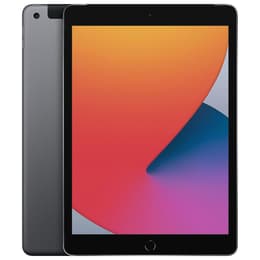
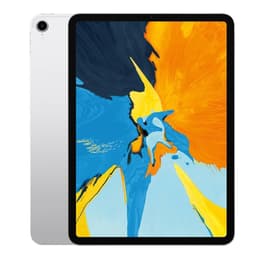

iPad 8 (2020, A12 series) vs iPad Pro (2018, A12 series)

iPad 8 (2020, A12 series)
Starting at

Refurbished price:A$231.00

Versus A$409.00 new

See options
iPad Pro (2018, A12 series)
Starting at

Refurbished price:A$466.00

Versus A$949.00 new

See options

Ratings

The iPad 2020 (8th Generation) and the iPad Pro 2018 represent different tiers within Apple's tablet lineup, despite both utilizing processors from the A12 series. Released in 2020, the standard iPad offers a more accessible experience, while the iPad Pro 2018, launched two years prior, was designed for professional use with advanced features. Both devices run on Apple's iPadOS, providing a consistent software experience, but they diverge significantly in display technology, performance capabilities, and accessory support, catering to distinct user needs.

Scores

Durability

When considering the longevity of these devices, their respective release dates and original positioning play a significant role in expected software support and overall practical lifespan.

  • Release Timeline: The iPad 2020, being a newer device, benefits from a later starting point for software updates. The iPad Pro 2018, released two years earlier, will likely reach its end-of-software-support sooner.
  • OS Support Duration: While both devices have received consistent iPadOS updates since their release, the iPad 2020 is expected to receive major iPadOS updates for approximately one to two years longer than the iPad Pro 2018. This means the iPad 2020 will maintain compatibility with the latest features and security patches for a longer period.
  • Practical Lifespan: Both iPads are built with durable materials, featuring aluminum backs. However, the iPad Pro 2018's more advanced internal components and display technology might offer a more robust hardware experience for demanding tasks over time, even as software support wanes. Users on Reddit have noted that the 2018 iPad Pro still performs well years after its release, with some considering battery life as the main reason for a potential upgrade.

Release year

2020

2018

Compatible with latest Update

Yes

Yes

Operating system

iPadOS

iPadOS

Minimum system requirements (iPadOS)

iPadOS 18

iPadOS 18

Performance

The performance capabilities of these two iPads, while both featuring A12-series processors, are tailored for different usage scenarios due to variations in their chip architecture.

  • Processor Capabilities: The iPad 2020 is equipped with the A12 Bionic chip, which provides a significant performance boost over its predecessors, making it capable of handling everyday tasks, web browsing, media consumption, and many popular games smoothly. The iPad Pro 2018, on the other hand, features the A12X Bionic chip, an enhanced version with more CPU and GPU cores, designed for more demanding professional applications and intensive multitasking. This results in noticeably higher performance for complex workloads.
  • Multitasking and Demanding Apps: The iPad Pro 2018's more powerful processor and potentially higher RAM configurations (up to 6GB compared to 3GB in the iPad 2020) allow it to manage multiple applications simultaneously and run graphically intensive games or creative software with greater fluidity. The iPad 2020 handles multitasking and many apps well, but may show limitations with very heavy workloads or advanced video editing.
  • Storage Options: The iPad 2020 offers storage options of 32GB and 128GB. The iPad Pro 2018 provides a wider range of higher storage capacities, starting from 64GB and going up to 1TB, catering to users who require substantial space for large files, projects, or extensive media libraries.
  • Battery Behavior: Both devices are designed to offer all-day battery life under typical usage. The iPad 2020 is rated for approximately 10 hours of web surfing or video playback. The iPad Pro 2018 also offers strong battery endurance, with some tests showing over 13 hours of video playback. However, heavy use of its more powerful processor and high refresh rate display can lead to faster battery drain.

Memory (GB)

3 GB

4 GB

Processor

Apple A12 Bionic

Apple A12X Bionic

Screen quality

The visual experience on these two iPads differs significantly, primarily due to their distinct display technologies and features.

  • Display Technology and Clarity: The iPad 2020 features a 10.2-inch Retina IPS LCD display with a resolution of 2160 x 1620 pixels, resulting in a pixel density of 264 pixels per inch (ppi). This provides clear and vibrant visuals for general use, media consumption, and web browsing. The iPad Pro 2018, available in 11-inch and 12.9-inch sizes, boasts a Liquid Retina IPS LCD display with higher resolutions (2388 x 1668 for 11-inch, 2732 x 2048 for 12.9-inch) and the same 264 ppi. The Liquid Retina display offers more advanced color accuracy with P3 wide color support and True Tone technology, which adjusts the display's white balance to match the ambient light.
  • Brightness and Outdoor Use: The iPad 2020 offers a typical brightness of 500 nits, making it suitable for indoor and some outdoor use. The iPad Pro 2018 features a higher peak brightness of 600 nits, which can improve visibility in brighter outdoor environments.
  • Refresh Rate and Smoothness: A key differentiator is the refresh rate. The iPad 2020 has a standard 60Hz refresh rate. The iPad Pro 2018 includes ProMotion technology, which allows for an adaptive refresh rate up to 120Hz. This results in noticeably smoother scrolling, more responsive touch input, and a more fluid experience when drawing with the Apple Pencil or playing games.

Resolution

2160 x 1620

2388 x 1668

True Tone

No

Yes

Promotion

No

Yes

Screen type

Retina display

Liquid Retina display

Pixel density

264ppp

264ppp

Brightness

500 nits brightness

600 nits brightness

Sound quality

Speakers

Stereo speakers

Four speaker audio

Audiovisual

The camera systems on these two iPads reflect their intended uses, with the iPad Pro 2018 offering more advanced capabilities for photography and video.

  • Rear Camera: The iPad 2020 features an 8-megapixel wide rear camera capable of recording 1080p video at 30 frames per second. This camera is suitable for casual photos, document scanning, and augmented reality applications. The iPad Pro 2018 comes with a 12-megapixel wide rear camera with an f/1.8 aperture, offering better detail and low-light performance, and supports 4K video recording at 30 or 60 frames per second.
  • Front Camera: For video calls and selfies, the iPad 2020 includes a 1.2-megapixel FaceTime HD front camera. The iPad Pro 2018 is equipped with a 7-megapixel TrueDepth front camera, which enables Face ID for secure authentication and supports Portrait mode for selfies.
  • Audio Quality: The iPad 2020 has stereo speakers located at the bottom, providing adequate sound for media consumption. The iPad Pro 2018 features a quad-speaker audio system, delivering a richer and more immersive sound experience, especially when holding the tablet in landscape orientation. Both devices include microphones for calls and recordings. The iPad 2020 retains a 3.5mm headphone jack, which is absent on the iPad Pro 2018.

Miscellaneous

Beyond core performance and display, several practical elements differentiate the iPad 2020 and iPad Pro 2018, impacting user experience and accessory compatibility.

  • Connectivity Options: Both iPads support Wi-Fi (802.11ac) and Bluetooth. The iPad 2020 uses Bluetooth 4.2, while the iPad Pro 2018 features the newer Bluetooth 5.0, offering improved range and stability with compatible accessories. Cellular models of both devices offer LTE connectivity.
  • Port Types: The iPad 2020 utilizes Apple's proprietary Lightning port for charging and accessories. The iPad Pro 2018 was a significant shift, adopting a USB-C port, which offers greater versatility for connecting to external displays, cameras, and other peripherals, aligning with more universal standards.
  • Biometric Authentication: The iPad 2020 relies on Touch ID, an integrated fingerprint sensor in the Home button, for secure unlocking and purchases. The iPad Pro 2018 introduced Face ID, using its TrueDepth camera system for facial recognition, allowing for a full-screen design without a physical Home button.
  • Accessory Support: The iPad 2020 supports the 1st generation Apple Pencil, which charges via the Lightning port, and the Smart Keyboard. The iPad Pro 2018 supports the 2nd generation Apple Pencil, which magnetically attaches to the side for charging and pairing, and the Smart Keyboard Folio.
  • Weight and Dimensions: The iPad 2020 (10.2-inch) measures 250.6 x 174.1 x 7.5 mm and weighs around 490-495g. The iPad Pro 2018 is notably thinner at 5.9 mm. The 11-inch model weighs approximately 468-470g, while the 12.9-inch model is heavier at around 631-633g. The thinner bezels on the iPad Pro 2018 also contribute to a more modern aesthetic.

Weight

490 oz

468 oz

Width

17.41 in

17.85 in

Height

25.06 in

24.76 in

Depth

0.75 in

0.59 in

Screen size (in)

10.2

11

Network

Wi-Fi

Wi-Fi

Carrier compatibility

Without SIM Port

Without SIM Port

Wi-Fi version

Wi-Fi 6 802.11a/b/g/n/ac

Wi-Fi 6 802.11a/b/g/n/ac

Bluetooth version

Bluetooth 4.2

Bluetooth 5.0

Face ID

No

Yes

Touch ID

Yes

No

Connector

Lightning connector

USB Type-C

The iPad 2020 and iPad Pro 2018, while both capable tablets, cater to different user expectations and workflows. User sentiment often highlights the iPad Pro 2018's enduring performance and advanced display as significant advantages, with many users on platforms like Reddit still finding it highly capable years after its release. Criticisms for the iPad Pro 2018 sometimes revolve around its battery life under heavy load and the initial transition to USB-C and the 2nd Gen Apple Pencil, which required new accessories. The iPad 2020 is frequently praised for its solid performance for everyday tasks and its continued support for the 1st Gen Apple Pencil and Smart Keyboard, making it a reliable option. Its main criticisms often point to its older design with larger bezels and less advanced display technology compared to Pro models.

Users prioritizing a fluid visual experience, advanced multitasking capabilities, and a more versatile port for professional accessories will find the iPad Pro 2018 well-suited to their needs. Its ProMotion display and more powerful processor are beneficial for creative work, demanding applications, and those who value a modern design with Face ID. Conversely, users seeking a dependable tablet for general productivity, media consumption, and light creative tasks will find the iPad 2020 to be a practical choice. It offers a familiar experience with Touch ID and retains the 3.5mm headphone jack, which some users prefer. Both models offer a gateway into the iPadOS ecosystem, and opting for a quality-assured refurbished option for either device can provide an eco-friendly alternative to purchasing new, extending the life cycle of these capable tablets.

See all articles

Our recent comparisons