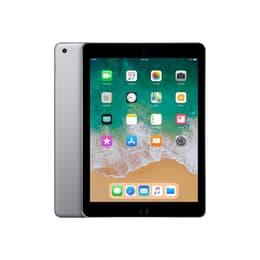
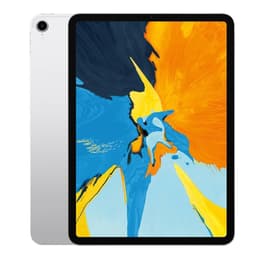

iPad 6 (2018, A10 series) vs iPad Pro (2018, A12 series)

iPad 6 (2018, A10 series)
Starting at

Refurbished price:A$143.00

Versus A$439.00 new

See options
iPad Pro (2018, A12 series)
Starting at

Refurbished price:A$466.00

Versus A$949.00 new

See options

Ratings

The iPad 2018 (6th generation) and the iPad Pro 2018 (11-inch and 12.9-inch models) represent distinct tiers within Apple's tablet offerings from that year. While both devices run on the iPadOS operating system, the iPad Pro 2018 introduced a significantly more advanced design and internal architecture, positioning it for demanding professional workflows, whereas the standard iPad 2018 was designed as a versatile and accessible option for general use and education. The primary differentiators lie in their display technology, processing power, and accessory compatibility.

Scores

Durability

When considering the longevity of these tablets, several factors come into play, including their release timelines, software support, and repairability.

  • Release Timeline and OS Support: The iPad 2018 was released in March 2018, while the iPad Pro 2018 models followed in October 2018. Both devices have received consistent iPadOS updates since their release. Historically, Apple provides around 5-7 years of major OS updates for its devices. As of the current date (April 2026), both models are still receiving updates, with the iPad Pro 2018 potentially having a slightly longer update window due to its later release and more powerful processor.
  • Repairability: The iPad 2018 received a repairability score of 2 out of 10 from iFixit, largely due to the extensive use of adhesive, making battery replacements and other repairs challenging. While the iPad Pro 2018 also uses adhesive, its design, particularly the separate digitizer panel on the standard iPad, can sometimes make screen repairs for the non-Pro model less complex in specific scenarios.
  • Expected Practical Lifespan: Both devices are known for their robust build quality. Users report that the iPad 2018 remains perfectly usable for everyday tasks even years after its release. The iPad Pro 2018, with its more powerful internal components, is noted by users to still be fast and reliable, with many expecting it to remain highly functional for several more years.

Release year

2018

2018

Compatible with latest Update

No

Yes

Operating system

iPadOS

iPadOS

Minimum system requirements (iPadOS)

iPadOS 17

iPadOS 18

Performance

The performance capabilities of these two iPad models show a notable difference, primarily driven by their internal processing units and RAM configurations.

  • Processor Capabilities: The iPad 2018 is equipped with a processor that handles everyday tasks, web browsing, and most applications smoothly. It provides a responsive experience for general use and light gaming. The iPad Pro 2018, however, features a significantly more powerful processor designed for demanding applications, advanced multitasking, and graphic-intensive tasks like video editing and high-end gaming.
  • Multitasking and Responsiveness: The iPad 2018 comes with 2 GB of RAM, which is sufficient for typical multitasking but may lead to apps reloading more frequently when switching between many demanding applications. The iPad Pro 2018 offers 4 GB or 6 GB of RAM (depending on the storage configuration), providing a smoother experience for heavy multitasking and keeping more applications active in memory.
  • Storage Options: The iPad 2018 was available with 32 GB or 128 GB of internal storage. The iPad Pro 2018 offered more generous storage options, starting from 64 GB and going up to 1 TB, catering to users with larger storage needs for media, projects, and applications.

Memory (GB)

2 GB

4 GB

Processor

Apple A10 Fusion

Apple A12X Bionic

Screen quality

The display is a key area where the iPad 2018 and iPad Pro 2018 diverge, offering different visual experiences tailored to their intended uses.

  • Display Technology and Resolution: The iPad 2018 features a 9.7-inch Retina IPS LCD display with a resolution of 2048 x 1536 pixels, providing clear and vibrant visuals for general content consumption. The iPad Pro 2018 models, available in 11-inch and 12.9-inch sizes, boast Liquid Retina IPS LCD displays with higher resolutions (2388 x 1668 for 11-inch, 2732 x 2048 for 12.9-inch) and advanced features.
  • Brightness and Color: Both displays offer good brightness, with the iPad Pro 2018 generally achieving higher peak brightness levels (600 nits) compared to the iPad 2018 (500 nits), which can be beneficial for outdoor visibility. The iPad Pro also supports a wider color gamut (P3) and True Tone technology for adaptive white balance, resulting in more accurate and dynamic color reproduction.
  • Refresh Rate and Lamination: A significant difference is the iPad Pro 2018's ProMotion technology, offering an adaptive refresh rate up to 120Hz for smoother scrolling and more responsive interactions, a feature absent on the standard iPad 2018. The iPad Pro's display is also fully laminated with an anti-reflective coating, reducing the gap between the glass and the LCD, which can enhance the visual experience and reduce reflections. The iPad 2018's display is not fully laminated.

Resolution

2048 x 1536

2388 x 1668

True Tone

No

Yes

Promotion

No

Yes

Screen type

Retina display

Liquid Retina display

Pixel density

264ppp

264ppp

Brightness

500 nits brightness

600 nits brightness

Sound quality

Speakers

Stereo speakers

Four speaker audio

Audiovisual

The camera systems on these two iPad models reflect their different design philosophies, with the Pro model offering more advanced capabilities for photography and video.

  • Rear Camera Performance: The iPad 2018 includes an 8-megapixel rear camera capable of recording 1080p HD video at 30 frames per second. It is suitable for casual photography and document scanning. The iPad Pro 2018 features a more capable 12-megapixel rear camera with a wider aperture, optical image stabilization, and the ability to record 4K video at up to 60 frames per second, providing greater detail and flexibility for creative work.
  • Front Camera and Video Calls: For front-facing cameras, the iPad 2018 has a 1.2-megapixel FaceTime HD camera for 720p video calls. The iPad Pro 2018 significantly upgrades this with a 7-megapixel TrueDepth camera, enabling 1080p HD video recording at 30 or 60 frames per second, along with advanced features like Portrait mode and Face ID for secure authentication.
  • Audio Experience: The iPad 2018 features stereo speakers. The iPad Pro 2018 enhances the audio experience with a four-speaker system that adjusts sound based on the device's orientation, providing a more immersive soundstage for media consumption. Both devices include microphones for calls and recording.

Miscellaneous

Beyond core performance and display, several practical elements differentiate these two iPad models, impacting their usability and accessory ecosystem.

  • Connectivity and Ports: Both devices support Wi-Fi (802.11ac) and Bluetooth. The iPad 2018 uses a Lightning port for charging and data transfer, and retains a 3.5mm headphone jack. The iPad Pro 2018 marked a significant shift by adopting a USB-C port, offering greater versatility for connecting to external displays, cameras, and other accessories, but it removed the traditional headphone jack.
  • Biometric Security: The iPad 2018 relies on Touch ID, an integrated fingerprint sensor in the home button, for secure unlocking and authentication. The iPad Pro 2018 introduced Face ID, using its TrueDepth camera system for facial recognition, allowing for secure unlocking in any orientation.
  • Design and Accessories: The iPad 2018 maintains a traditional iPad design with bezels and a home button, supporting the 1st generation Apple Pencil. The iPad Pro 2018 features a redesigned, more modern aesthetic with slimmer bezels and no home button, supporting the 2nd generation Apple Pencil which attaches magnetically and charges wirelessly. The iPad Pro 2018 is also thinner and lighter for its screen size compared to previous Pro models.

Weight

469 oz

468 oz

Width

16.95 in

17.85 in

Height

24 in

24.76 in

Depth

0.75 in

0.59 in

Screen size (in)

9.7

11

Network

Wi-Fi

Wi-Fi

Carrier compatibility

Without SIM Port

Without SIM Port

Wi-Fi version

Wi-Fi 6 802.11a/b/g/n/ac

Wi-Fi 6 802.11a/b/g/n/ac

Bluetooth version

Bluetooth 4.2

Bluetooth 5.0

Face ID

No

Yes

Touch ID

Yes

No

Connector

Lightning connector

USB Type-C

User sentiment for the iPad 2018 often highlights its strong value proposition for general use. Many praise its reliable performance for everyday tasks, web browsing, and media consumption, noting that it remains a capable device years after its release. Criticisms sometimes point to its less advanced display technology and limited RAM compared to more premium models, which can affect performance with very demanding applications.

The iPad Pro 2018, on the other hand, is frequently lauded for its powerful performance, advanced display, and modern design. Users appreciate its ability to handle intensive creative and productivity tasks, with many noting its impressive longevity and continued relevance. Some common concerns include the transition to USB-C, which required new accessories for some users, and the absence of a headphone jack.

Users prioritizing a versatile and accessible tablet for general productivity, education, and media consumption will find the iPad 2018 well-suited to their needs. Its support for the 1st generation Apple Pencil makes it a good option for note-taking and casual drawing. Users who require a more powerful device for professional creative work, advanced multitasking, or high-end gaming, and who benefit from a more immersive display and modern accessory ecosystem, will likely lean toward the iPad Pro 2018. Its USB-C connectivity and 2nd generation Apple Pencil support offer a more integrated and flexible workflow for power users.

Both models, available as quality-assured refurbished options, present an eco-friendly alternative for consumers seeking capable tablets without purchasing new. This allows for informed choices that align with both performance needs and sustainable practices.

See all articles

Our recent comparisons