Compare models
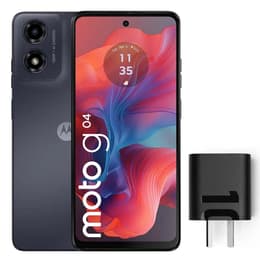
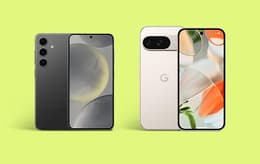
Google Pixel 9a vs Motorola Moto G04
- 1-year warranty
- Free standard shipping
- Free 30-day returns
Differences at a glance
The Google Pixel 9a (2025) and the Motorola Moto G04 (2024) are smartphone models designed for distinct tiers of daily mobile usage. While the Google Pixel 9a targets users seeking modern processing power and long-term software support, the Motorola Moto G04 focuses on delivering essential communications functionality for everyday tasks. Both devices run on different iterations of the Android operating system, with the Pixel model offering an extensive multi-year update timeline.
Available Models
Colour
Storage
Scores
Durability
When examining hardware longevity and software support, both devices approach lifecycle sustainability from different angles, influencing how long they remain viable daily drivers.
- Software support duration: The Google Pixel 9a provides extended operating system upgrades spanning several years, whereas the Motorola Moto G04 features a shorter security patch schedule typical of entry-level devices.
- Build materials and physical protection: The Google Pixel 9a incorporates advanced water resistance ratings and dust sealing, while the Motorola Moto G04 relies on splash-resistant construction suitable for basic handling.
- Expected practical lifespan: The Google Pixel 9a retains sufficient performance headroom for long-term daily utility, whereas the Motorola Moto G04 serves immediate communication needs effectively over a standard device lifecycle.
Release year
2025
2024
Operating system
Android
Android
Foldable
No
No
Performance
Daily operation and multitasking capabilities vary significantly between these two models based on their internal architecture and memory configurations.
- App loading and multitasking: The Google Pixel 9a handles demanding applications, split-screen multitasking, and mobile gaming smoothly, while the Motorola Moto G04 manages standard messaging, web browsing, and calling with basic efficiency.
- Storage capacity: The Google Pixel 9a offers larger baseline storage options for extensive media files, whereas the Motorola Moto G04 provides lighter storage configurations tailored to minimal app usage.
- Battery behavior: Both devices easily sustain a full day of standard use on a single charge, though their charging speeds and power efficiency profiles differ during intensive tasks.
Screen quality
The viewing experiences differ notably due to the underlying display technologies and visual refresh capabilities built into each handset.
- Display technology: The Google Pixel 9a utilizes an OLED panel delivering deep contrast and vibrant colors, while the Motorola Moto G04 features an IPS LCD screen suited for basic content consumption.
- Refresh rate and fluidity: The Google Pixel 9a supports a high refresh rate for smooth scrolling animations, whereas the Motorola Moto G04 uses a standard refresh rate suited for static reading and browsing.
- Outdoor visibility: The Google Pixel 9a achieves high peak brightness levels for clear visibility under direct sunlight, while the Motorola Moto G04 performs adequately in indoor or shaded environments.
Resolution
1080x2424
720 x 1612
Screen type
P-OLED
IPS LCD
Audiovisual
Multimedia capture and media playback capabilities reflect the varied hardware design philosophies of each manufacturer.
- Photography performance: The Google Pixel 9a includes advanced multi-lens camera software for detailed low-light and everyday photos, while the Motorola Moto G04 provides a single primary sensor for basic snapshot needs.
- Video recording: The Google Pixel 9a supports high-resolution stabilization features for crisp video clips, whereas the Motorola Moto G04 handles casual, stationary video recording at standard definition.
- Audio output: The Google Pixel 9a features balanced stereo speakers for media playback, while the Motorola Moto G04 relies on a single loudspeaker configuration alongside a physical headphone jack.
Miscellaneous
Practical daily usability elements such as connectivity standards and physical handling characteristics shape the overall user experience.
- Connectivity options: The Google Pixel 9a supports modern 5G networks and advanced Wi-Fi standards, whereas the Motorola Moto G04 is restricted to 4G LTE connectivity.
- Biometric security: The Google Pixel 9a integrates secure under-display fingerprint recognition and facial scanning, while the Motorola Moto G04 utilizes a side-mounted fingerprint sensor.
- Physical dimensions: The Google Pixel 9a balances a compact footprint with sturdy handling weight, whereas the Motorola Moto G04 offers a lightweight plastic build that is easy to hold with one hand.
Weight
186 oz
179 oz
Screen size (in)
6.3
6.56
Network
5G
4G
SIM card
Physical SIM + eSIM
Dual Physical SIM
Carrier compatibility
Unlocked
Unlocked
What the community thinks
User feedback from online communities highlights distinct preferences for each device based on individual daily requirements. Owners of the Google Pixel 9a frequently praise its responsive system performance, bright display quality, and reliable multi-lens camera outputs. At the same time, users note that intensive gaming can generate warmth during extended sessions. Conversely, Moto G04 users appreciate the straightforward interface, lightweight build, and inclusion of a traditional headphone jack, while acknowledging that processing speeds and camera capabilities remain limited to basic tasks.
Users prioritizing photography, high-resolution media consumption, and long-term software updates will find the Google Pixel 9a well-suited to their needs. On the other hand, users seeking a simple secondary phone for calls, messaging, and light browsing may lean toward the Motorola Moto G04. For those exploring sustainable hardware choices, a quality-assured refurbished option from Back Market provides an eco-friendly alternative that extends device life cycles without compromising on performance standards. Ultimately, the right choice depends on balancing daily performance demands with long-term software expectations.