
Galaxy A55 vs Galaxy Z Fold6

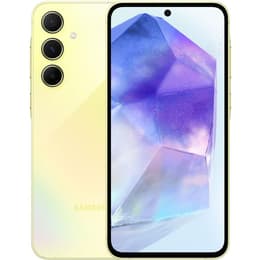
Galaxy A55
Galaxy A55
Starting at

Refurbished price:A$339.00

Versus A$699.00 new

See options
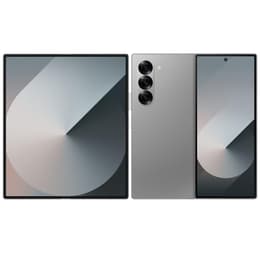
Galaxy Z Fold6
Galaxy Z Fold6
Starting at

Refurbished price:A$1,090.24

Versus A$2,749.00 new

See options

Ratings

The Samsung Galaxy A55 and the Samsung Galaxy Z Fold6 represent distinct approaches within the smartphone market. The Galaxy A55, released in March 2024, offers a traditional smartphone experience with a focus on balanced features and robust everyday performance. In contrast, the Galaxy Z Fold6, launched in July 2024, introduces a foldable design, fundamentally altering its form factor to provide a larger, tablet-like display for enhanced productivity and media consumption. Both devices operate on the Android platform, utilizing Samsung's One UI for their user interface, but cater to different user priorities through their unique designs and capabilities.

Scores

Durability

The expected lifespan and software support differ between these two Samsung smartphones, influencing their long-term usability.

  • Release Timeline and Software Support: The Galaxy A55 was released in March 2024 and is promised four major Android OS upgrades and five years of security updates. The Galaxy Z Fold6, released in July 2024, offers an extended software support window, including seven years of Android OS upgrades and seven years of security updates.
  • Physical Durability: The Galaxy A55 features an aluminum frame and Corning Gorilla Glass Victus+ protection on its display, along with an IP67 rating for dust and water resistance. The Galaxy Z Fold6 boasts a more durable hinge mechanism and an IPX8 water resistance rating, though it lacks official dust resistance. Its cover screen is protected by Gorilla Glass Victus 2, while the inner foldable display uses Ultra Thin Glass.
  • Repairability and Practical Lifespan: The Galaxy A55 has a higher repairability score, indicating it is relatively easy to disassemble and replace parts. The Galaxy Z Fold6 has a lower repairability score due to its complex foldable screen, intricate hinge mechanism, and extensive use of adhesive, making repairs more challenging. Users can expect the Galaxy A55 to remain a capable device for several years, while the Z Fold6, with its longer software support and advanced build, is designed for extended use, though the unique foldable form factor introduces different considerations for long-term mechanical durability.

Release year

2024

2024

Operating system

Android

Android

Foldable

No

Yes

Performance

Performance capabilities vary significantly between the Galaxy A55 and the Galaxy Z Fold6, impacting how each device handles demanding tasks and multitasking.

  • Processing Power: The Galaxy A55 is equipped with a capable processor that provides smooth performance for everyday applications and moderate gaming. The Galaxy Z Fold6 features a high-end processor designed for demanding apps, intensive multitasking, and advanced mobile gaming, offering a more responsive experience across the board.
  • Multitasking and Storage: The Galaxy A55 comes with 8GB or 12GB of RAM and offers 128GB or 256GB of internal storage, which is expandable via a microSD card up to 1TB. The Galaxy Z Fold6 typically features 12GB or 16GB of RAM and is available with 256GB, 512GB, or 1TB of internal storage, but it does not support microSD card expansion. The Z Fold6 excels in running multiple applications simultaneously and switching between them without noticeable slowdowns, particularly benefiting from its larger internal display.
  • Battery Behavior: The Galaxy A55 houses a 5000mAh battery, generally providing reliable power for a full day of typical use, with some users reporting 7-8 hours of screen-on time. The Galaxy Z Fold6 has a 4400mAh battery, and while user experiences can vary, it generally offers solid battery life for a full day, even with its dual-screen setup, though heavy use of the main display can lead to faster drain.

Memory (GB)

8 GB

12 GB

Screen quality

The display experience is a primary differentiator, with each device offering distinct advantages based on its form factor.

  • Display Technology and Clarity: Both devices feature vibrant AMOLED displays. The Galaxy A55 has a 6.6-inch Super AMOLED display with Full HD+ resolution (1080x2340 pixels), offering deep blacks and rich colors. The Galaxy Z Fold6 boasts two Dynamic AMOLED 2X displays: a 6.3-inch cover screen with a resolution of 968x2376 pixels and a larger 7.6-inch foldable inner screen with a resolution of 2160x1856 pixels, both providing sharp visuals.
  • Brightness and Refresh Rate: Both devices offer a 120Hz adaptive refresh rate for smooth scrolling and interaction. The Galaxy A55's display can reach a peak brightness of 1000 nits, providing good visibility in various lighting conditions. The Galaxy Z Fold6's displays offer a significantly higher peak brightness of up to 2600 nits, ensuring excellent visibility even in bright outdoor sunlight.
  • Screen Size and Viewing Experience: The Galaxy A55 provides a traditional large screen experience suitable for everyday media consumption and browsing. The Galaxy Z Fold6 offers a compact experience when folded, and when unfolded, its tablet-like main display provides an immersive viewing experience ideal for multitasking, reading, and watching videos, though some users note the aspect ratio can lead to letterboxing for certain content.

Resolution

1080x2340

1856 x 2160

Audiovisual

The camera systems on the Galaxy A55 and Galaxy Z Fold6 are designed for different user expectations and photographic needs.

  • Rear Camera System: The Galaxy A55 features a versatile triple-camera setup with a 50MP main sensor with optical image stabilization (OIS), a 12MP ultrawide lens, and a 5MP macro lens. It performs well in good lighting, producing sharp and detailed photos, and offers decent low-light performance with Night Mode. The Galaxy Z Fold6 also has a triple rear camera system, including a 50MP main sensor with OIS, a 12MP ultrawide lens, and a 10MP telephoto lens with 3x optical zoom. Its cameras are capable of producing excellent photos with vivid colors and improved low-light capabilities.
  • Video Recording and Selfies: The Galaxy A55 supports 4K video recording at 30 frames per second with both its main and front cameras. The Galaxy Z Fold6 offers more advanced video capabilities, including 8K video recording and 4K at 60 frames per second. For selfies, the A55 has a 32MP front camera, while the Z Fold6 features a 10MP camera on its cover screen and a 4MP under-display camera beneath the main foldable screen.
  • User Sentiment: Users generally find the Galaxy A55's cameras acceptable for its segment, though some note occasional oversaturation in colors. While the Galaxy Z Fold6's cameras are strong, some users report that its performance, while robust, may not always match the absolute top-tier of non-foldable flagship devices in all scenarios, particularly in very challenging low-light conditions.

Miscellaneous

Beyond core features, several practical elements differentiate these two devices in daily use.

  • Connectivity and Ports: Both smartphones support 5G connectivity. The Galaxy A55 includes Wi-Fi 6 and Bluetooth 5.3, while the Galaxy Z Fold6 offers newer standards like Wi-Fi 6E or Wi-Fi 7 and Bluetooth 5.4. Both devices utilize a USB-C port for charging and data transfer, with the A55 featuring USB-C 2.0 and the Z Fold6 offering faster USB-C 3.2. Neither device includes a traditional 3.5mm headphone jack.
  • Biometric Security and Dimensions: The Galaxy A55 features an in-display optical fingerprint sensor for secure unlocking. The Galaxy Z Fold6 incorporates a side-mounted fingerprint sensor. Both devices also offer face recognition. In terms of physical characteristics, the Galaxy A55 weighs 213g and measures 161.1 x 77.4 x 8.2 mm. The Galaxy Z Fold6, when folded, measures 153.5 x 68.1 x 12.1 mm and weighs 239g, becoming significantly thinner at 5.6 mm when unfolded. The Z Fold6 is heavier but offers a more compact footprint when closed and a much larger screen when open.
  • Build Materials and Additional Features: The Galaxy A55 features a metal frame and a glass back, contributing to a solid feel. The Galaxy Z Fold6 utilizes an Armor Aluminum frame, providing enhanced durability for its foldable design. A notable additional feature of the Galaxy Z Fold6 is its support for the S Pen on the main foldable display, enhancing its productivity capabilities, though the S Pen is typically sold separately.

Weight

213 oz

239 oz

Screen size (in)

6.6

7.6

Network

5G

5G

SIM card

Physical SIM

Dual Physical SIM + eSIM

Carrier compatibility

Unlocked

Unlocked

User feedback for the Galaxy A55 often praises its vibrant display, reliable battery life for daily use, and acceptable camera performance for its price point. Users appreciate its solid build quality and the consistent software experience provided by Samsung's One UI. However, some criticisms include potential oversaturation in photos and charging speeds that are not as fast as some competitors.

For the Galaxy Z Fold6, common praise centers on its innovative and immersive dual displays, powerful performance for demanding tasks, and the versatility offered by its foldable form factor. The improved design and hinge mechanism are also frequently highlighted. Conversely, some users note that while its cameras are good, they may not always reach the absolute peak performance of some non-foldable flagship devices, and heavy use of the large inner screen can impact battery endurance.

Users prioritizing a balanced, reliable smartphone experience with good software longevity and a traditional form factor may find the Galaxy A55 well-suited to their needs. It serves everyday users, students, and those who value expandable storage. Conversely, users seeking a versatile device for productivity, immersive media consumption, and advanced multitasking, who appreciate an innovative foldable design, may lean toward the Galaxy Z Fold6. This device is often preferred by professionals, power users, and those who desire a tablet-like experience in a pocketable form factor. Both devices offer compelling features, and considering a quality-assured refurbished option can provide an eco-friendly alternative for either model.


See all articles

Our recent comparisons