Compare models

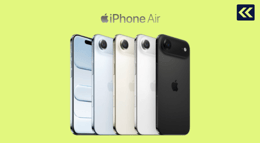
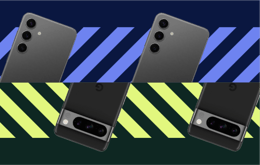
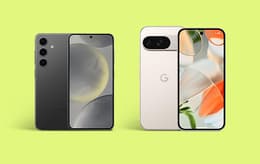
Google Pixel 9 vs iPhone Air

  • 1-year warranty
  • Free standard shipping
  • Free 30-day returns
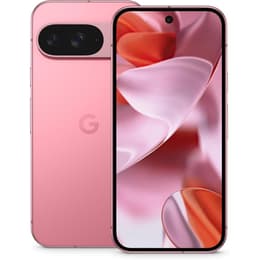
Google Pixel 9
Starting at

Refurbished price:A$640.00

Versus A$1,349.00 new

See options
iPhone Air
Starting at

Refurbished price:A$1,061.00

Versus A$1,899.00 new

See options

Differences at a glance

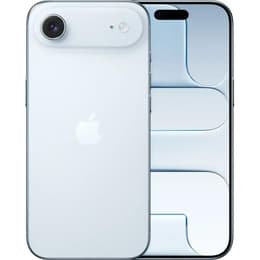
The Google Pixel 9 (2024) and the iPhone Air (2025) are distinctive smartphones that approach mobile technology from different directions, balancing everyday usability with modern design. The Google Pixel 9 runs on the Android operating system, emphasizing Google's suite of smart software features and integrated assistance. Meanwhile, the iPhone Air operates on Apple's iOS platform, focusing on a remarkably thin profile and streamlined hardware integration. While both serve as primary daily devices, they cater to varied preferences regarding form factor and software ecosystems.

Available Models

Colour

Storage (GB)

Scores

Durability

When evaluating the longevity and support timelines of these two devices, buyers will find distinct update commitments and structural approaches. Both models are built to receive multi-year operating system upgrades, though their launch timelines place them in slightly different generations of support longevity.

  • Software Support Duration: The Google Pixel 9 features an extended update policy offering multiple years of operating system and security patches, while the iPhone Air benefits from Apple's traditionally long software maintenance cycle.
  • Repairability and Build: Both handsets incorporate durable exterior materials designed to withstand daily wear, with repair accessibility varying slightly depending on authorized service availability and regional part distribution.
  • Expected Lifespan: Users can anticipate stable multi-year performance from both devices, supported by robust hardware architectures and consistent security updates.

Release year

2024

2025

Compatible with latest Update

Yes

Yes

Operating system

Android

iOS

Foldable

No

No

Performance

Day-to-day operation relies on efficient internal hardware to manage multitasking, gaming, and responsive application loading. Each device utilizes its own processor architecture to balance performance demands and energy consumption.

  • Multitasking and Responsiveness: Both models handle demanding applications, web browsing, and background tasks smoothly, aided by generous memory capacities that keep active processes readily accessible.
  • Storage Configurations: Multiple internal storage tiers are available across both lineups to accommodate personal media libraries, documents, and application data without external expansion slots.
  • Battery Behavior: Battery endurance varies under sustained heavy use, with power-efficient software optimization helping both devices sustain typical daily workflows before requiring a recharge.

Screen quality

Visual output is delivered through high-contrast OLED panels designed to provide clear text and vibrant media playback under diverse lighting conditions. Both screens offer responsive refresh rates for smooth scrolling and navigation.

  • Display Technology: The Google Pixel 9 utilizes a crisp OLED screen with high peak brightness levels, while the iPhone Air features a wide Super Retina XDR display with advanced outdoor contrast handling.
  • Refresh Rates: Both devices support high refresh rates up to 120Hz, ensuring fluid motion during gaming, animations, and general interface interaction.
  • Viewing Area: The Google Pixel 9 offers a compact 6.3-inch viewing footprint, whereas the iPhone Air provides a slightly larger 6.5-inch panel suitable for extended media consumption and reading.

Resolution

1080 x 2424

2736x1260

Screen type

OLED

Super Retina XDR

Audiovisual

Imaging capabilities on these smartphones cater to everyday photography, video recording, and clear audio capture during calls or media creation.

  • Camera Systems: The Google Pixel 9 employs a dual rear camera array including a primary and an ultra-wide sensor, whereas the iPhone Air utilizes a streamlined single high-resolution rear lens setup.
  • Low-Light and Video: Computational photography algorithms assist both models in capturing balanced images in challenging lighting conditions, alongside stable high-definition video recording.
  • Audio Output: Integrated microphone arrays and speaker systems deliver clear voice transmission for calls and balanced media playback for casual listening.

Main camera

50 megapixels

48 megapixels

Front camera

10.5 megapixels

18 megapixels

Miscellaneous

Practical physical characteristics, connectivity standards, and daily handling traits shape how each device fits into a user's routine.

  • Connectivity Standards: Both smartphones support modern fifth-generation cellular networks, advanced Wi-Fi protocols, and Bluetooth for reliable peripheral pairing.
  • Physical Dimensions: The Google Pixel 9 features a standard profile with traditional pocketability, while the iPhone Air emphasizes an ultra-slim chassis and reduced weight for lightweight handling.
  • Security Sensors: Secure biometric authentication is handled via integrated facial recognition and fingerprint scanning solutions depending on the model.

Weight

198 oz

165 oz

Screen size (in)

6.3

6.5

Network

5G

5G

SIM card

Physical SIM + eSIM

eSIM

Carrier compatibility

Unlocked

Unlocked

What the community thinks

User feedback for the Google Pixel 9 frequently highlights its capable camera suite, helpful artificial intelligence integrations, and comfortable ergonomics. Reviewers and everyday users note that its balanced size and reliable software make it a practical daily companion. At the same time, discussions surrounding the iPhone Air often center on its breakthrough slim profile, lightweight construction, and seamless integration within the Apple ecosystem. Some users point out trade-offs regarding single-lens camera limitations on the ultra-thin Apple model, while others appreciate the sleek physical design.

Users prioritizing an Android experience with versatile camera options and smart software features may prefer the Google Pixel 9. Conversely, users seeking an ultra-lightweight iOS device with a large, bright display often lean toward the iPhone Air. For those exploring sustainable purchasing routes, opting for a quality-assured refurbished option provides a practical and eco-friendly alternative. Ultimately, the choice depends on personal operating system preferences, desired physical dimensions, and daily usage priorities.