
Google Pixel 9 vs iPhone 13

Google Pixel 9
Google Pixel 9
Starting at

Refurbished price:A$717.00

Versus A$1,349.00 new

See options
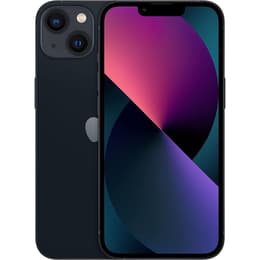
iPhone 13
iPhone 13
Starting at

Refurbished price:A$413.00

Versus A$1,099.00 new

See options

Ratings

The Google Pixel 9, released in August 2024, and the Apple iPhone 13, launched in September 2021, represent distinct approaches to smartphone design and functionality from their respective manufacturers. While both are capable devices, the Pixel 9 offers more recent hardware and software advancements, particularly in computational intelligence, whereas the iPhone 13 provides a well-established ecosystem with a focus on user experience. The Pixel 9 operates on Android, while the iPhone 13 runs on Apple's iOS.

Scores

Durability

The expected lifespan and software support differ between these two devices, largely due to their release timelines.

  • Release Timeline: The iPhone 13 was released in September 2021, making it an older model compared to the Google Pixel 9, which launched in August 2024. This age difference inherently impacts their remaining software support and overall practical lifespan.
  • Software Longevity: The Google Pixel 9 is designed to receive 7 years of software updates, extending its usability well into the future. The iPhone 13, while still receiving updates (compatible with iOS 26.4 as of March 2026), typically receives major iOS updates for approximately 5-6 years from its release.
  • Durability Features: Both devices feature an IP68 rating for dust and water resistance. The iPhone 13 incorporates a Ceramic Shield front cover for enhanced drop protection.

Release year

2024

2021

Compatible with latest Update

Yes

Yes

Operating system

Android

iOS

Foldable

No

No

Performance

Performance capabilities vary between the two smartphones, reflecting the generational gap in their internal components.

  • Processing Power: The Google Pixel 9, with its newer processor, handles demanding applications and multitasking with notable responsiveness. The iPhone 13, powered by its A15 Bionic chip, also offers smooth performance for everyday tasks and many intensive applications.
  • Multitasking and Responsiveness: The Pixel 9 typically includes 12GB of RAM, contributing to efficient multitasking and app management. The iPhone 13 features 4GB of RAM, which is optimized by iOS for smooth transitions and app handling.
  • Battery Behavior: The Pixel 9 features a 4700mAh battery, with user reviews indicating improved efficiency and reliable daily use, often lasting over 24 hours depending on usage. The iPhone 13, with a 3227mAh battery, generally provides a full day of use for most users, though heavy usage may require more frequent charging.

Memory (GB)

12 GB

4 GB

Screen quality

The display technologies in these phones offer distinct visual experiences, with the newer Pixel 9 incorporating more advanced features.

  • Display Technology and Clarity: Both devices feature OLED displays, providing deep blacks and vibrant colors. The iPhone 13 has a 6.1-inch Super Retina XDR OLED display with a resolution of 1170 x 2532 pixels and 460 ppi. The Pixel 9 offers a 6.3-inch OLED screen with a 1080 x 2424 resolution and 422 ppi.
  • Brightness and Refresh Rate: The Pixel 9 boasts a higher peak brightness of 2700 nits and an adaptive refresh rate that ranges from 60Hz to 120Hz, contributing to smoother scrolling and a more fluid visual experience. The iPhone 13 has a typical brightness of 800 nits and a peak of 1200 nits for HDR content, with a standard 60Hz refresh rate.
  • Viewing Experience: The Pixel 9's larger screen and higher refresh rate may appeal to users who prioritize immersive media consumption and gaming. The iPhone 13's display offers excellent color accuracy and contrast for everyday viewing.

Resolution

1080 x 2424

1170 x 2532

Screen type

OLED

Super Retina XDR OLED

Audiovisual

Both smartphones offer capable camera systems, but the Pixel 9 benefits from more recent sensor technology and computational photography advancements.

  • Rear Camera System: The Google Pixel 9 features a dual-lens rear camera setup with a 50MP main sensor and a 48MP ultra-wide lens with macro autofocus. The iPhone 13 has a dual 12MP camera system, including a main wide lens and an ultra-wide lens.
  • Photography Performance: The Pixel 9 is praised for its excellent low-light performance and computational photography, producing detailed images with good contrast. The iPhone 13's main camera also performs well in various lighting conditions, with features like Night mode and Smart HDR 4.
  • Video Capabilities: Both devices support 4K video recording at 60 frames per second. The iPhone 13 introduced Cinematic mode for video, offering a shallow depth of field effect. The Pixel 9 also offers strong video quality, with Night Sight Video being a notable feature.

Main camera

50 megapixels

12 megapixels

Front camera

10.5 megapixels

12 megapixels

Miscellaneous

Beyond core specifications, several practical elements differentiate the user experience of these two devices.

  • Connectivity and Ports: Both the Pixel 9 and iPhone 13 support 5G connectivity and Wi-Fi 6. The iPhone 13 uses a Lightning port for charging and data transfer, while the Pixel 9 features a USB-C port.
  • Biometric Security: The Pixel 9 incorporates an under-display ultrasonic fingerprint sensor, alongside face recognition. The iPhone 13 relies primarily on Face ID for biometric authentication.
  • Design and Handling: The Pixel 9 measures 152.8 x 72.0 x 8.5mm and weighs 198g. The iPhone 13 is slightly more compact at 146.7 x 71.5 x 7.65mm and weighs 173-174g. Both devices feature flat edges and premium build materials.

Weight

198 oz

173 oz

Screen size (in)

6.3

6,1

Network

5G

5G

SIM card

Physical SIM + eSIM

Physical SIM + eSIM

Carrier compatibility

Unlocked

Unlocked

User feedback for the Google Pixel 9 often highlights its significantly improved battery life compared to previous Pixel generations, along with its excellent camera performance, particularly in low-light conditions. Many users appreciate the clean Android experience and the long-term software support. Some criticisms occasionally point to potential inconsistencies in quality control or the absence of a telephoto lens on the base model.

For the iPhone 13, common praise centers on its reliable performance, the quality of its video recording capabilities, and the overall smooth user experience provided by iOS. While its battery life is generally considered good, some heavy users have expressed that it is not exceptional. A frequent point of discussion among users is the lack of a telephoto camera on the standard model.

Users prioritizing the latest software features, advanced computational photography, and extended software support may find the Google Pixel 9 well-suited to their needs. Those who value a highly optimized ecosystem, strong video capabilities, and a slightly more compact design might lean towards the iPhone 13. Both devices offer a quality-assured refurbished option, providing an eco-friendly alternative for consumers.
See all articles

Our recent comparisons