

Compare models
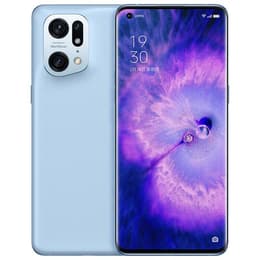
Google Pixel 9 Pro vs Oppo Find X5 Pro
- 1-year warranty
- Free standard shipping
- Free 30-day returns
Differences at a glance
The Google Pixel 9 Pro (2024) and the Oppo Find X5 Pro (2022) are premium Android smartphones that offer distinct design philosophies, software ecosystems, and hardware capabilities. While both devices cater to users seeking high-end functionality, the Google Pixel 9 Pro focuses on a compact form factor and deeply integrated software features, whereas the Oppo Find X5 Pro emphasizes a larger curved display and rapid charging technology. Choosing between these two devices depends heavily on individual preferences regarding software support, physical dimensions, and everyday user experience.
Available Models
Colour
Storage (GB)
Scores
Durability
Evaluating the lifespan and durability of these two devices reveals notable differences in release timelines, software maintenance schedules, and expected operational longevity.
- Software Support Duration: The Google Pixel 9 Pro benefits from an extended software update commitment spanning multiple years of major operating system upgrades, while the Oppo Find X5 Pro operates on a shorter remaining support window aligned with its earlier release year.
- Build and Repairability: Both models feature durable glass and metal construction with robust water and dust resistance ratings, though parts availability and repair frameworks vary depending on regional service networks.
- Practical Lifespan: Users seeking long-term operating system updates and sustained security patches will find the Google Pixel 9 Pro better positioned for extended ownership.
Release year
2024
2022
Compatible with latest Update
Yes
Yes
Operating system
Android
Android
Foldable
No
No
Performance
The internal hardware and software optimization of each device shape how they handle multitasking, gaming, and daily application loading.
- Multitasking and Memory: The Google Pixel 9 Pro pairs ample random access memory with streamlined software to switch between demanding applications smoothly, while the Oppo Find X5 Pro relies on high-tier memory configurations to maintain responsive performance during heavy workloads.
- App Responsiveness: Both smartphones handle resource-intensive tasks, navigation apps, and casual gaming without noticeable stutter, though thermal management under prolonged heavy use differs between their respective chassis designs.
- Battery Behavior: Battery endurance varies under heavy daily use, with each device employing different power management strategies to balance screen-on time and background process efficiency.
Screen quality
Display characteristics differ significantly in terms of physical dimensions, panel curvature, and viewing comfort for media consumption and outdoor visibility.
- Display Technology: The Google Pixel 9 Pro features a flat organic light-emitting diode screen with high pixel density, whereas the Oppo Find X5 Pro utilizes a larger curved panel with adaptive refresh rate capabilities.
- Outdoor Brightness: Both screens reach high peak luminance levels to ensure readability under direct sunlight, supported by automatic brightness adjustments and vibrant color reproduction.
- Smoothness: Both panels support high refresh rates up to 120 hertz, ensuring fluid scrolling through web pages and responsive touch interactions.
Resolution
1280x2856
1440 x 3216
Screen type
LTPO OLED
LTPO2 AMOLED
Audiovisual
Photography and video recording suites on both smartphones offer versatile lens configurations tailored to capturing everyday moments and challenging lighting conditions.
- Lens Array: Both devices incorporate primary wide-angle sensors and ultra-wide lenses, alongside specialized secondary lenses—a telephoto zoom on the Google Pixel 9 Pro and dedicated processing hardware on the Oppo Find X5 Pro.
- Low-Light Performance: Image processing software on both models effectively reduces noise and balances exposure in dim environments, producing clear night photographs.
- Media and Audio: Video recording remains stable and detailed across various resolutions, while built-in microphone arrays and stereo speakers deliver clear audio for calls and media playback.
Main camera
50 megapixels
50 megapixels
Front camera
42 megapixels
32 megapixels
Miscellaneous
Practical daily usability elements, including physical dimensions, connectivity standards, and biometric security features, define the ergonomic profile of each device.
- Handling and Dimensions: The Google Pixel 9 Pro offers a more compact, pocket-friendly flat profile, while the Oppo Find X5 Pro presents a wider, curved footprint that feels substantial in the hand.
- Biometric Security: Both models provide secure authentication methods through fast in-display fingerprint sensors and facial recognition capabilities.
- Connectivity: Modern wireless standards including 5G, fast Wi-Fi protocols, and Bluetooth connectivity are standard across both devices for reliable network pairing.
Weight
199 oz
218 oz
Screen size (in)
6.3
6.7
Network
5G
5G
SIM card
Physical SIM + eSIM
Physical SIM + eSIM
Carrier compatibility
Unlocked
Unlocked
What the community thinks
User feedback from online communities highlights distinct preferences for each smartphone. Owners of the Google Pixel 9 Pro frequently praise its compact handling, reliable camera output, and clean software experience, though some note that battery levels can drain quickly under intensive tasks. Conversely, users of the Oppo Find X5 Pro often commend its immersive curved display and fast charging speeds, while occasionally pointing out that software update cycles conclude sooner than newer market alternatives. Choosing between these quality-assured refurbished options depends on individual daily habits.
Users prioritizing a smaller physical footprint, extended software support windows, and straightforward software updates may prefer the Google Pixel 9 Pro. Meanwhile, users prioritizing a larger curved viewing area and rapid charging speeds will find the Oppo Find X5 Pro well-suited to their needs. Evaluating these core differences ensures a practical choice that aligns with personal usage priorities.