
Compare models
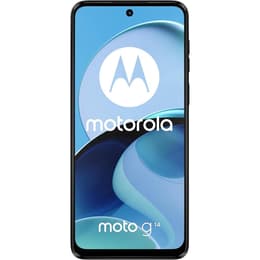
Google Pixel 9a vs Motorola Moto G14
- 1-year warranty
- Free standard shipping
- Free 30-day returns
Differences at a glance
The Google Pixel 9a (2025) and the Motorola Moto G14 (2023) are distinct smartphones designed for different tiers of mobile usage. While the Pixel 9a serves as a feature-rich mid-range device with advanced capabilities, the Moto G14 functions as an entry-level smartphone focused on essential daily functions. Both devices run the Android operating system, though they offer vastly different hardware platforms and long-term software support commitments.
Available Models
Colour
Storage
Scores
Durability
The Google Pixel 9a and Motorola Moto G14 differ significantly in their release timelines and expected software lifespans, influencing how long each device remains current.
- Software support duration: The Pixel 9a benefits from an extended software support window spanning multiple years of major operating system upgrades, whereas the Moto G14 provides a more modest update cycle covering essential security patches and a single platform upgrade.
- Hardware longevity: Built with sturdier frame materials and higher water resistance ratings, the Pixel 9a is structured to endure long-term daily wear, while the Moto G14 offers basic splash resistance suitable for casual use.
- Practical lifespan: Users tracking long-term utility will find that the Pixel 9a maintains its operational readiness over a greater number of years due to robust internal components and sustained security maintenance.
Release year
2025
2023
Operating system
Android
Android
Foldable
No
No
Performance
Under everyday conditions, these two smartphones handle workloads differently based on their internal processing configurations and system memory allocations.
- Multitasking and app switching: The Pixel 9a handles demanding applications, split-screen tasks, and heavy background processes smoothly thanks to its high-tier processor and generous RAM allocation, whereas the Moto G14 manages basic messaging, web browsing, and light social media apps reliably with its entry-level processor and smaller memory capacity.
- Storage capacity: The Pixel 9a ships with larger internal storage configurations, while the Moto G14 offers expandable storage via a microSD card slot for users who prefer physical media management.
- Battery behavior: Both devices feature large capacity batteries designed to easily complete a full day of typical mixed usage, though charging speeds vary with the Pixel supporting faster wired power replenishment.
Screen quality
Viewing experiences differ notably between the two models due to contrasting display panels and refresh rate technologies.
- Display technology: The Pixel 9a features an OLED panel that delivers deep black levels and vibrant color reproduction, while the Moto G14 utilizes an IPS LCD screen providing clear text and standard color accuracy.
- Smoothness and refresh rate: The Pixel 9a supports a high refresh rate for fluid scrolling and animations, whereas the Moto G14 sticks to a standard refresh rate suited for routine viewing tasks.
- Outdoor visibility: High peak brightness levels on the Pixel 9a allow for easier readability under direct sunlight, while the Moto G14 requires manually boosting brightness for comfortable outdoor usage.
Resolution
1080x2424
1080 x 2400
Screen type
P-OLED
IPS LCD
Audiovisual
Multimedia capabilities and camera hardware setups cater to different levels of photography and audio consumption preferences.
- Camera versatility: The Pixel 9a incorporates a capable multi-lens rear camera system paired with advanced computational photography software for crisp detail in low light, while the Moto G14 relies on a simpler primary sensor and macro lens configuration suited for basic daylight snapshots.
- Video and audio output: The Pixel 9a records stable video with wide dynamic range, whereas the Moto G14 features stereo speakers enhanced with spatial audio tuning for casual media streaming.
- Call quality: Both models include reliable microphone arrays that ensure clear voice transmission during standard phone calls and video chats.
Miscellaneous
Physical design traits and modern connectivity standards shape the everyday handling and utility of both smartphones.
- Connectivity standards: The Pixel 9a supports advanced 5G networks and modern Wi-Fi protocols for fast data transfers, while the Moto G14 operates primarily on 4G LTE networks.
- Physical ports and biometrics: The Moto G14 includes a traditional 3.5mm headphone jack, whereas the Pixel 9a relies entirely on wireless audio or USB-C adapters; both use secure biometric authentication methods such as face recognition and fingerprint sensors.
- Dimensions and handling: The Pixel 9a offers a balanced, lightweight footprint with a matte finish, complementing the slim profile and lightweight plastic frame of the Moto G14. As a sustainable choice, opting for a quality-assured refurbished option provides an eco-friendly alternative for conscious consumers.
Weight
186 oz
177 oz
Screen size (in)
6.3
6.5
Network
5G
4G
SIM card
Physical SIM + eSIM
Dual Physical SIM
Carrier compatibility
Unlocked
Unlocked
What the community thinks
User feedback from online communities highlights distinct advantages for each device depending on individual expectations. Owners of the Google Pixel 9a frequently praise its fluid display performance, reliable multi-lens camera output, and extended software roadmap. Conversely, users of the Motorola Moto G14 often note its straightforward interface, dependable daily battery retention, and the convenience of expandable storage via memory cards.
When deciding between these options, users prioritizing high-end processing, advanced photography tools, and long-term software updates will find the Google Pixel 9a well-suited to their needs. Meanwhile, users focusing primarily on essential communication, media playback, and straightforward functionality may prefer the Motorola Moto G14. Exploring a quality-assured refurbished option can also serve as an eco-friendly alternative when making a sustainable purchasing decision.