Compare models
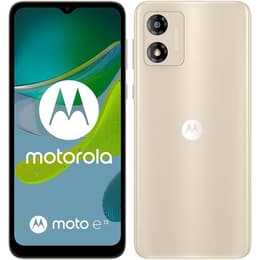
Galaxy A34 vs Motorola Moto E13
- 1-year warranty
- Free standard shipping
- Free 30-day returns
Differences at a glance
The Samsung Galaxy A34 (2023) and the Motorola Moto E13 (2023) are entry-to-mid-range smartphones designed to handle daily communication and lightweight applications efficiently. While both devices serve users looking for straightforward, reliable mobile technology, they cater to different expectations regarding performance and capability. The Galaxy A34 operates on Android with Samsung's customized interface, offering a feature-rich environment, whereas the Motorola Moto E13 utilizes a streamlined version of Android optimized for lightweight operations. These distinct approaches mean users will experience different levels of versatility and system responsiveness depending on their daily needs.
Available Models
Colour
Storage
Scores
Durability
When examining software longevity and physical build durability, these two devices approach long-term utility from different positions within the market.
- Software updates and support: The Galaxy A34 benefits from a multi-year commitment to security and operating system updates, helping it remain current and secure over an extended timeframe. The Motorola Moto E13 receives lighter, essential security patches for a more limited duration, suiting users who upgrade hardware more frequently.
- Repairability and build quality: Both models utilize durable plastics for their outer chassis, though the Galaxy A34 includes formal water and dust resistance ratings. Choosing a quality-assured refurbished option for either model provides an eco-friendly alternative that extends device lifecycles and reduces electronic waste.
Release year
2023
2023
Compatible with latest Update
Yes
No
Operating system
Android
Android
Foldable
No
No
Performance
Underneath the exterior, these smartphones utilize different hardware configurations that directly influence everyday operation and multitasking capacity.
- Multitasking and app switching: The Galaxy A34 handles multiple open applications and moderately demanding tasks smoothly without noticeable delay. The Motorola Moto E13 manages basic single-task operations well, though heavy multitasking or rapid switching between numerous apps may require a moment of loading time.
- Storage and battery endurance: The Galaxy A34 provides generous internal storage configurations alongside reliable battery behavior that comfortably spans a full day of mixed use. The Motorola Moto E13 features lighter storage capacity paired with efficient power management, allowing standard users to reach the end of the day on a single charge under light workloads.
Screen quality
Display technology varies significantly between these two models, impacting media consumption, outdoor legibility, and visual clarity.
- Panel technology and sharpness: The Galaxy A34 features a vibrant display technology with deep contrast levels and sharp resolution, making text crisp and images vivid. The Motorola Moto E13 utilizes a standard panel resolution adequate for reading messages and viewing basic web pages, though with less visual pop.
- Brightness and smoothness: The Galaxy A34 offers higher peak brightness for outdoor visibility alongside a faster refresh rate that keeps scrolling animations fluid. The Motorola Moto E13 maintains standard brightness and refresh rates suitable for indoor viewing environments.
Resolution
1080 x 2340
720 x 1600
Screen type
Super AMOLED
IPS LCD
Audiovisual
The photographic and acoustic hardware on each device dictates how well they capture memories and handle media playback.
- Camera versatility: The Galaxy A34 incorporates a multi-lens camera array, including an ultra-wide sensor, providing flexibility for landscape and close-up photography alongside reliable low-light processing. The Motorola Moto E13 focuses on a single primary rear camera that handles bright daylight snapshots adequately.
- Audio and video output: The Galaxy A34 includes stereo speakers that deliver a balanced soundscape for listening to podcasts or casual video viewing. The Motorola Moto E13 relies on a single mono speaker sufficient for voice calls and basic notification alerts.
Main camera
48 megapixels
13 megapixels
Front camera
13 megapixels
5 megapixels
Miscellaneous
Practical daily usability is shaped by connectivity standards, physical dimensions, and biometric security features.
- Connectivity and ports: The Galaxy A34 supports modern high-speed cellular networks and advanced wireless standards for stable data connections. The Motorola Moto E13 covers standard wireless connectivity and utilizes reversible cable connections for charging and data transfer.
- Security and handling: The Galaxy A34 integrates modern biometric authentication options including facial recognition and an in-display sensor. The Motorola Moto E13 relies primarily on facial recognition and standard passcode entry to secure personal data.
Weight
199 oz
181 oz
Screen size (in)
6,6
6.5
Network
5G
4G
SIM card
Physical SIM
Dual Physical SIM
Carrier compatibility
Unlocked
Unlocked
What the community thinks
User feedback from online communities highlights distinct patterns of satisfaction for each smartphone. Owners of the Galaxy A34 frequently praise its reliable battery performance, smooth display fluidness, and capable multi-lens camera system for daily photography. Conversely, users note that it occupies a larger physical footprint in the hand. For the Motorola Moto E13, community discussions often focus on its lightweight simplicity and straightforward functionality, while users frequently mention that it is best suited for minimal tasks rather than heavy application use or gaming.
Users prioritizing media consumption, fluid visuals, and broader camera versatility will find the Galaxy A34 well-suited to their requirements. Meanwhile, users seeking a simple, dedicated device for basic calling, messaging, and light web browsing may lean toward the Motorola Moto E13. Selecting a quality-assured refurbished model from sustainable platforms provides an environmentally conscious way to acquire either device while minimizing environmental impact. Ultimately, aligning these distinct capability profiles with personal daily habits ensures a satisfying long-term smartphone experience.