Compare models
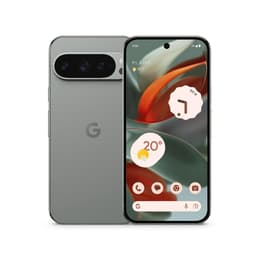
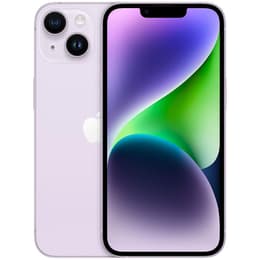
Google Pixel 9 Pro vs iPhone 14
- 1-year warranty
- Free standard shipping
- Free 30-day returns
Differences at a glance
The Google Pixel 9 Pro (2024) and the iPhone 14 (2022) represent distinct approaches to smartphone design within the modern mobile landscape. While they operate on different software ecosystems—Android and iOS respectively—both devices target users seeking high-level daily reliability, capable photography tools, and polished hardware. The primary differentiators between these two models center on their release timelines, camera configurations, and software customization capabilities, offering distinct user experiences depending on personal ecosystem preferences.
Available Models
Colour
Storage
Scores
Durability
When evaluating the longevity and support lifecycle of these devices, several generational and ecosystem factors come into play regarding software updates and hardware wear over time.
- Software support timelines: The Google Pixel 9 Pro benefits from an extended software support policy spanning multiple years of major operating system upgrades, while the iPhone 14 follows Apple's standard multi-year update window, though its earlier release year places it slightly further along its support lifecycle.
- Repairability and build durability: Both models utilize robust aluminum frames and reinforced glass panels designed to withstand everyday handling, and both maintain standardized repair pathways through certified service providers.
- Expected practical lifespan: Users choosing a quality-assured refurbished option can expect several years of smooth daily operation from either device, though the Google Pixel 9 Pro retains a slight advantage in total future software longevity due to its more recent introduction.
Release year
2024
2022
Operating system
Android
iOS
Foldable
No
No
Performance
Daily fluidities and task handling vary based on internal processing architecture, random access memory allocation, and battery efficiency under load.
- Multitasking and app switching: The Google Pixel 9 Pro handles demanding background processes and split-screen multitasking effortlessly thanks to an expanded memory allocation, whereas the iPhone 14 manages background apps efficiently through tight software and hardware integration.
- App loading and gaming: Both devices load everyday applications instantly and handle graphic-intensive mobile games smoothly, maintaining responsive frame rates during prolonged usage sessions.
- Battery behavior and energy management: The Google Pixel 9 Pro includes a larger battery capacity designed to sustain heavy daily use throughout a full schedule, while the iPhone 14 relies on optimized power efficiency to match typical daily usage requirements despite its smaller cell size.
Screen quality
Visual output and display responsiveness differ across panel technology, peak luminance capabilities, and refresh rate implementation.
- Display technology and clarity: Both models utilize advanced OLED panel technology that delivers deep black levels, high contrast ratios, and sharp resolutions for reading, media consumption, and general navigation.
- Outdoor visibility and brightness: The Google Pixel 9 Pro achieves higher peak brightness levels for comfortable outdoor viewing under direct sunlight, while the iPhone 14 offers reliable visibility in bright environments with balanced automatic lighting adjustments.
- Refresh rate and scrolling smoothness: The Google Pixel 9 Pro features an adaptive refresh rate reaching higher frequencies for fluid scrolling and animations, whereas the iPhone 14 operates at a standard fixed refresh rate for general display tasks.
Resolution
1280x2856
1170 x 2532
Audiovisual
Photography and media capture capabilities vary across lens versatility, computational image processing, and video recording features.
- Lens configurations: The Google Pixel 9 Pro provides a versatile triple-lens setup including a dedicated high-resolution telephoto zoom lens, while the iPhone 14 relies on a dual-lens system featuring main and ultra-wide cameras.
- Low-light and everyday photography: Both devices excel at capturing sharp, detailed images in diverse lighting conditions, utilizing computational algorithms to balance highlights and shadows automatically.
- Video recording and audio capture: The iPhone 14 offers stable video stabilization and cinematic recording modes, whereas the Google Pixel 9 Pro provides advanced software-based video enhancement tools and clear multi-microphone audio capture during recording.
Miscellaneous
Physical dimensions, connectivity standards, and daily handling characteristics differ noticeably between the two handsets.
- Physical dimensions and handling: The iPhone 14 features a more compact form factor that fits easily into smaller pockets and one-handed grips, while the Google Pixel 9 Pro offers a slightly larger physical footprint designed to accommodate an expanded display area.
- Connectivity and ports: The Google Pixel 9 Pro utilizes a reversible USB-C port for charging and data transfer, whereas the iPhone 14 relies on Apple's proprietary Lightning connector.
- Biometric security: The Google Pixel 9 Pro combines facial recognition with an under-display fingerprint sensor for flexible unlocking, while the iPhone 14 relies primarily on secure facial recognition technology.
Weight
199 oz
172 oz
Screen size (in)
6.3
6,1
Network
5G
5G
SIM card
Physical SIM + eSIM
Physical SIM + eSIM
Carrier compatibility
Unlocked
Unlocked
What the community thinks
Real-world user feedback across online communities highlights distinct preferences for each device. Owners of the Google Pixel 9 Pro frequently praise its versatile multi-lens camera system, bright display, and deep integration of artificial intelligence features for everyday organization. Conversely, iPhone 14 users often emphasize the reliability of the iOS interface, the comfortable one-handed ergonomics, and seamless synchronization within the broader Apple device ecosystem. Common discussions note that while the Google Pixel 9 Pro offers more advanced zoom photography and a smoother display refresh rate, the iPhone 14 provides a dependable, straightforward software experience that appeals to users seeking simplicity and long-term stability.
Users prioritizing advanced photography versatility, higher display refresh rates, and USB-C connectivity may prefer the Google Pixel 9 Pro. Meanwhile, users who value a compact physical footprint, the iOS ecosystem, and streamlined daily operation will lean toward the iPhone 14. For those exploring sustainable choices, selecting a quality-assured refurbished option provides an eco-friendly alternative to purchasing newly manufactured hardware while delivering equivalent functional performance. Ultimately, the choice depends on personal preferences regarding software environment, camera priorities, and physical size.