
Samsung
Compare models
Differences at a glance
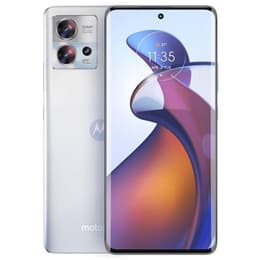
The Google Pixel 9 Pro XL, released August 2024, and the Motorola Edge 30 Fusion, launched September 2022, offer distinct Android smartphone experiences. The Pixel 9 Pro XL focuses on advanced computational photography and long-term software support, while the Edge 30 Fusion emphasizes premium design and smooth display. Both run Android, providing unique user interfaces and feature sets.
Colour
Storage
The expected lifespan of a smartphone is determined by its release timeline, software support, and physical resilience. The Google Pixel 9 Pro XL, launched August 2024, offers seven years of software updates, ensuring prolonged access to the latest Android features and security enhancements. The Motorola Edge 30 Fusion, released September 2022, typically receives two major Android updates and three years of security support, indicating a shorter software lifecycle. For physical durability, the Pixel 9 Pro XL incorporates Gorilla Glass Victus 2 and an aluminum frame. The Edge 30 Fusion features Gorilla Glass 5 for its display and an aluminum frame, providing a solid build. The Pixel's newer protective glass generally offers superior resistance to damage.
Release year
Compatible with latest Update
Operating system
Foldable
Both devices offer capable performance, though they cater to different expectations due to their release timelines. The Google Pixel 9 Pro XL, a more recent device, provides a highly responsive experience, handling demanding applications and extensive multitasking with ease, well-suited for intensive tasks and advanced AI features. The Motorola Edge 30 Fusion, while featuring an earlier generation of internal components, still offers strong performance for daily activities such as web browsing, social media, and moderate gaming. Its system remains snappy for general use.
The display is a primary interaction point, and both phones offer vibrant viewing experiences with distinct characteristics. The Google Pixel 9 Pro XL features a 6.8-inch QHD+ LTPO OLED display with high resolution and 486 PPI, resulting in exceptionally sharp images and clear text. The Motorola Edge 30 Fusion comes with a 6.55-inch pOLED display with a 2400x1080 (FHD+) resolution and 402 PPI. Both utilize OLED technology for deep blacks and vibrant colors.
Resolution
Screen type
The camera systems on both devices offer distinct strengths, catering to different photography preferences. The Google Pixel 9 Pro XL features a versatile triple-camera setup, including a 50MP main sensor, a 48MP ultrawide with macro capabilities, and a 48MP telephoto lens offering 5x optical zoom and up to 10x optical quality shots. This system is known for its computational photography, delivering detailed images with accurate colors and strong low-light performance. The Motorola Edge 30 Fusion also has a triple-camera system, comprising a 50MP main sensor with optical image stabilization and a 13MP ultrawide with macro mode. Its main camera performs well in good lighting.
Main camera
Front camera
Beyond core performance and display, several practical elements differentiate these two smartphones. Both devices support 5G connectivity, ensuring access to the latest mobile network speeds. The Pixel 9 Pro XL features modern Wi-Fi standards and Bluetooth, along with a USB-C port. The Edge 30 Fusion also includes Wi-Fi 6 (ax) and Bluetooth 5.2, utilizing a USB-C 3.1 port. Neither phone includes a traditional headphone jack.
Weight
Screen size (in)
Network
SIM card
Carrier compatibility
User sentiment for the Google Pixel 9 Pro XL often highlights its exceptional display, smooth performance, and powerful camera system with AI-driven features. Its long software support and reliable battery life are also frequently praised. Criticisms sometimes include inconsistent face unlock, app optimization concerns, and charging speeds that don't always reach advertised maximums. For the Motorola Edge 30 Fusion, users frequently praise its premium build, vibrant 144Hz OLED display, and very fast charging. Its clean Android experience and solid everyday performance are also well-regarded. Common concerns include the ultrawide camera's performance, less consistent low-light photography, and potential thermal throttling during intensive tasks.
Users prioritizing cutting-edge camera technology, extensive software support, and advanced AI features will find the Google Pixel 9 Pro XL well-suited to their needs. Its larger display and robust performance make it ideal for power users and those valuing long-term device relevance. Conversely, users who prioritize a lightweight, premium design, a very fluid display for everyday scrolling, and exceptionally fast charging may lean towards the Motorola Edge 30 Fusion. It offers a strong overall experience for general use and media consumption. Both devices, whether new or as quality-assured refurbished options, provide distinct advantages depending on individual preferences.