Galaxy S10 vs Galaxy S21+ 5G

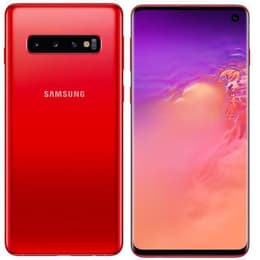
Galaxy S10
Galaxy S10
Starting at

Refurbished price:A$359.00

Versus A$849.00 new

See options
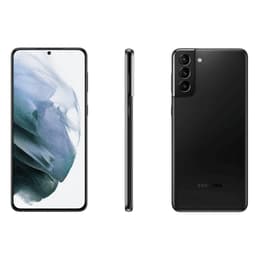
Galaxy S21+ 5G
Galaxy S21+ 5G
Starting at

Refurbished price:A$348.00

Versus A$2,005.00 new

See options

Ratings

The Samsung Galaxy S10, released in March 2019, and the Samsung Galaxy S21 Plus 5G, launched in January 2021, represent different generations within Samsung's flagship smartphone series. While both offer a premium Android experience, the S21 Plus 5G introduces advancements in processing power, camera capabilities, and connectivity, reflecting the technological progress over a two-year period.

Scores

Durability

When considering the longevity of these devices, several factors come into play, primarily their release timelines and software support. The newer device generally benefits from a longer period of official updates and security patches.

  • Software Support: The Galaxy S10, launched in March 2019, received major Android updates up to Android 12. The Galaxy S21 Plus 5G, released in January 2021, launched with Android 11 and is expected to receive updates up to Android 15, offering a longer software lifespan.
  • Physical Durability: Both models feature an IP68 rating for dust and water resistance, indicating protection against submersion in fresh water. The Galaxy S10 utilizes Corning Gorilla Glass 6 on the front and Gorilla Glass 5 on the back, while the S21 Plus 5G features the more advanced Gorilla Glass Victus on both sides, offering enhanced scratch and drop resistance.
  • Practical Lifespan: Users prioritizing the latest software features and security updates will find the S21 Plus 5G to have a longer practical lifespan due to its newer release and extended update cycle.

Release year

2019

2021

Compatible with latest Update

No

Yes

Operating system

Android

Android

Foldable

No

No

Performance

The performance of a smartphone is crucial for daily operations, from launching applications to handling demanding tasks. The generational gap between these two devices brings notable differences in their processing capabilities and battery endurance.

  • Processing Power: The Galaxy S21 Plus 5G features a more advanced processor, which translates to faster app loading times, smoother multitasking, and more efficient handling of graphics-intensive applications and games. The Galaxy S10, while still capable for everyday use, may exhibit slower performance with newer, more demanding software.
  • Battery Endurance: The Galaxy S21 Plus 5G is equipped with a larger 4800 mAh battery, compared to the Galaxy S10's 3400 mAh battery. This difference typically results in the S21 Plus 5G offering longer usage times on a single charge, especially for heavy users. Both support fast wired and wireless charging.
  • Storage and RAM: Both devices offer 8GB of RAM, with the S10 also having a 12GB option in some configurations, impacting multitasking fluidity. Storage options vary, with both offering 128GB and 256GB, and the S10 also having a 512GB option. The S10 includes a microSD card slot for expandable storage, a feature absent in the S21 Plus 5G.

Memory (GB)

8 GB

8 GB

Screen quality

The display is a primary interface for smartphone interaction, and both models offer high-quality viewing experiences, though with distinct differences in technology and specifications.

  • Display Technology and Resolution: Both phones feature Dynamic AMOLED displays, known for vibrant colors and deep blacks. The Galaxy S10 has a 6.1-inch QHD+ display (3040 x 1440 pixels), resulting in a higher pixel density. The Galaxy S21 Plus 5G has a larger 6.7-inch display with an FHD+ resolution (2400 x 1080 pixels).
  • Refresh Rate and Brightness: A key differentiator is the refresh rate; the S10 operates at a standard 60Hz, while the S21 Plus 5G offers an adaptive 120Hz refresh rate, providing a smoother scrolling and viewing experience. The S21 Plus 5G also boasts higher peak brightness, improving visibility in bright outdoor conditions.
  • Viewing Experience: The S21 Plus 5G's larger screen offers a more expansive viewing area, which can be beneficial for media consumption and productivity. The S10's higher pixel density provides slightly sharper details, though the difference may not be noticeable to all users in everyday scenarios.

Resolution

1440 x 3040

1080 x 2400

Screen type

Dynamic AMOLED

Dynamic AMOLED 2X

Audiovisual

Camera systems are a significant aspect of modern smartphones, and both the Galaxy S10 and S21 Plus 5G offer versatile setups for capturing photos and videos, with the newer model featuring enhancements.

  • Rear Camera System: The Galaxy S10 features a triple rear camera setup with a 12MP wide, 16MP ultrawide, and 12MP telephoto lens with 2x optical zoom. The S21 Plus 5G also has a triple rear camera system, consisting of a 12MP wide, 12MP ultrawide, and a 64MP telephoto lens, offering 3x hybrid optical zoom and up to 30x digital zoom.
  • Video Recording Capabilities: The S10 supports 4K video recording at up to 60 frames per second. The S21 Plus 5G elevates video capture with support for 8K resolution at 24 frames per second, in addition to enhanced 4K options.
  • Front Camera: Both devices feature a 10MP front-facing camera for selfies and video calls.

Main camera

12 megapixels

12 megapixels

Front camera

10 megapixels

10 megapixels

Miscellaneous

Beyond core features, several practical elements contribute to the overall user experience, including connectivity, physical design, and additional functionalities.

  • Connectivity: The Galaxy S21 Plus 5G supports 5G networks, offering faster mobile data speeds where available, a feature absent in the S10. Both support Wi-Fi 6, with the S21 Plus 5G also supporting Wi-Fi 6E in some regions, and Bluetooth 5.0.
  • Ports and Sensors: The Galaxy S10 includes a 3.5mm headphone jack, which is not present on the S21 Plus 5G. Both utilize a USB-C port for charging and data transfer. Both devices feature an in-display ultrasonic fingerprint sensor for secure unlocking.
  • Design and Handling: The S10 is more compact and lighter, weighing 157 grams with dimensions of 149.9 x 70.4 x 7.8 mm. The S21 Plus 5G is larger and slightly heavier at 200-202 grams, with dimensions of 161.5 x 75.6 x 7.8 mm. The S21 Plus 5G also features Ultra Wideband (UWB) technology for enhanced short-range communication.

Weight

157 oz

200 oz

Screen size (in)

6.1

6.7

Network

4G

5G

SIM card

Physical SIM

Physical SIM + eSIM

Carrier compatibility

Unlocked

Unlocked

User feedback for the Galaxy S10 often praises its compact design, the inclusion of a headphone jack, and its high-resolution display. Some common criticisms have revolved around its battery life compared to larger phones of its era and the eventual end of major software updates. The Galaxy S21 Plus 5G generally receives positive remarks for its powerful performance, improved camera system, and the smooth experience provided by its high refresh rate display. Some users have noted the absence of a headphone jack and expandable storage as drawbacks.

For users who prioritize a more compact device, a higher pixel density display, and the convenience of a traditional headphone jack, the Galaxy S10 may be a suitable choice. Its established feature set still provides a capable smartphone experience. Conversely, individuals seeking the latest in mobile technology, including 5G connectivity, a smoother display, enhanced camera capabilities, and a longer period of software support, will find the Galaxy S21 Plus 5G better aligned with their needs. Both devices offer robust functionality, and choosing between them often comes down to specific priorities regarding size, connectivity, and future-proofing. Opting for a quality-assured refurbished option for either model can be a sustainable choice, extending the life of these devices and reducing electronic waste.

See all articles

Our recent comparisons