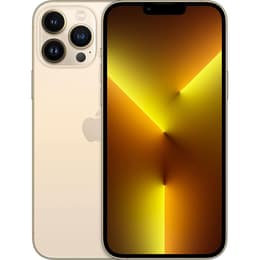

Google Pixel 9 Pro XL vs iPhone 13 Pro Max

Google Pixel 9 Pro XL
Starting at

Refurbished price:A$853.00

Versus A$1,849.00 new

See options
iPhone 13 Pro Max
iPhone 13 Pro Max
Starting at

Refurbished price:A$581.00

Versus A$1,689.00 new

See options

Ratings

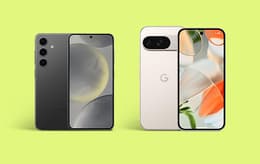
The Google Pixel 9 Pro XL, released in August 2024, and the Apple iPhone 13 Pro Max, launched in September 2021, represent two distinct approaches to high-end smartphone design and functionality. While the Pixel 9 Pro XL showcases more recent technological advancements and a strong emphasis on artificial intelligence within the Android ecosystem, the iPhone 13 Pro Max offers a refined and established experience powered by iOS. These devices cater to users seeking large displays and robust capabilities, differing primarily in their operating system philosophies and the generational gap in their hardware.

Scores

Durability

When considering the long-term usability and support for these devices, their respective release timelines and software policies are key factors.

  • Software Longevity: The Google Pixel 9 Pro XL benefits from Google's commitment to seven years of operating system and security updates, extending its official support until approximately August 2031. The iPhone 13 Pro Max, released earlier, typically receives major iOS updates for about five to six years, with security updates potentially continuing for a year or two beyond that, suggesting its update cycle may conclude around 2027 or 2028.
  • Physical Durability: Both smartphones feature robust construction with high-grade materials. The Pixel 9 Pro XL incorporates Gorilla Glass Victus 2 for screen protection, while the iPhone 13 Pro Max utilizes Apple's Ceramic Shield. Both are designed to withstand daily wear and tear, offering resistance to dust and water.
  • Practical Lifespan: The newer Pixel 9 Pro XL integrates more current hardware standards, which may better accommodate future software demands and advanced features. The iPhone 13 Pro Max, despite its age, is known for its durable build and continues to perform reliably for many users, though its hardware may eventually face limitations with increasingly demanding applications.

Release year

2024

2021

Compatible with latest Update

Yes

Yes

Operating system

Android

iOS

Foldable

No

No

Performance

The performance of these devices is influenced by their respective processors and system optimizations, impacting how they handle various tasks.

  • Processing Power: The Google Pixel 9 Pro XL is equipped with a current-generation processor designed for efficient handling of demanding applications and advanced on-device artificial intelligence tasks. The iPhone 13 Pro Max features a powerful processor that, at its release, offered industry-leading performance, still providing a smooth experience for most applications and multitasking.
  • Multitasking and Responsiveness: With 16GB of RAM, the Pixel 9 Pro XL offers substantial capacity for running numerous applications simultaneously and switching between them fluidly. The iPhone 13 Pro Max, with 6GB of RAM, manages multitasking effectively within the iOS environment, providing a responsive user experience for typical daily usage.
  • Battery Behavior: The Pixel 9 Pro XL houses a 5060 mAh battery, designed to provide ample power for a full day of varied use. The iPhone 13 Pro Max, with its 4352 mAh battery, is widely recognized for its exceptional battery longevity, often allowing for extended usage even under heavy demands.

Memory (GB)

16 GB

6 GB

Screen quality

Both devices offer large, high-quality displays, but they differ in their specifications and visual characteristics.

  • Display Technology and Clarity: The Google Pixel 9 Pro XL features a 6.8-inch QHD+ LTPO OLED display with a resolution of 2992x1344 pixels, providing sharp images and vibrant colors. The iPhone 13 Pro Max comes with a 6.7-inch Super Retina XDR OLED display, offering a resolution of 2778x1284 pixels, known for its deep blacks and accurate color reproduction.
  • Brightness and Smoothness: The Pixel 9 Pro XL's display can reach a peak brightness of 3,000 nits, enhancing visibility in bright outdoor conditions. It also features an adaptive refresh rate ranging from 1 to 120Hz for smooth scrolling and animations. The iPhone 13 Pro Max offers a peak HDR brightness of 1200 nits and a ProMotion display with an adaptive refresh rate up to 120Hz, providing a fluid visual experience.
  • Viewing Experience: Both phones provide an immersive viewing experience due to their large screen sizes and OLED technology. The Pixel 9 Pro XL's higher resolution and peak brightness may offer a slightly more detailed and vibrant display, particularly in challenging lighting.

Resolution

1344 x 2992

1284 x 2778

Screen type

LTPO OLED

Super Retina XDR OLED

Audiovisual

The camera systems on both devices are designed for high-quality photography and videography, though they approach image processing with different philosophies.

  • Rear Camera System: The Google Pixel 9 Pro XL features a versatile triple camera setup, including a 50MP main sensor, a 48MP ultrawide lens, and a 48MP telephoto lens with 5x optical zoom. It emphasizes computational photography and AI enhancements for image quality. The iPhone 13 Pro Max also has a triple 12MP camera system, comprising a main, ultrawide, and a 3x optical zoom telephoto lens, known for its consistent image quality and natural color science.
  • Photography and Video Capabilities: The Pixel 9 Pro XL offers 8K video recording at 30fps and a 42MP front camera, providing high detail for both stills and video. The iPhone 13 Pro Max records 4K video and includes features like Cinematic Mode and ProRes video recording, offering advanced options for videographers. Its 12MP front camera delivers clear selfies and video calls.
  • Low-Light Performance: Both devices excel in low-light conditions, utilizing their respective software and hardware optimizations to capture bright and detailed images. The Pixel's larger main sensor and advanced processing contribute to its low-light performance, while the iPhone's larger apertures and Night Mode deliver strong results.

Main camera

50 megapixels

12 megapixels

Front camera

42 megapixels

12 megapixels

Miscellaneous

Beyond core features, several practical elements contribute to the overall user experience and daily convenience of these smartphones.

  • Connectivity and Ports: The Google Pixel 9 Pro XL supports the latest Wi-Fi 7 and 5G standards, offering faster wireless data speeds and improved network efficiency. It features a universal USB-C port for charging and data transfer. The iPhone 13 Pro Max utilizes Wi-Fi 6 and 5G connectivity, providing reliable wireless performance, and includes Apple's proprietary Lightning port.
  • Biometrics and Sensors: The Pixel 9 Pro XL incorporates an under-display ultrasonic fingerprint sensor for secure unlocking, alongside a suite of environmental sensors including a barometer and temperature sensor. The iPhone 13 Pro Max relies on Face ID for secure facial recognition and includes standard sensors like an accelerometer and gyroscope.
  • Design and Handling: The Pixel 9 Pro XL measures 162.8 x 76.6 x 8.5mm and weighs 221 grams, offering a substantial yet balanced feel. The iPhone 13 Pro Max is slightly more compact at 160.8 x 78.1 x 7.65mm but heavier at 240 grams, contributing to a solid in-hand feel.

Weight

221 oz

238 oz

Screen size (in)

6.8

6.7

Network

5G

5G

SIM card

Physical SIM + eSIM

Physical SIM + eSIM

Carrier compatibility

Unlocked

Unlocked

User feedback on the Google Pixel 9 Pro XL often highlights its incredibly bright display and the helpfulness of its integrated software features, particularly those driven by artificial intelligence. Some users note that its large size might necessitate two-handed operation. The iPhone 13 Pro Max continues to be praised for its exceptional battery life and the consistent quality of its video recording, with many users finding it still delivers a premium experience despite being an older model.

For users prioritizing the latest technological advancements, extensive software support, and a strong focus on AI-driven features, the Google Pixel 9 Pro XL presents a compelling option. Its newer processor and camera system, coupled with a longer update commitment, make it suitable for those who want a device that will remain current for an extended period. Conversely, individuals who value established reliability, a highly optimized ecosystem, and industry-leading battery performance may find the iPhone 13 Pro Max to be a robust choice. It continues to offer a capable camera and smooth performance for everyday tasks.

Both devices offer distinct advantages, and the choice often comes down to a preference for the Android or iOS ecosystem, as well as the importance placed on cutting-edge features versus proven stability. For those considering either of these powerful smartphones, exploring quality-assured refurbished options can provide an eco-friendly alternative to extend the life cycle of these devices.
See all articles

Our recent comparisons