
Compare models
Google Pixel 9 Pro XL vs iPhone Air
- 1-year warranty
- Free standard shipping
- Free 30-day returns
Differences at a glance
The Google Pixel 9 Pro XL (2024) and the iPhone Air (2025) represent distinct approaches to modern smartphone engineering, balancing large screen displays with unique design philosophies. While the Google Pixel 9 Pro XL focuses on a feature-rich, large-screen Android experience, the iPhone Air prioritizes an ultra-slim titanium profile running iOS. These devices differ fundamentally in operating systems, physical build strategies, and everyday handling.
Available Models
Colour
Storage (GB)
Scores
Durability
Both smartphones are built for long-term ownership, differing primarily in their software ecosystems and physical durability structures.
- Software Support: The Google Pixel 9 Pro XL offers extended software maintenance lasting seven years, whereas the iPhone Air follows Apple's standard multi-year update path within the iOS ecosystem.
- Build Durability: The Google Pixel 9 Pro XL utilizes heavy-duty glass and robust framing, while the iPhone Air adopts a titanium frame with reinforced front and back shielding designed to withstand everyday wear.
- Repairability: Both manufacturers provide structured repair programs, helping users maintain device longevity and extend practical lifespan through quality-assured refurbished options.
Release year
2024
2025
Compatible with latest Update
Yes
Yes
Operating system
Android
iOS
Foldable
No
No
Performance
Underneath their respective surfaces, both devices manage demanding workloads and multitasking effectively through current-generation internal hardware.
- Multitasking Handling: Both models handle memory-intensive applications and background tasks smoothly, aided by generous random access memory configurations.
- Battery Behavior: The Google Pixel 9 Pro XL features a larger battery capacity suited for prolonged heavy usage, while the iPhone Air relies on power-efficient processing to sustain typical daily routines despite its slim chassis.
- System Responsiveness: App loading, web browsing, and graphics-heavy tasks execute fluidly across both devices without noticeable stutter or lag during normal operation.
Screen quality
Visual output across both models delivers sharp text, accurate colors, and high peak brightness levels for outdoor readability.
- Display Technology: Both devices employ advanced OLED panels featuring deep black levels and wide color reproduction for media consumption.
- Refresh Rate Smoothness: Adaptive refresh rates scaling up to 120Hz ensure fluid scrolling through menus, web pages, and supported interactive applications.
- Screen Size: The Google Pixel 9 Pro XL provides a sprawling 6.8-inch viewing area, whereas the iPhone Air offers a slightly more compact 6.5-inch panel housed within a much thinner frame.
Resolution
1344 x 2992
2736x1260
Screen type
LTPO OLED
Super Retina XDR
Audiovisual
Optics and media capture diverge significantly between the multi-lens setup on one model and the streamlined single-lens approach on the other.
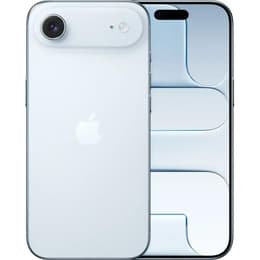
- Camera Array: The Google Pixel 9 Pro XL features a versatile triple-lens system including dedicated optical zoom capabilities, while the iPhone Air relies on a single high-resolution main camera integrated into a raised rear plateau.
- Low-Light Performance: Both devices process challenging lighting conditions effectively, producing clear photos and stable video output during evening or indoor use.
- Audio Output: Built-in stereo speaker configurations provide clear sound clarity for hands-free calling, video playback, and casual media streaming.
Main camera
50 megapixels
48 megapixels
Front camera
42 megapixels
18 megapixels
Miscellaneous
Practical everyday features, connection standards, and physical dimensions shape how each device fits into routine transit and use.
- Connectivity Standards: Both phones support rapid 5G cellular networks, modern Wi-Fi protocols, and Bluetooth connectivity for peripheral accessories.
- Physical Dimensions: The Google Pixel 9 Pro XL weighs 221 grams with a standard thickness, whereas the iPhone Air focuses on a featherlight 165-gram construction measuring a remarkably thin 5.6 mm.
- Security Sensors: Secure authentication is handled via biometric scanning, utilizing fast under-display fingerprint sensors or facial recognition technology depending on the chosen model.
Weight
221 oz
165 oz
Screen size (in)
6.8
6.5
Network
5G
5G
SIM card
Physical SIM + eSIM
eSIM
Carrier compatibility
Unlocked
Unlocked
What the community thinks
Users evaluating these two smartphones often weigh hardware versatility against physical form factor preferences. Owners of the Google Pixel 9 Pro XL frequently praise its expansive screen, comprehensive multi-lens camera system, and long-term software commitment, though some note its heavier build in hand. Conversely, users drawn to the iPhone Air highlight its remarkably slim profile, lightweight titanium build, and smooth iOS integration, while noting the absence of a dedicated telephoto camera lens.
Users prioritizing maximum camera versatility and a large workspace will find the Google Pixel 9 Pro XL well-suited to their needs, while users prioritizing a lightweight build and minimalist thickness may lean toward the iPhone Air. Selecting either model as an eco-friendly, quality-assured refurbished option allows consumers to make a sustainable choice without compromising on daily functionality.