
Compare models
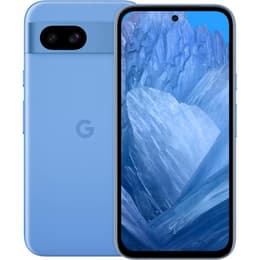
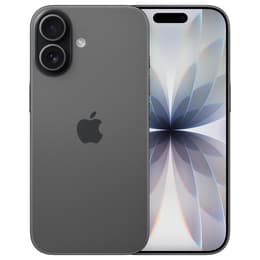
Google Pixel 8a vs iPhone 17
- 1-year warranty
- Free standard shipping
- Free 30-day returns
Differences at a glance
The Google Pixel 8a (2024) and the iPhone 17 (2025) are modern smartphones that represent different generations, platforms, and hardware philosophies within the mobile market. While both devices offer polished daily computing experiences, they differ significantly in their operating systems, hardware ecosystems, and release timelines.
Users evaluating these models will find distinct approaches to software integration, media capture, and physical design.
Available Models
Colour
Storage (GB)
Scores
Durability
When examining longevity, both models offer reliable structural builds and long-term software support, though their launch timelines and update schedules differ.
- Software support windows: The Google Pixel 8a provides extended operating system and security updates spanning several years from its release, while the newer iPhone 17 benefits from an advanced launch window that extends its active support timeline further into the future.
- Build durability: Both devices incorporate scratch-resistant glass front panels and reinforced frames designed to withstand routine daily handling and minor impacts.
- Repairability and lifespan: Each model supports standardized component replacement options through authorized channels, ensuring predictable practical lifespans for everyday users.
Release year
2024
2025
Compatible with latest Update
Yes
Yes
Operating system
Android
iOS
Foldable
No
No
Performance
System responsiveness and day-to-day operation vary based on internal hardware configurations and battery management strategies.
- App loading and multitasking: Both handsets handle demanding applications, web browsing, and background task management smoothly, though the newer processor architecture in the iPhone 17 delivers additional speed headroom for intensive workloads.
- Battery behavior: Each device is engineered to sustain a full day of typical mixed usage, combining efficient power management with rapid recharging capabilities.
- Storage capacity configurations: The Google Pixel 8a is available in standard storage tiers suited for general media storage, whereas the iPhone 17 begins at higher baseline capacities to accommodate large files and high-resolution video collections.
Screen quality
Display properties dictate visual clarity, outdoor visibility, and scrolling fluidity across both handsets.
- Panel technology and resolution: Both smartphones feature vibrant OLED displays that deliver deep black levels and crisp text rendering for reading and messaging.
- Refresh rate and motion: Each model supports adaptive high refresh rates up to 120Hz, ensuring fluid scrolling through menus and web pages.
- Outdoor visibility: High peak brightness levels allow both screens to remain legible under direct sunlight, though panel dimensions vary slightly between the compact Google Pixel 8a and the slightly larger iPhone 17.
Audiovisual
Imaging hardware and computational processing shape the photography and videography output of each device.
- Lens configurations: The Google Pixel 8a pairs a high-resolution primary sensor with an ultra-wide lens, while the iPhone 17 utilizes a dual 48-megapixel layout that supports flexible optical-quality framing.
- Low-light and video performance: Both units capture detailed nighttime imagery and support stable high-definition video recording with clear audio capture from built-in microphones.
- Media consumption: Integrated stereo speakers on both models deliver clear sound output for casual video viewing and voice calls.
Front camera
13 megapixels
18 megapixels
Miscellaneous
Physical dimensions, connectivity standards, and biometric security features define the practical handling of each smartphone.
- Biometric security: The Google Pixel 8a features an under-display fingerprint sensor alongside facial recognition, whereas the iPhone 17 relies on secure 3D facial mapping technology.
- Physical dimensions: The Google Pixel 8a offers a lightweight, compact form factor, compared to the slightly broader profile and updated button layout of the iPhone 17.
- Connectivity standards: Both smartphones support current-generation 5G cellular networks, high-speed Wi-Fi, and Bluetooth protocols for reliable peripheral pairing.
Weight
188 oz
177 oz
Screen size (in)
6.1
6.3
Network
5G
5G
SIM card
Physical SIM + eSIM
Physical SIM + eSIM
Carrier compatibility
Unlocked
Unlocked
Connector
USB-C
USB-C
What the community thinks
User discussions and community feedback indicate that satisfaction with either device depends heavily on personal ecosystem preferences and workflow priorities. Users prioritizing Android customisation and advanced computational photography tools often lean toward the Google Pixel 8a, while those invested in the Apple ecosystem who value longer hardware lifecycles and higher baseline storage frequently prefer the iPhone 17. For consumers seeking an eco-friendly alternative, choosing a quality-assured refurbished option provides a sustainable way to acquire either device without compromising on performance.
Reviewing these core differences helps ensure that your final choice aligns naturally with your daily usage habits and long-term expectations.