
Galaxy A33 5G vs Motorola Edge 30 Pro

Galaxy A33 5G
Galaxy A33 5G
Starting at

Refurbished price:A$205.00

Versus A$495.00 new

See options
Motorola Edge 30 Pro
Starting at

Refurbished price:A$291.72

Versus A$2,709.00 new

See options

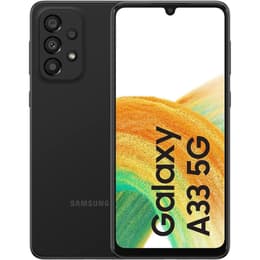
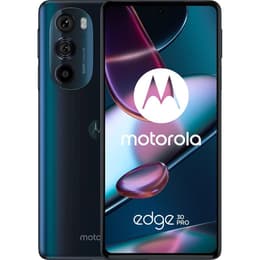
The Samsung Galaxy A33 5G, released in March 2022, and the Motorola Edge 30 Pro, launched in February 2022, are both Android smartphones that offer distinct experiences. While the Galaxy A33 5G focuses on balanced features with extended software support, the Motorola Edge 30 Pro prioritizes high-end performance and a faster display. Both devices initially ran on Android 12.

Scores

Durability

When considering the long-term usability of these devices, their release timelines and software support policies are key factors.

  • Release Timeline: Both devices were released in early 2022, making them similar in age. The Galaxy A33 5G was launched in March 2022, while the Motorola Edge 30 Pro debuted slightly earlier in February 2022.
  • OS Support Duration: The Samsung Galaxy A33 5G offers a longer software lifespan, with a commitment to four years of Android OS updates and five years of security updates. This means it is expected to receive major Android updates up to Android 16 (One UI 8) by October 2025. In contrast, the Motorola Edge 30 Pro typically receives two major Android OS updates and three years of security updates, with Android 14 expected to be its final major OS update.
  • Durability Features: The Galaxy A33 5G features an IP67 rating for dust and water resistance, providing protection against immersion in up to 1 meter of fresh water for 30 minutes. The Motorola Edge 30 Pro has an IP52 rating, indicating splash resistance but not full water immersion protection. The Galaxy A33 5G also uses Gorilla Glass 5 for its front display, offering better scratch and drop resistance compared to the Edge 30 Pro's Gorilla Glass 3 on the front.

Release year

2022

2022

Compatible with latest Update

Yes

Yes

Operating system

Android

Android

Foldable

No

No

Performance

The performance capabilities of these two smartphones cater to different user expectations, largely influenced by their internal components.

  • Processing Power: The Motorola Edge 30 Pro is equipped with a high-performance processor, designed to handle demanding applications, intensive multitasking, and graphic-heavy gaming with exceptional smoothness and responsiveness. The Samsung Galaxy A33 5G features a capable processor that provides consistent performance for everyday tasks, social media, and moderate gaming, though it may show some delays or stutters when many apps are open simultaneously.
  • Multitasking and Storage: The Edge 30 Pro offers higher RAM configurations, up to 12GB, which contributes to its ability to keep numerous applications open in the background without slowdowns. It also provides larger internal storage options, up to 512GB, but lacks a microSD card slot for expansion. The Galaxy A33 5G comes with up to 8GB of RAM and includes a microSD card slot, allowing users to expand storage up to 1TB.
  • Battery Performance: The Galaxy A33 5G houses a larger 5000 mAh battery, generally providing extended usage time that can last a full day for many users. The Motorola Edge 30 Pro has a 4800 mAh battery and supports faster 68W wired charging, as well as wireless and reverse wireless charging capabilities. However, some users have reported that the Edge 30 Pro's powerful processor can lead to quicker battery drain, especially under heavy use or during periods of overheating.

Memory (GB)

4 GB

8 GB

Screen quality

Both devices offer vibrant displays, but they differ in technology, size, and refresh rate, impacting the visual experience.

  • Display Technology and Clarity: The Samsung Galaxy A33 5G features a 6.4-inch Super AMOLED display, known for its deep blacks, high contrast, and vibrant colors. The Motorola Edge 30 Pro sports a larger 6.7-inch pOLED display, which also delivers rich colors and excellent contrast. Both screens offer a Full HD+ resolution (1080 x 2400 pixels), ensuring sharp and clear visuals for typical viewing distances.
  • Refresh Rate and Smoothness: The Edge 30 Pro provides a smoother visual experience with its 144Hz refresh rate, which is particularly noticeable during scrolling, animations, and gaming. The Galaxy A33 5G has a 90Hz refresh rate, offering a smoother experience than standard 60Hz displays, but not as fluid as the Edge 30 Pro.
  • Brightness and Viewing Experience: The Galaxy A33 5G's Super AMOLED panel can reach a typical brightness of around 695 nits, making it reasonably legible outdoors. The Edge 30 Pro's OLED display has a typical brightness of 500 nits, which is generally good but may be less bright than some competitors in direct sunlight. The larger screen size of the Edge 30 Pro offers a more expansive viewing area for media consumption and productivity.

Resolution

1080 x 2400

1080 x 2400

Screen type

Super AMOLED

OLED

Audiovisual

The camera systems on both phones aim to capture quality images, but they approach photography with different sensor configurations and processing.

  • Rear Camera Setup: The Samsung Galaxy A33 5G features a quad-camera system with a 48 MP main sensor that includes Optical Image Stabilization (OIS), an 8 MP ultrawide lens, a 5 MP macro lens, and a 2 MP depth sensor. The Motorola Edge 30 Pro has a triple-camera setup, highlighted by a 50 MP main sensor with OIS and a 50 MP ultrawide sensor, alongside a 2 MP depth sensor.
  • Photography Performance: The Galaxy A33 5G's main camera with OIS performs well in daylight, producing detailed and vibrant photos, though some users note a tendency for oversaturation. Its low-light performance is decent for its category. The Edge 30 Pro's 50 MP main and ultrawide cameras can capture detailed images, but user feedback often points to inconsistencies in image processing, particularly in low light and with moving subjects, sometimes resulting in grainy or noisy photos.
  • Video Recording and Front Camera: The Galaxy A33 5G supports video recording up to 4K at 30 frames per second and has a 13 MP front-facing camera. The Edge 30 Pro offers more advanced video capabilities, including 8K recording at 24 frames per second and 4K at 30/60 frames per second, and features a high-resolution 60 MP front camera.

Main camera

48 megapixels

50 megapixels

Front camera

13 megapixels

60 megapixels

Miscellaneous

Beyond the core features, several practical elements contribute to the overall user experience of these smartphones.

  • Connectivity and Ports: Both devices support 5G connectivity. The Motorola Edge 30 Pro offers newer Wi-Fi 6E and Bluetooth 5.2 standards, providing potentially faster and more stable wireless connections compared to the Galaxy A33 5G's Wi-Fi 5 and Bluetooth 5.1. The Edge 30 Pro also features a USB-C 3.1 port with DisplayPort 1.4 support, allowing for external display output, while the A33 5G has a USB-C 2.0 port. Neither phone includes a 3.5mm headphone jack.
  • Biometric Security: The Galaxy A33 5G incorporates an optical fingerprint sensor integrated into the display for unlocking. The Motorola Edge 30 Pro utilizes a side-mounted fingerprint sensor. Both methods offer reliable biometric authentication.
  • Design and Handling: The Galaxy A33 5G has a glass front (Gorilla Glass 5) and a plastic back and frame, weighing 186g. The Edge 30 Pro features a glass front (Gorilla Glass 3) and glass back (Gorilla Glass 5) with a plastic frame, weighing 196g. The A33 5G is slightly more compact and lighter, which might appeal to users preferring a smaller device, while the Edge 30 Pro is larger and slightly heavier.

Weight

186 oz

196 oz

Screen size (in)

6.4

6,7

Network

5G

5G

SIM card

Physical SIM

Dual Physical SIM

Carrier compatibility

Unlocked

Unlocked

User feedback for the Samsung Galaxy A33 5G often praises its reliable battery life, vibrant Super AMOLED display, and the inclusion of OIS in its main camera, which contributes to stable photos and videos. Criticisms are less frequent but sometimes mention that its processor, while capable, might not be as snappy as higher-end alternatives, occasionally leading to minor stutters with heavy use. The extended software support is a significant advantage for users planning to keep their device for several years.

The Motorola Edge 30 Pro is frequently lauded for its exceptionally fast performance, driven by its powerful processor, and its smooth 144Hz display. However, common criticisms revolve around its camera performance, which users often describe as inconsistent, especially in challenging lighting conditions or with moving subjects, despite high megapixel counts. Some users also report issues with the device heating up under load, which can impact battery life. Its shorter software update commitment compared to the A33 5G is also a point of concern for long-term users.

Users prioritizing a device with a long software support lifespan, robust dust and water resistance, and consistently good battery life for everyday tasks may find the Samsung Galaxy A33 5G well-suited to their needs. For those who value top-tier processing power for demanding applications and gaming, a very high refresh rate display, and faster charging capabilities, the Motorola Edge 30 Pro could be the preferred choice. Both devices are available as quality-assured refurbished options, providing an eco-friendly alternative for consumers.


See all articles

Our recent comparisons