Compare models
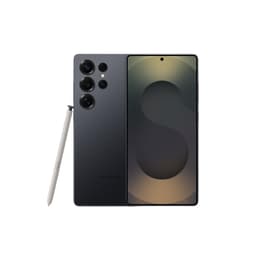
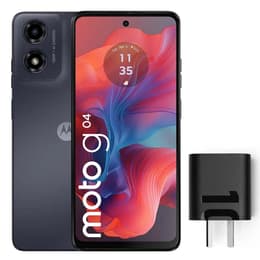
Galaxy S25 Ultra vs Motorola Moto G04
- 1-year warranty
- Free standard shipping
- Free 30-day returns
Differences at a glance
The Samsung Galaxy S25 Ultra (2025) and the Motorola Moto G04 (2024) occupy completely different segments of the smartphone market, catering to vastly distinct user needs. The Galaxy S25 Ultra serves as a high-end flagship device packed with advanced computing hardware and versatile multi-lens photography systems, while the Motorola Moto G04 functions as an entry-level smartphone designed for fundamental daily tasks. Both devices operate on Android, though their software interfaces and long-term support timelines reflect their contrasting market positioning.
Choosing between these two models depends on whether a user requires high-performance capability and advanced hardware features or simply a reliable tool for basic communication and media viewing.
Available Models
Colour
Storage (GB)
Scores
Durability
When evaluating structural longevity and software support, these two models follow very different paths dictated by their respective hardware classes.
- Software longevity: The Galaxy S25 Ultra receives extended multi-year system updates and security patches, whereas the Motorola Moto G04 features a shorter software support lifecycle geared toward fundamental updates.
- Build materials: The Galaxy S25 Ultra utilizes high-grade titanium and reinforced glass construction for robust daily protection, while the Motorola Moto G04 features a polycarbonate body designed for lightweight everyday handling.
- Expected lifespan: High-tier internal hardware ensures the Galaxy S25 Ultra retains processing capability for demanding applications over many years, while the Moto G04 suits users with standard, less intensive daily requirements.
Release year
2025
2024
Operating system
Android
Android
Foldable
No
No
Performance
System responsiveness and handling of daily workloads highlight the fundamental processing differences between these two smartphones.
- Multitasking and app loading: The Galaxy S25 Ultra handles intensive games, split-screen applications, and complex workloads smoothly, whereas the Moto G04 manages standard tasks like web browsing and messaging reliably.
- Storage capacity: The Galaxy S25 Ultra provides extensive internal storage configurations for large media libraries, while the Moto G04 offers streamlined storage suited for essential apps.
- Battery behavior: Both devices deliver sufficient daily endurance for typical usage patterns, though power users running demanding tasks on the Galaxy S25 Ultra will utilize its fast-charging capabilities to maintain power throughout the day.
Screen quality
Display characteristics vary significantly in panel technology, resolution, and visual fluidity between the two models.
- Display technology: The Galaxy S25 Ultra features a vibrant OLED screen with deep contrast and high peak brightness for clear outdoor visibility, while the Moto G04 employs an LCD screen suited for indoor viewing.
- Refresh rate and fluidity: The Galaxy S25 Ultra includes a high refresh rate panel for smooth scrolling, whereas the Moto G04 utilizes a standard refresh rate appropriate for basic navigation.
- Viewing experience: The larger, high-resolution screen on the Galaxy S25 Ultra enhances media consumption and detailed document viewing, while the Moto G04 provides a functional viewing area for standard messages and video clips.
Resolution
1440x3120
720 x 1612
Audiovisual
Photography and media recording capabilities highlight a major hardware divergence between these two smartphones.
- Camera versatility: The Galaxy S25 Ultra incorporates a multi-lens array featuring ultra-wide and telephoto options for varied shooting scenarios, while the Moto G04 features a single main rear camera for straightforward snapshots.
- Low-light performance: Advanced sensor processing allows the Galaxy S25 Ultra to capture clear images in dim environments, whereas the Moto G04 performs best in well-lit daylight conditions.
- Audio and video: The Galaxy S25 Ultra supports high-resolution video recording and balanced stereo speakers, while the Moto G04 provides adequate microphone and speaker output for casual calls and video playback.
Miscellaneous
Practical everyday features, connectivity standards, and physical dimensions shape the physical handling of each device.
- Connectivity options: The Galaxy S25 Ultra supports fast 5G networks and modern Wi-Fi standards, whereas the Moto G04 focuses primarily on 4G connectivity and standard wireless protocols.
- Physical design: The Galaxy S25 Ultra features an integrated stylus slot and a heavier, larger chassis, while the Moto G04 offers a lighter, compact frame that rests easily in one hand.
- Security features: Both devices provide biometric unlocking options, utilizing face recognition and fingerprint sensors positioned for accessible daily use.
Weight
218 oz
179 oz
Screen size (in)
6.9
6.56
Network
5G
4G
SIM card
Physical SIM + eSIM
Dual Physical SIM
Carrier compatibility
Unlocked
Unlocked
What the community thinks
User discussions across community forums highlight distinct preferences for each device based on individual requirements. Owners of the Galaxy S25 Ultra frequently praise its fluid display performance, comprehensive camera flexibility, and extensive feature set, though some note its larger physical footprint and heavier weight. Conversely, users of the Motorola Moto G04 appreciate its straightforward operation, lightweight build, and simplicity, while noting limitations when running demanding applications or capturing photos in low light.
Users prioritizing advanced photography, high processing power, and maximum software longevity will find the Galaxy S25 Ultra well-suited to their needs. Meanwhile, users prioritizing a straightforward, lightweight device for calls, messaging, and basic web browsing may lean toward the Motorola Moto G04. For buyers seeking a sustainable choice, a quality-assured refurbished option provides an eco-friendly alternative for acquiring high-end technology without purchasing newly manufactured hardware.