

Compare models
Google Pixel 10 vs iPhone 17 Pro
- 1-year warranty
- Free standard shipping
- Free 30-day returns
Differences at a glance
The Google Pixel 10 (2025) and the Apple iPhone 17 Pro (2025) represent prominent flagships from two major mobile ecosystems, each bringing distinct hardware philosophies to the smartphone market.
While both devices offer polished daily experiences, they diverge notably in software environments, user interfaces, and specialized hardware approaches.
Available Models
Colour
Storage (GB)
Scores
Durability
Both smartphones are built for long-term daily use, though their software update pathways and structural durability design differ to accommodate varying user preferences.
- Software Support: The Google Pixel 10 benefits from extended multi-year software updates, whereas the iPhone 17 Pro relies on Apple's established long-term support cycle to maintain operating system longevity.
- Repairability: Both manufacturers provide structured repair frameworks and components, though everyday repair accessibility varies depending on regional service networks and professional technician availability.
- Expected Lifespan: Robust build materials and high-capacity internal components ensure that both devices easily sustain multiple years of demanding daily routines for average consumers.
Release year
2025
2025
Operating system
Android
iOS
Foldable
No
No
Performance
Handling daily tasks and demanding software smoothly, both models utilize advanced internal architectures to deliver reliable responsiveness across diverse workloads.
- App Responsiveness: Both devices open heavy applications instantly, switch between multiple background tools without stutter, and manage intensive mobile games with efficient thermal regulation.
- Multitasking Capacity: Generous memory allocations on both models allow seamless transitions across productivity suites, streaming media, and web browsing simultaneously.
- Battery Behavior: Power management systems on both phones efficiently sustain a full day of mixed usage, though heavy media consumption or continuous navigation will require a recharge by evening.
Screen quality
Visual output is handled by vibrant display panels engineered to maintain high clarity, smooth motion, and comfortable viewing across varying ambient lighting conditions.
- Display Technology: Both models feature advanced OLED panels that deliver deep contrast levels, rich color reproduction, and sharp text rendering for comfortable reading and media consumption.
- Brightness and Outdoors: High peak brightness capabilities ensure that screens remain easily legible under direct sunlight or bright outdoor environments.
- Motion Smoothness: Adaptive high refresh rate technology allows scrolling and interface animations to render smoothly while optimizing power efficiency during static tasks.
Resolution
1080x2424
2622x1206
Screen type
OLED
Super Retina XDR
Audiovisual
Multimedia capabilities cater to everyday photography and video recording through versatile lens arrays and balanced software image processing.
- Lens Versatility: Both devices include multi-lens setups featuring wide-angle and ultra-wide capabilities alongside specialized zoom options to handle varied compositional needs.
- Low-Light Performance: Advanced sensor sensitivity and computational image handling capture clear details and balanced colors in dimly lit indoor or night settings.
- Video and Audio: High-resolution video recording features steady stabilization and clear directional microphone capture, complemented by balanced stereo speakers for media playback.
Miscellaneous
Practical physical design choices and modern connectivity standards shape how comfortably each device integrates into daily travel and accessory ecosystems.
- Connectivity: Both models support fast 5G cellular networks, modern Wi-Fi standards, and reliable Bluetooth pairing for wireless accessories.
- Biometrics and Ports: Secure facial recognition and fingerprint authentication methods streamline unlocking, while universal USB-C ports handle wired charging and data transfers.
- Build and Handling: Ergonomic dimensions and balanced weight distribution provide a secure, comfortable grip during prolonged single-handed use.
Weight
204 oz
206 oz
Screen size (in)
6.3
6.3
Network
5G
5G
SIM card
Physical SIM + eSIM
eSIM
Carrier compatibility
Unlocked
Unlocked
What the community thinks
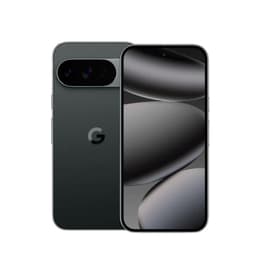
User discussions across community forums highlight strong appreciation for the Google Pixel 10's intuitive artificial intelligence integrations and clean interface design, while noting that its complex camera module protrudes noticeably from the back. Conversely, users frequently praise the iPhone 17 Pro for its robust unibody build quality and smooth processing speeds, though some express preference for lighter daily carry weights. Users prioritizing a flexible open-source environment and intelligent software assistants will find the Google Pixel 10 well-suited to their needs, while those heavily invested in the iOS ecosystem will lean toward the iPhone 17 Pro. Selecting a quality-assured refurbished option provides a sustainable choice for environmentally conscious consumers looking to minimize electronic waste without compromising on modern device performance. Ultimately, both devices offer capable flagships tailored to distinct mobile preferences.