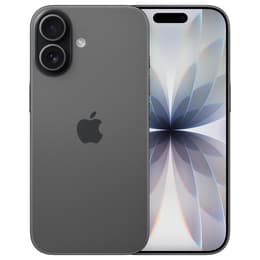

Compare models
Google Pixel 10 vs iPhone 17
- 1-year warranty
- Free standard shipping
- Free 30-day returns
Differences at a glance
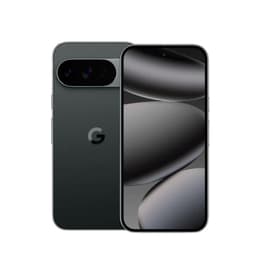
The Google Pixel 10 (2025) and the Apple iPhone 17 (2025) represent contemporary flagship smartphone engineering from two industry-leading ecosystems. While both devices deliver refined hardware, optimized daily performance, and advanced capabilities, they operate on different software platforms—Android and iOS—and cater to distinct user preferences.
Available Models
Colour
Storage (GB)
Scores
Durability
Both the Google Pixel 10 and the iPhone 17 are built for longevity, though their long-term update frameworks and hardware repairability structures differ to suit varying user requirements.
- Software Longevity: The Google Pixel 10 provides long-term operating system updates spanning multiple years, matching the extended support schedule offered by Apple for the iPhone 17.
- Repair Infrastructure: Both manufacturers provide structured repair programs, with modular internal layouts that facilitate component replacements such as batteries and screens over time.
- Expected Lifespan: Thanks to durable build materials and robust processing architectures, both devices maintain reliable functionality across years of daily use. Exploring a quality-assured refurbished option provides an eco-friendly alternative that extends device lifecycles further.
Release year
2025
2025
Operating system
Android
iOS
Foldable
No
No
Performance
Multitasking, app responsiveness, and energy management vary between the two devices based on their underlying system architecture and hardware optimization.
- Everyday Responsiveness: Both smartphones handle demanding applications, rapid app switching, and graphics-heavy gaming smoothly without noticeable stutter or delay.
- Memory and Multitasking: The Google Pixel 10 features ample memory to manage background processes effortlessly, while the iPhone 17 relies on tight hardware and software integration to sustain high efficiency.
- Battery Behavior: Each device comfortably supports a full day of standard use under mixed conditions, though individual charging routines may vary depending on screen brightness and navigation habits.
Screen quality
Display technology on both smartphones emphasizes visual clarity, vivid color accuracy, and smooth motion handling for daily media consumption.
- Display Technology: Both models utilize vibrant OLED panels that deliver deep contrast levels, sharp text rendering, and wide viewing angles.
- Outdoor Visibility: High peak brightness capabilities on both screens ensure that content remains legible under direct sunlight or bright ambient lighting.
- Motion Smoothness: High refresh rate support allows scrolling through web pages and system menus to appear fluid and responsive on both devices.
Audiovisual
Photography and video recording suites on the Google Pixel 10 and the iPhone 17 utilize distinct software processing approaches to capture everyday moments.
- Image Capture: Both devices handle low-light environments and high-contrast scenes effectively, producing clear details and balanced color reproduction across main and secondary lenses.
- Video Recording: Video stabilization features on both smartphones maintain steady footage during movement, accompanied by clear audio recording through multi-microphone arrays.
- Media Playback: Built-in stereo speaker systems deliver balanced audio output suitable for hands-free calls, podcasts, and casual video viewing.
Miscellaneous
Physical dimensions, connectivity standards, and daily handling ergonomics differ slightly between the two options.
- Connectivity and Ports: Both models support current-generation 5G networks, fast Wi-Fi standards, and universal USB-C connectivity for charging and data transfer.
- Ergonomics and Build: Dimensions and weights are balanced for single-handed use, utilizing robust glass and metal enclosures designed to resist everyday wear and tear.
- Biometric Security: Both devices offer secure authentication options combining facial recognition and secure lock-screen controls.
Weight
204 oz
177 oz
Screen size (in)
6.3
6.3
Network
5G
5G
SIM card
Physical SIM + eSIM
Physical SIM + eSIM
Carrier compatibility
Unlocked
Unlocked
What the community thinks
Choosing between the Google Pixel 10 and the iPhone 17 ultimately depends on personal ecosystem preferences and workflow habits. Users prioritizing deep integration with Google services and customizable interface options may find the Pixel 10 well-suited to their needs. Conversely, users who prefer the streamlined ecosystem and software consistency of iOS will likely gravitate toward the iPhone 17.
Reviewing community discussions reveals that users appreciate the reliable daily performance and camera versatility of both devices, while noting that preference often comes down to operating system familiarity. For those aiming to make a sustainable choice, a quality-assured refurbished option provides a reliable path to owning either of these capable smartphones.