
Google Pixel 9 Pro Fold vs iPhone 16 Plus

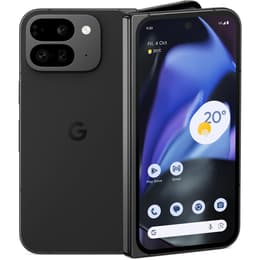
Google Pixel 9 Pro Fold
See options
iPhone 16 Plus
iPhone 16 Plus
Starting at

Refurbished price:A$942.00

Versus A$1,599.00 new

See options

Ratings

The Google Pixel 9 Pro Fold, released in September 2024, and the iPhone 16 Plus, launched in September 2024, represent distinct approaches to modern smartphone design and functionality. The Pixel 9 Pro Fold offers a unique foldable form factor, transforming from a traditional smartphone into a larger tablet-like display, while the iPhone 16 Plus maintains a classic, expansive slab design. Both devices operate on their respective flagship mobile operating systems, Android and iOS, and integrate advanced features, including sophisticated camera systems and next-generation artificial intelligence capabilities.

Scores

Durability

The longevity of a smartphone is influenced by its release timeline, software support, and physical resilience. These two devices offer different profiles in these areas.

  • Release Timeline and Software Support: The Google Pixel 9 Pro Fold, released in September 2024, ships with Android 14 and is promised seven years of operating system, security, and Pixel Feature Drop updates, ensuring extended software relevance [7, 11]. The iPhone 16 Plus, also released in September 2024, runs on iOS 18 and typically receives five or more years of major iOS updates, providing a long period of software support [13, 16, 19].
  • Physical Durability: The Pixel 9 Pro Fold features IPX8 water resistance and a Gorilla Glass Victus 2 cover display, offering protection against water immersion and everyday scratches [8, 15, 19]. Its inner foldable screen, however, utilizes a more flexible material that is generally more susceptible to scratches than traditional glass. The iPhone 16 Plus boasts a Ceramic Shield front cover and an IP68 rating for dust and water resistance, allowing it to withstand submersion up to 6 meters for 30 minutes [16].
  • Expected Practical Lifespan: Both devices are designed for long-term use, with their respective manufacturers providing substantial software update commitments. The Pixel's foldable display introduces a different set of considerations for long-term physical wear compared to the iPhone's rigid screen.

Release year

2024

2024

Compatible with latest Update

Yes

Yes

Foldable

Yes

No

Performance

Performance is a critical aspect for daily use, encompassing processing power, storage, and battery efficiency, where both devices offer robust capabilities tailored to their ecosystems.

  • Processor Capabilities and Responsiveness: The Google Pixel 9 Pro Fold is powered by Google's Tensor G4 processor, paired with 16GB of RAM, which enables smooth handling of demanding applications, efficient multitasking, and advanced on-device AI features [3, 7, 8, 11, 14]. The iPhone 16 Plus features Apple's A18 chipset and 8GB of RAM, delivering responsive performance for a wide range of tasks, from everyday browsing to intensive gaming and the new Apple Intelligence features [1, 9, 13, 16].
  • Storage Options: The Pixel 9 Pro Fold is available with 256GB or 512GB of internal storage, providing ample space for applications, media, and documents [3, 7, 8, 11, 15]. The iPhone 16 Plus offers storage configurations of 128GB, 256GB, and 512GB, catering to various user needs for digital content [1, 9, 10, 16].
  • Battery Behavior: The Pixel 9 Pro Fold is equipped with a 4650mAh battery, designed to provide over 24 hours of typical usage, with support for 45W fast charging and Qi-certified wireless charging [3, 7, 8, 12]. The iPhone 16 Plus includes a 4674mAh battery, noted for its excellent endurance, offering up to 27 hours of video playback, and supports faster MagSafe wireless charging at 25W, alongside 15W Qi2 wireless charging [13, 16, 17, 19].

Memory (GB)

16 GB

8 GB

Screen quality

The display is a primary interface, and these devices offer distinct visual experiences due to their form factors and display technologies.

  • Display Technology and Size: The Google Pixel 9 Pro Fold features two OLED displays: a 6.3-inch cover screen and an 8.0-inch inner foldable screen [7, 8, 11, 15]. The cover display has a 20:9 aspect ratio, making it comfortable for single-handed use, while the inner display offers a larger, more immersive canvas when unfolded [7, 11, 15]. The iPhone 16 Plus sports a single 6.7-inch Super Retina XDR OLED display, providing a large and vibrant viewing area in a traditional smartphone format [1, 10, 16, 17].
  • Resolution and Clarity: The Pixel 9 Pro Fold's cover display has a resolution of 1080 x 2424 pixels (422 ppi), and its inner display offers 2076 x 2152 pixels (373 ppi), ensuring sharp visuals across both screens [8, 11, 15]. The iPhone 16 Plus features a resolution of 2796 x 1290 pixels at 460 ppi, delivering high clarity and detail for all content [10, 16, 17].
  • Brightness and Refresh Rate: Both displays on the Pixel 9 Pro Fold offer a peak brightness of 2700 nits and a dynamic refresh rate ranging from 1Hz to 120Hz, providing smooth scrolling and excellent visibility in bright conditions [7, 8, 11, 15]. The iPhone 16 Plus's display achieves a typical maximum brightness of 1000 nits, with peak HDR brightness reaching 1600 nits, and can boost to 2000 nits outdoors. It maintains a consistent 60Hz refresh rate [1, 10, 17].

Resolution

2076 x 2152

1290 x 2796

Screen type

Foldable LTPO OLED

Super Retina XDR OLED

Audiovisual

Both smartphones integrate advanced camera systems, but their configurations and photographic strengths cater to different user preferences.

  • Rear Camera System: The Google Pixel 9 Pro Fold features a triple-lens rear camera setup, including a 48MP main sensor with optical image stabilization (OIS), a 10.5MP ultrawide lens that also functions for macro photography, and a 10.8MP telephoto lens offering 5x optical zoom and up to 20x Super Res Zoom [3, 11, 14, 15]. The iPhone 16 Plus comes with a dual-camera system, featuring a 48MP main camera with OIS that can achieve a 2x telephoto effect through cropping, and a 12MP ultrawide lens [1, 9, 10, 16].
  • Front-Facing Cameras and Video Quality: The Pixel 9 Pro Fold includes two 10MP front-facing cameras, one on the cover screen and one on the inner display, providing flexibility for selfies and video calls [3, 11, 15]. It supports video recording up to 4K at 60 frames per second [11]. The iPhone 16 Plus has a 12MP front camera with autofocus and offers advanced video capabilities, including 4K Dolby Vision recording up to 60fps and spatial video recording for capturing 3D content [9, 10].
  • Computational Photography and Features: Google's Pixel line is known for its computational photography, enhancing image quality across various conditions, including low light [4, 7, 11]. The iPhone 16 Plus introduces a new Camera Control button for easier access to settings and leverages features like Photonic Engine and Smart HDR 5 for optimized image processing [1, 10].

Main camera

48 megapixels

48 megapixels

Front camera

10 megapixels

12 megapixels

Miscellaneous

Beyond core specifications, several practical elements contribute to the overall user experience and device handling, from connectivity to physical design.

  • Connectivity and Ports: The Google Pixel 9 Pro Fold supports 5G, Wi-Fi 7, Bluetooth 5.3, and includes a USB-C port with USB 3.0 speeds for faster data transfer [5, 8]. It also features Ultra-Wideband (UWB) support and Satellite SOS service [7, 8]. The iPhone 16 Plus also supports 5G, Wi-Fi 6E, Bluetooth 5.3, and UWB, featuring a USB-C port, though with USB 2.0 data transfer speeds [2, 9, 16, 19].
  • Physical Design and Handling: When folded, the Pixel 9 Pro Fold measures 10.5mm thick and weighs 257g, offering a more compact form factor than its predecessor [7, 11, 14]. Unfolded, it provides a large, immersive screen. The iPhone 16 Plus has dimensions of 160.9 x 77.8 x 7.8 mm and weighs 199g, presenting a slim and relatively light profile for a large-screen device [10, 16, 17].
  • Useful Sensors and Features: The Pixel 9 Pro Fold includes a side-mounted fingerprint sensor, face unlock, and stereo speakers, along with the Titan M2 security chip and integrated Gemini AI features [7, 8, 11, 15]. The iPhone 16 Plus features Face ID for secure authentication, a new Action Button, and a dedicated Camera Control button for quick access to camera functions [1, 2, 9, 10].

Weight

257 oz

199 oz

Screen size (in)

8.0

6.7

Network

5G

5G

SIM card

Physical SIM + eSIM

Physical SIM + eSIM

Carrier compatibility

Unlocked

Unlocked

The Google Pixel 9 Pro Fold and the iPhone 16 Plus cater to different user preferences, each excelling in distinct areas. Users often praise the Pixel 9 Pro Fold for its innovative foldable design, which provides the utility of a large tablet screen in a pocketable format, and for Google's strong computational photography capabilities and extensive AI integration [4, 7, 11, 15, 23]. Common feedback also highlights its improved slimness and larger, brighter displays compared to previous foldable models [7, 11, 14]. However, some users note that the foldable screen's durability requires careful handling, and app optimization for the unique form factor can vary [19, 23].

The iPhone 16 Plus is frequently lauded for its consistent performance, robust software ecosystem, and excellent battery endurance, making it a reliable choice for everyday use [1, 17, 19]. Its camera system, particularly with the introduction of spatial video recording and the new Camera Control button, receives positive remarks for ease of use and quality [1, 10, 19]. Criticisms sometimes point to the 60Hz refresh rate, which some users find less fluid compared to devices with higher refresh rates [2].

Users prioritizing a versatile device that can switch between a traditional smartphone and a larger tablet-like experience, coupled with advanced AI features and a long software support window, may find the Google Pixel 9 Pro Fold well-suited to their needs. Conversely, users who value a consistently smooth and intuitive operating system, strong overall performance, and a highly capable camera in a conventional, durable form factor may lean toward the iPhone 16 Plus. Both devices offer quality-assured refurbished options, providing an eco-friendly alternative for consumers.

See all articles

Our recent comparisons