
Galaxy S21+ 5G vs iPhone 16 Plus

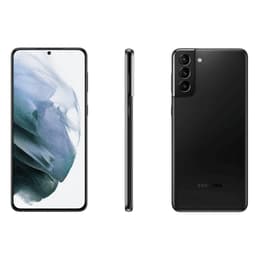
Galaxy S21+ 5G
Galaxy S21+ 5G
Starting at

Refurbished price:A$319.00

Versus A$1,747.00 new

See options
iPhone 16 Plus
iPhone 16 Plus
Starting at

Refurbished price:A$942.00

Versus A$1,599.00 new

See options

Ratings

The Samsung Galaxy S21 Plus 5G, released in January 2021, and the Apple iPhone 16 Plus, launched in September 2024, represent different generations within the smartphone landscape. While both offer large displays and robust performance, the iPhone 16 Plus benefits from more recent technological advancements, particularly in processing power and software longevity. This comparison will explore their core differences to help users determine which device aligns best with their needs.

Scores

Durability

The age difference between these two devices significantly impacts their expected practical lifespan and ongoing software support.

  • Release Timeline: The Galaxy S21 Plus 5G was released in January 2021, making it over three years old at the time of this comparison. The iPhone 16 Plus, released in September 2024, is a much newer device.
  • Software Longevity: The Galaxy S21 Plus 5G launched with Android 11 and has likely received its last major Android operating system update, with security updates potentially concluding in early 2025. In contrast, the iPhone 16 Plus, launching with iOS 18, is expected to receive major iOS updates for many more years, typically five to seven years from its release, offering a longer period of access to new features and security enhancements.
  • Durability Features: Both devices feature robust build materials and IP68 ratings for water and dust resistance. The iPhone 16 Plus incorporates Ceramic Shield on its front display, which is designed for enhanced drop performance, while the Galaxy S21 Plus 5G uses Corning Gorilla Glass Victus.

Release year

2021

2024

Compatible with latest Update

Yes

Yes

Foldable

No

No

Performance

Performance is a key area where the generational gap between these two smartphones becomes apparent, influencing how smoothly they handle demanding applications and multitasking.

  • Processing Power: The iPhone 16 Plus is equipped with a more recent processor, featuring a 6-core CPU and a 5-core GPU, alongside a 16-core Neural Engine. This hardware configuration provides a substantial boost in speed and efficiency compared to the Galaxy S21 Plus 5G's processor, which was a top-tier chip at its 2021 release.
  • Multitasking and Responsiveness: Both devices offer 8GB of RAM, which is sufficient for managing multiple applications simultaneously. However, the iPhone 16 Plus's more efficient processor and optimized software allow for smoother transitions and faster app loading, especially with graphically intensive games or complex productivity tools.
  • Storage Options: The Galaxy S21 Plus 5G is available with 128GB or 256GB of internal storage, without expandable memory. The iPhone 16 Plus offers more flexibility with 128GB, 256GB, and 512GB storage options, catering to users with larger digital libraries.

Memory (GB)

8 GB

8 GB

Screen quality

Both smartphones feature large, vibrant displays, but they differ in their underlying technology and refresh rate capabilities.

  • Display Technology and Clarity: The Galaxy S21 Plus 5G features a 6.7-inch Dynamic AMOLED 2X display with a resolution of 1080 x 2400 pixels, resulting in a pixel density of 394 ppi. The iPhone 16 Plus also has a 6.7-inch Super Retina XDR OLED display, offering a higher resolution of 2796 x 1290 pixels and a pixel density of 460 ppi, providing a slightly sharper image.
  • Brightness and Outdoor Visibility: The Galaxy S21 Plus 5G can reach a peak brightness of 1300 nits, offering good visibility in various lighting conditions. The iPhone 16 Plus surpasses this with a typical brightness of 1000 nits and a peak outdoor brightness of 2000 nits, making it exceptionally clear even in direct sunlight.
  • Refresh Rate: The Galaxy S21 Plus 5G features an adaptive 120Hz refresh rate, which allows for smoother scrolling and more fluid animations. The iPhone 16 Plus maintains a standard 60Hz refresh rate, which is suitable for most daily tasks but may not appear as fluid as a higher refresh rate display.

Resolution

1080 x 2400

1290 x 2796

Screen type

Dynamic AMOLED 2X

Super Retina XDR OLED

Audiovisual

Both devices offer capable camera systems designed for capturing a variety of moments, though with different approaches and features.

  • Rear Camera Systems: The Galaxy S21 Plus 5G is equipped with a triple-lens rear camera setup, including a 12MP wide-angle, a 64MP telephoto with 3x hybrid optical zoom, and a 12MP ultrawide lens. The iPhone 16 Plus features an advanced dual-camera system with a 48MP main sensor that can achieve a 2x telephoto effect through cropping, and a 12MP ultrawide lens.
  • Photography Features: The Galaxy S21 Plus 5G offers features like 30x Space Zoom (digital) and 8K video recording. The iPhone 16 Plus introduces Spatial Capture for 3D photos and videos, an improved 12MP front camera with autofocus, and a new Camera Control button for enhanced photographic control.
  • Low-Light and Video Performance: Both phones are capable of capturing detailed images in various lighting conditions. The iPhone 16 Plus, with its larger main sensor and advanced image processing, tends to excel in low-light scenarios and offers 4K Dolby Vision video recording, providing high-quality video capture.

Main camera

12 megapixels

48 megapixels

Front camera

10 megapixels

12 megapixels

Miscellaneous

Beyond core performance and display, several practical elements differentiate these two smartphones in daily use.

  • Connectivity Standards: Both devices support 5G connectivity for fast mobile data. The Galaxy S21 Plus 5G supports Wi-Fi 6 and Bluetooth 5.0/5.2. The iPhone 16 Plus features newer connectivity standards, including Wi-Fi 7 and Bluetooth 5.3, offering potentially faster and more stable wireless connections.
  • Physical Design and Handling: The Galaxy S21 Plus 5G measures 161.5 x 75.6 x 7.8 mm and weighs 200g. The iPhone 16 Plus has very similar dimensions at 160.9 x 77.8 x 7.8 mm and weighs 199g, making both large-screen devices that are comparable in hand feel.
  • User Interaction and Ports: The Galaxy S21 Plus 5G features an under-display fingerprint sensor and face recognition for biometric security. The iPhone 16 Plus relies on Face ID for secure authentication and includes a new Action Button for customizable shortcuts. Both devices utilize a USB-C port for charging and data transfer, though the iPhone 16 Plus's USB-C port operates at USB 2.0 speeds for data.

Weight

200 oz

199 oz

Screen size (in)

6.7

6.7

Network

5G

5G

SIM card

Physical SIM + eSIM

Physical SIM + eSIM

Carrier compatibility

Unlocked

Unlocked

The Samsung Galaxy S21 Plus 5G and the Apple iPhone 16 Plus cater to users with different priorities, largely due to their generational gap. Users frequently praise the iPhone 16 Plus for its exceptional battery life, often reporting it lasts well into a second day of use, and its powerful processor that handles demanding tasks with ease. Its long-term software support is also a significant advantage for those who keep their devices for many years. Some users, however, note that the 60Hz refresh rate on the iPhone 16 Plus is a noticeable difference compared to devices with higher refresh rates.

The Galaxy S21 Plus 5G, while an older model, was well-regarded for its vibrant AMOLED display with a 120Hz adaptive refresh rate and a versatile camera system at its release. Its main criticisms often revolve around its more limited software update lifespan compared to newer devices. For users prioritizing a device with the latest processing power, extended software support, and outstanding battery performance, the iPhone 16 Plus is a strong contender. Conversely, those who value a smoother display experience with a 120Hz refresh rate and a dedicated telephoto camera, and are comfortable with an older software ecosystem, might consider the Galaxy S21 Plus 5G. Both devices, when acquired as quality-assured refurbished options, offer a sustainable choice for consumers.
See all articles

Our recent comparisons