
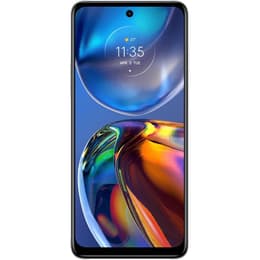
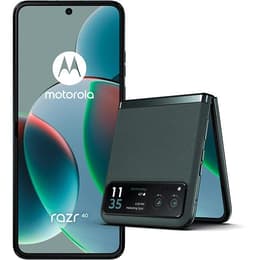

Motorola Moto E32 vs Motorola Razr 40

Motorola Moto E32
Motorola Moto E32
See options
Motorola Razr 40
Motorola Razr 40
See options

The Motorola Moto E32, released in May 2022, and the Motorola Razr 40, launched in June 2023, represent distinct approaches within the smartphone market. The Moto E32 is a traditional slab-style smartphone, while the Razr 40 features a foldable design. These devices cater to different user preferences, primarily differing in their form factor, display technology, and overall performance capabilities. Both run on the Android operating system, offering a familiar software experience.

Scores

Durability

The expected practical lifespan of these devices varies significantly due to their release timelines and software support policies.

  • Release Timeline and Age: The Moto E32 was released in May 2022, making it an older model compared to the Razr 40, which launched in June 2023. This difference in release date impacts their remaining software support.
  • Software Longevity: The Motorola Razr 40 is expected to receive three major Android OS upgrades and four years of bi-monthly security updates from its release. The Moto E32, launching with Android 11, typically receives fewer major OS updates, suggesting a shorter period of official software support.
  • Repairability: The Razr 40, with its complex foldable design, has a lower repairability score due to the intricate components and adhesive used, making repairs more challenging. The Moto E32, as a standard smartphone, generally offers a more straightforward repair process.

Release year

2022

2023

Compatible with latest Update

No

Yes

Operating system

Android

Android

Foldable

No

Yes

Performance

Performance differences between the Moto E32 and the Razr 40 are notable, influencing how smoothly each device handles daily tasks and demanding applications.

  • Processor Capabilities: The Razr 40 is equipped with a more capable current-generation processor, allowing it to handle demanding applications, multitasking, and graphically intensive games with greater fluidity. The Moto E32 features a processor designed for essential smartphone functions, suitable for everyday tasks and lighter usage.
  • System Responsiveness and RAM: The Razr 40 typically offers 8GB or 12GB of RAM, contributing to a highly responsive user experience and efficient multitasking. The Moto E32 comes with 4GB of RAM, which is sufficient for basic app usage and navigation but may show limitations with numerous apps open simultaneously.
  • Storage Options: The Razr 40 provides internal storage options of 128GB or 256GB, offering ample space for apps, media, and files. The Moto E32 typically includes 64GB of internal storage, which can be expanded using a microSD card for additional space.

Memory (GB)

4 GB

8 GB

Screen quality

The display experience is a primary differentiator, with the Razr 40's foldable screen offering a distinct visual and interactive experience compared to the Moto E32's traditional display.

  • Display Technology and Clarity: The Razr 40 features a 6.9-inch foldable LTPO AMOLED main display with a resolution of 1080 x 2640 pixels, providing deep blacks and vibrant colors. It also includes a 1.5-inch OLED cover display for quick interactions. The Moto E32 has a 6.5-inch IPS LCD display with a resolution of 720 x 1600 pixels, offering clear visuals for general use.
  • Refresh Rate and Smoothness: The Razr 40's main display boasts a 144Hz refresh rate, resulting in very smooth scrolling and animations. The Moto E32 offers a 90Hz refresh rate, which provides a smoother experience than standard 60Hz displays.
  • Brightness and Viewing Experience: The Razr 40's AMOLED display can reach higher peak brightness levels, enhancing visibility in bright outdoor conditions and supporting HDR10+ content for a more dynamic viewing experience. The Moto E32's IPS LCD panel provides adequate brightness for indoor and typical outdoor use.

Resolution

720 x 1600

1080 x 2640

Screen type

IPS LCD

Foldable LTPO AMOLED

Audiovisual

Camera capabilities differ between the two devices, with the Razr 40 offering more advanced features and higher resolution sensors.

  • Rear Camera System: The Razr 40 features a dual rear camera setup, including a 64MP main sensor with optical image stabilization (OIS) and a 13MP ultrawide lens that also supports macro photography. The Moto E32 has a triple rear camera system, typically with a 16MP main sensor, a 2MP macro lens, and a 2MP depth sensor.
  • Photography Performance: The Razr 40's main camera is capable of capturing detailed images with good color reproduction, and OIS assists in reducing blur in various lighting conditions. Its ultrawide camera also performs well. The Moto E32's camera system is suitable for everyday photos in good lighting, but its performance in low-light situations may be more limited.
  • Video Recording and Front Camera: The Razr 40 can record 4K video at 30 frames per second and features a 32MP front camera that uses pixel-binning to produce 8MP selfies. The Moto E32 records 1080p video at 30 frames per second and has an 8MP front camera for selfies and video calls.

Main camera

16 megapixels

64 megapixels

Front camera

8 megapixels

32 megapixels

Miscellaneous

Beyond core features, several practical elements distinguish the Moto E32 and the Razr 40, impacting their usability and overall experience.

  • Connectivity and Ports: The Razr 40 supports 5G connectivity, Wi-Fi 6, and Bluetooth 5.3, offering faster wireless speeds and broader network compatibility. It features a USB Type-C 2.0 port but lacks a 3.5mm headphone jack. The Moto E32 supports 4G LTE, Wi-Fi 802.11 b/g/n, and Bluetooth 5.0/5.1. It includes a USB Type-C 2.0 port and retains a 3.5mm headphone jack.
  • Build Materials and Durability Features: The Razr 40 features an aluminum frame, a vegan leather finish on the back, and a stainless steel hinge, with a water-repellent coating and IP52 rating for splash resistance. The Moto E32 has a glass front, plastic frame, and plastic back, also with a water-repellent design.
  • Sensors and Biometrics: Both devices include a side-mounted fingerprint sensor. The Razr 40 also offers face unlock and a wider array of sensors, including a gyroscope, proximity sensor, compass, and barometer. The Moto E32 includes an accelerometer and proximity sensor.

Weight

184 oz

189 oz

Screen size (in)

6,5

6,9

Network

4G

5G

SIM card

Dual Physical SIM

Dual Physical SIM + eSIM

Carrier compatibility

Unlocked

Unlocked

The Motorola Moto E32 and Motorola Razr 40 cater to different segments of the smartphone market, each with distinct advantages. Users often praise the Razr 40 for its unique foldable design, vibrant AMOLED display with a high refresh rate, and capable camera system, particularly its main sensor with OIS. Its more powerful processor and 5G connectivity are also frequently highlighted as strong points. However, some users note the challenges associated with its repairability due to the complex folding mechanism.

The Moto E32 is generally appreciated for its large battery capacity, offering extended usage times, and its 90Hz display, which provides a smoother visual experience than many devices in its category. Its expandable storage is also a practical benefit for many. Criticisms often revolve around its more modest processor performance and lower-resolution display compared to higher-end devices.

Users prioritizing a modern, compact, and feature-rich experience with a focus on display quality and camera performance may find the Motorola Razr 40 well-suited to their needs. Its foldable form factor offers a unique blend of portability and screen real estate. Conversely, individuals seeking a reliable, long-lasting device for everyday tasks, with a strong emphasis on battery life and expandable storage, might lean toward the Motorola Moto E32. Both models are available as quality-assured refurbished options, providing an eco-friendly alternative for consumers.
See all articles

Our recent comparisons
