

Galaxy S25+ vs Motorola Razr 40 Ultra

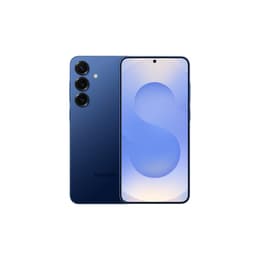
Galaxy S25+
Galaxy S25+
Starting at

Refurbished price:A$922.00

Versus A$1,699.00 new

See options
Motorola Razr 40 Ultra
See options

The Samsung Galaxy S25 Plus (released February 2025) and the Motorola Razr 40 Ultra (released June 2023) represent distinct approaches to smartphone design and functionality. While the Galaxy S25 Plus offers a traditional, high-performance slab experience, the Razr 40 Ultra stands out with its innovative foldable clamshell form factor and highly functional external display. Both devices run on the Android operating system, but they cater to different user preferences with their unique features and capabilities.

Scores

Durability

The expected practical lifespan of a smartphone is significantly influenced by its release timeline, physical durability, and the manufacturer's commitment to software updates.

  • Release Timeline and Software Support: The Samsung Galaxy S25 Plus, released in February 2025, benefits from a more recent launch, offering seven years of major Android OS upgrades and seven years of security updates, extending its software longevity well into the future. In contrast, the Motorola Razr 40 Ultra, launched in June 2023, is promised three major Android OS upgrades and four years of bi-monthly security updates.
  • Physical Durability: The Galaxy S25 Plus features an Armor Aluminum frame and Gorilla Glass Victus 2 on both its front and back, along with an IP68 rating for dust and water resistance, indicating robust protection against environmental elements. The Razr 40 Ultra incorporates a 7000-series aluminum frame and Gorilla Glass Victus for its cover screen, with an IP52 water-repellent rating, offering splash protection. However, some durability tests have raised concerns about the Razr 40 Ultra's cover screen, noting its susceptibility to shattering under pressure due to a lack of structural backing.
  • Repairability: While specific repairability scores can vary, the traditional design of the Galaxy S25 Plus generally lends itself to more straightforward repairs compared to the complex internal structure of a foldable device like the Razr 40 Ultra. User reports for the Razr 40 Ultra suggest that while the hinge itself can be durable over time, screen repairs, particularly for the foldable display, can be complex.

Performance

Performance is a key differentiator, with the newer Galaxy S25 Plus offering more advanced processing capabilities compared to the Razr 40 Ultra.

  • Processing Power and Responsiveness: The Samsung Galaxy S25 Plus is equipped with a current-generation processor, which provides a significant boost in speed and efficiency, ensuring smooth operation for demanding applications and multitasking. This results in faster app loading times and a highly responsive user experience. The Motorola Razr 40 Ultra utilizes a previous-generation flagship processor, which still handles everyday tasks and most applications competently, but may show limitations in comparison during intensive gaming or heavy multitasking scenarios.
  • Multitasking and Storage: The Galaxy S25 Plus typically comes with 12GB of RAM, facilitating seamless switching between numerous applications and maintaining performance under heavy loads. It offers storage options of 256GB and 512GB. The Razr 40 Ultra is available with 8GB or 12GB of RAM and 256GB or 512GB of internal storage, providing ample space for most users. Neither device offers expandable storage.
  • Battery Behavior: The Galaxy S25 Plus features a larger 4900 mAh battery, which generally translates to extended usage times, with users reporting it can last through a full day of heavy use. The Razr 40 Ultra has a 3800 mAh battery, which, combined with its foldable display technology, may require more frequent charging for users with high demands.

Memory (GB)

12 GB

8 GB

Screen quality

The display experience varies significantly between these two devices, primarily due to their distinct form factors and display technologies.

  • Main Display Technology and Clarity: The Samsung Galaxy S25 Plus features a 6.7-inch Dynamic LTPO AMOLED 2X display with a high QHD+ resolution (3120x1440 pixels), delivering exceptional sharpness, deep blacks, and vibrant colors. The Motorola Razr 40 Ultra's main display is a 6.9-inch pOLED panel with a Full HD+ resolution (2640x1080 pixels), offering a clear and immersive viewing experience, with the added benefit of being foldable.
  • Brightness and Refresh Rate: The Galaxy S25 Plus boasts a peak brightness of up to 2600 nits, ensuring excellent visibility even in bright outdoor conditions, and an adaptive 120Hz refresh rate for smooth scrolling and responsiveness. The Razr 40 Ultra's main display reaches up to 1400 nits of peak brightness and offers a high 165Hz refresh rate, providing a fluid visual experience, though its peak brightness is lower than the S25 Plus.
  • Unique Display Features: A standout feature of the Razr 40 Ultra is its large 3.6-inch pOLED cover display, which has a 144Hz refresh rate and can be used for a wide range of tasks, including checking notifications, running apps, and taking selfies with the main cameras. The Galaxy S25 Plus, as a traditional slab phone, does not have a secondary external display. The foldable nature of the Razr 40 Ultra's main screen means a subtle crease is present, though users often report it is barely noticeable during typical use.

Audiovisual

Both smartphones offer capable camera systems, but they approach photography with different strengths and features.

  • Rear Camera Systems: The Samsung Galaxy S25 Plus is equipped with a versatile triple-camera setup, including a 50MP main wide-angle lens with optical image stabilization (OIS), a 12MP ultrawide lens, and a 10MP telephoto lens capable of 3x optical zoom. This configuration provides flexibility for various shooting scenarios, from wide landscapes to zoomed-in subjects. The Motorola Razr 40 Ultra features a dual-camera system on its rear, comprising a 12MP wide-angle lens with OIS and a 13MP ultrawide lens that also functions for macro photography.
  • Photography Performance: The Galaxy S25 Plus generally delivers strong image quality, particularly with its main sensor, offering good detail, color reproduction, and dynamic range, even in low-light conditions. Its ProVisual Engine enhances image processing. The Razr 40 Ultra's cameras perform well for everyday photography, and its foldable design allows for unique shooting angles and the use of the main cameras for high-quality selfies via the cover screen.
  • Video Recording and Front Camera: The Galaxy S25 Plus supports high-resolution video recording and includes a 12MP front-facing camera with autofocus, producing sharp and clear selfies. The Razr 40 Ultra offers a 32MP front camera for selfies and video calls, and its ability to use the main rear cameras with the cover screen provides a distinct advantage for self-portraits and vlogging.

Miscellaneous

Beyond core specifications, several practical elements contribute to the overall user experience of these devices.

  • Connectivity and Ports: The Samsung Galaxy S25 Plus supports advanced connectivity standards, including 5G, Wi-Fi 7, and Bluetooth 5.4, ensuring fast and reliable wireless connections. It features a USB-C port for charging and data transfer. The Motorola Razr 40 Ultra also offers 5G connectivity, Wi-Fi 6E, and Bluetooth, along with a USB Type-C port.
  • Biometrics and Sensors: The Galaxy S25 Plus incorporates an ultrasonic in-screen fingerprint sensor for secure and convenient unlocking. The Razr 40 Ultra uses a side-mounted fingerprint sensor. Both devices include standard sensors like accelerometers, gyroscopes, and compasses.
  • Design and Handling: The Galaxy S25 Plus presents a sleek, traditional slab design with an Armor Aluminum frame and Gorilla Glass Victus 2, offering a premium feel and an IP68 rating for dust and water resistance. It measures 158.4 x 75.8 x 7.3mm and weighs 190g. The Razr 40 Ultra's foldable design allows it to be compact when closed (73.95 × 88.42 × 15.1 mm) and expands to a larger screen when unfolded (73.95 × 170.82 × 6.99 mm), weighing around 184.5-188.5g. Its unique form factor enables features like Flex View, allowing the phone to stand on its own for hands-free use.

Screen size (in)

6.7

6.9

Network

5G

5G

SIM card

Physical SIM + eSIM

Dual Physical SIM

Carrier compatibility

Unlocked

Unlocked

Users frequently praise the Samsung Galaxy S25 Plus for its consistently strong performance, vibrant display, and comprehensive software support. Common feedback highlights its reliable camera system and robust build quality as significant advantages. Some users, however, note that while the design is refined, it represents an incremental evolution rather than a radical change from previous generations.

The Motorola Razr 40 Ultra is often lauded for its innovative foldable design and the versatility of its large external display, which allows for extensive functionality without needing to open the phone. Its unique form factor and ability to stand at various angles for content creation are also frequently mentioned as positives. Criticisms sometimes point to its battery life and the durability concerns surrounding the cover screen under specific pressures.

Users prioritizing a long-lasting device with extensive software support, a top-tier traditional display, and a highly capable, versatile camera system will find the Samsung Galaxy S25 Plus well-suited to their needs. Its robust build and powerful internal components make it a reliable choice for demanding daily use. Conversely, users who value a compact, stylish, and innovative form factor with a highly interactive external display may lean toward the Motorola Razr 40 Ultra. Its unique design offers a different way to interact with a smartphone, appealing to those seeking a fresh experience. Both devices offer compelling features, and choosing between them often comes down to whether a traditional, high-performance slab or a cutting-edge foldable design aligns better with individual preferences. For those considering either model, exploring quality-assured refurbished options can be an eco-friendly alternative.


See all articles

Our recent comparisons