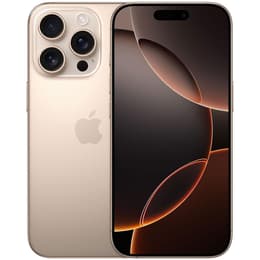

Galaxy A55 vs iPhone 16 Pro

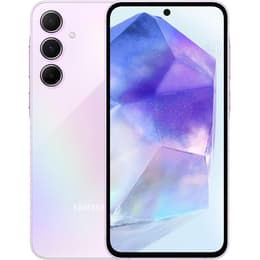
Galaxy A55
Galaxy A55
Starting at

Refurbished price:A$340.00

Versus A$699.00 new

See options
iPhone 16 Pro
iPhone 16 Pro
Starting at

Refurbished price:A$1,134.00

Versus A$1,999.00 new

See options

Ratings

The Samsung Galaxy A55 and the iPhone 16 Pro represent distinct offerings in the smartphone market, released in March 2024 and September 2024, respectively. While the Galaxy A55 operates on Android with Samsung's One UI, the iPhone 16 Pro runs on Apple's iOS platform. Key differentiators between these two devices include their core processing power, camera system capabilities, and overall ecosystem integration, catering to different user preferences.

Scores

Durability

When considering the longevity of a smartphone, several factors come into play, including software support, physical durability, and the timeline of its release.

  • Release Timeline: The Samsung Galaxy A55 was released in March 2024, while the iPhone 16 Pro followed in September 2024, giving the iPhone a slight advantage in terms of its newer launch date.
  • Software Longevity: Samsung typically provides four major OS updates and five years of security patches for the Galaxy A55, ensuring several years of current software. Apple generally offers 5-6 years of major iOS updates for its devices, meaning the iPhone 16 Pro is likely to receive software support for an extended period.
  • Physical Durability: The Galaxy A55 features an aluminum frame and Gorilla Glass Victus+ on its front, contributing to its robust build, along with an IP67 rating for dust and water resistance. The iPhone 16 Pro boasts a titanium frame, a Ceramic Shield front cover, and an IP68 rating, indicating a higher level of water and dust resistance.

Release year

2024

2024

Foldable

No

No

Performance

Performance is a critical aspect for users, influencing everything from app responsiveness to gaming experiences and multitasking efficiency.

  • Processing Power: The Galaxy A55 is equipped with an Exynos 1480 processor, which handles everyday tasks and moderate gaming smoothly. The iPhone 16 Pro is powered by the A18 Pro chip, which offers a significant performance boost, particularly for demanding applications, graphics-intensive games, and advanced AI tasks.
  • Multitasking and Responsiveness: The Galaxy A55 comes with 8GB or 12GB of RAM, allowing for efficient multitasking. The iPhone 16 Pro features 8GB of RAM, optimized by iOS for smooth app switching and overall system responsiveness, even with numerous applications open.
  • Battery Behavior: The Galaxy A55 includes a 5000 mAh battery, often providing a full day of heavy use and sometimes extending to two days for lighter users. The iPhone 16 Pro features a larger battery than its predecessors, designed to offer extended usage, with reports suggesting up to 29 hours of talk time.

Memory (GB)

8 GB

8 GB

Screen quality

The display is the primary interface for user interaction, and its quality significantly impacts the viewing experience for media, browsing, and daily tasks.

  • Display Technology and Clarity: The Galaxy A55 features a 6.6-inch Super AMOLED display with a Full HD+ resolution, offering vibrant colors and deep blacks. The iPhone 16 Pro comes with a 6.3-inch Super Retina XDR OLED display, providing exceptional clarity and color accuracy.
  • Brightness and Refresh Rate: Both devices offer a 120Hz refresh rate for smooth scrolling and animations. The Galaxy A55 reaches a peak brightness of 1000 nits, suitable for outdoor visibility. The iPhone 16 Pro achieves a typical brightness of 1000 nits and a peak brightness of 2000 nits, enhancing visibility in bright sunlight and for HDR content.
  • Viewing Experience: The iPhone 16 Pro also incorporates an Always-On display and ProMotion technology, which dynamically adjusts the refresh rate for power efficiency and smoother visuals. Both phones feature edge-to-edge displays, with the iPhone 16 Pro having notably thinner bezels for a more expansive viewing area.

Resolution

1080x2340

1206 x 2622

Audiovisual

Camera capabilities are a major consideration for many users, influencing the quality of photos and videos captured in various environments.

  • Rear Camera Systems: The Galaxy A55 is equipped with a triple rear camera setup, including a 50MP main sensor with optical image stabilization (OIS), a 12MP ultrawide lens, and a 5MP macro lens. The iPhone 16 Pro features a more advanced triple-camera system, comprising a 48MP main sensor with sensor-shift OIS, a 48MP ultrawide sensor, and a 12MP telephoto lens with 5x optical zoom.
  • Photography Performance: The Galaxy A55 delivers sharp and detailed photos in good lighting, with decent low-light performance for its category. The iPhone 16 Pro offers enhanced low-light photography and improved detail across all lenses, particularly with its upgraded ultrawide sensor.
  • Video Recording and Front Camera: Both devices support 4K video recording at 30fps. The iPhone 16 Pro elevates video capabilities with 4K recording at up to 120fps, including ProRes and Spatial Video options, and features a 12MP front camera. The Galaxy A55 has a 32MP front camera, capable of 4K video recording.

Miscellaneous

Beyond the core features, several practical elements contribute to the overall user experience and device utility.

  • Connectivity and Ports: Both smartphones support 5G connectivity. The Galaxy A55 includes Wi-Fi 6 and Bluetooth 5.3, with a USB-C 2.0 port. The iPhone 16 Pro offers more advanced connectivity with Wi-Fi 7 and Bluetooth 5.3, alongside a USB-C port.
  • Biometrics and Navigation: The Galaxy A55 features an in-display fingerprint sensor for secure unlocking. The iPhone 16 Pro relies on Face ID for biometric authentication. Both devices offer GPS and other location technologies.
  • Design and Handling: The Galaxy A55 has dimensions of 161.1 x 77.4 x 8.2 mm and weighs 213g, featuring a glass back and aluminum frame. The iPhone 16 Pro is slightly more compact and lighter at 149.6 x 71.5 x 8.25 mm and 199g, with a titanium frame and textured matte glass back. The iPhone 16 Pro also introduces a new Camera Control button for quick access to camera functions.

Weight

213 oz

199 oz

Screen size (in)

6.6

6.3

Network

5G

5G

SIM card

Physical SIM

Physical SIM + eSIM

Carrier compatibility

Unlocked

Unlocked

User feedback for the Samsung Galaxy A55 often highlights its premium design and feel, with many appreciating its vibrant display and robust battery life for daily use. Its camera system is generally considered good for its segment, particularly in well-lit conditions and for low-light shots. Some users have noted that while the battery capacity is large, real-world battery performance can sometimes be inconsistent, and the camera's software processing can occasionally lead to oversaturated colors. The Gorilla Glass Victus+ on the front provides good drop resistance, though some users recommend a screen protector to prevent micro-scratches.

For the iPhone 16 Pro, common praise centers on its powerful A18 Pro chip, which delivers exceptional performance for demanding applications and gaming. Users also commend its advanced camera system, especially the upgraded ultrawide sensor and 5x telephoto capabilities, along with its high-quality video recording features. The brighter, larger OLED display with ProMotion is another frequently lauded feature. Some discussions around the new Camera Control button suggest mixed opinions on its practical utility, though its quick access to camera functions is appreciated.

Users prioritizing a device with a highly capable camera system, top-tier processing power for intensive tasks, and a premium build with a strong software ecosystem may find the iPhone 16 Pro well-suited to their needs. Conversely, users seeking a device with a large, vibrant display, expandable storage, and a long-lasting battery for general use, within the Android ecosystem, might lean towards the Samsung Galaxy A55. Both devices offer compelling features for different user profiles, and considering a quality-assured refurbished option for either model can be an eco-friendly alternative.


See all articles

Our recent comparisons