Compare models
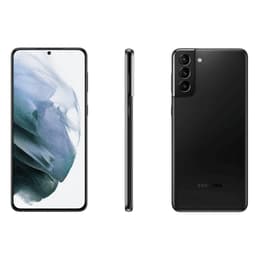
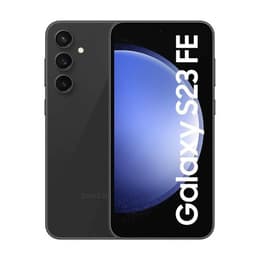
Galaxy S21+ 5G vs Galaxy S23 FE
- 1-year warranty
- Free standard shipping
- Free 30-day returns
Differences at a glance
The Samsung Galaxy S21 Plus 5G, released in January 2021, and the Samsung Galaxy S23 FE, launched in October 2023, are both prominent smartphones within Samsung's Galaxy S series. While both devices offer a premium Android experience, the S23 FE introduces a more recent hardware generation and extended software support, distinguishing it from its predecessor. Both run on Samsung's One UI atop the Android operating system, providing a consistent user interface.
Available Models
Colour
Storage (GB)
Scores
Durability
The practical lifespan of a smartphone is significantly influenced by its release date and the manufacturer's commitment to software updates and repairability.
- Release Timeline: The Galaxy S21 Plus 5G was released in January 2021, making it an older device compared to the Galaxy S23 FE, which launched in October 2023. This age difference directly impacts their remaining software support.
- Software Longevity: The Galaxy S21 Plus 5G launched with Android 11 and was upgradable to Android 14, indicating its major OS update cycle is likely concluding or has concluded. In contrast, the Galaxy S23 FE launched with Android 13 and is guaranteed to receive four major OS updates, extending its support until Android 17, along with five years of security patches until 2028. This provides the S23 FE with a considerably longer period of official software support.
- Repairability: Both devices feature an IP68 rating for dust and water resistance, offering protection against environmental elements. The Galaxy S23 FE has been noted for its improved repairability, featuring design elements like battery pull tabs that facilitate easier component replacement, potentially leading to a higher repairability score. The S21 Plus 5G, while durable, does not have the same explicit design considerations for ease of repair.
Release year
2021
2023
Compatible with latest Update
Yes
Yes
Operating system
Android
Android
Foldable
No
No
Performance
Performance in daily use, from app responsiveness to handling demanding tasks, is a key differentiator between these two Galaxy smartphones.
- Processing Power: The Galaxy S21 Plus 5G is powered by a processor that was a flagship in 2021, providing smooth performance for everyday applications and moderate multitasking. The Galaxy S23 FE features a newer generation processor, originally a flagship from 2022, which offers enhanced efficiency and more robust performance for graphically intensive games and demanding applications, ensuring a more responsive experience over time.
- Multitasking and Storage: Both devices typically come with 8GB of RAM, allowing for competent multitasking. Both offer 128GB and 256GB storage options. The 256GB variant of the S23 FE utilizes a newer, faster storage technology compared to the 128GB version and the S21 Plus, which can result in quicker app loading and data transfer speeds.
- Battery Behavior: The Galaxy S21 Plus 5G is equipped with a 4800 mAh battery. The Galaxy S23 FE has a 4500 mAh battery. User experiences suggest the S23 FE generally provides a full day of use for typical activities, though heavy usage, such as extended gaming or video streaming, may require more frequent charging.
Screen quality
The visual experience on both devices is delivered through high-quality displays, though with some distinctions in size and brightness.
- Display Technology and Clarity: Both smartphones feature Dynamic AMOLED 2X displays, known for their vibrant colors and deep blacks. They both offer Full HD+ resolution (1080 x 2400 pixels for S21 Plus, 1080 x 2340 pixels for S23 FE), providing sharp and clear visuals for everyday viewing.
- Brightness and Refresh Rate: The Galaxy S23 FE offers a higher peak brightness of 1450 nits, making it slightly more visible in bright outdoor conditions compared to the S21 Plus 5G's 1300 nits. Both devices feature an adaptive 120Hz refresh rate, which contributes to smoother scrolling and a more fluid user interface experience.
- Screen Size: The Galaxy S21 Plus 5G has a larger 6.7-inch display, offering a more expansive viewing area. The Galaxy S23 FE features a slightly more compact 6.4-inch display.
Resolution
1080 x 2400
1080 x 2340
Screen type
Dynamic AMOLED 2X
Dynamic AMOLED 2X
Audiovisual
Both devices offer versatile camera systems designed to capture a range of photographic and video content, with some differences in sensor technology.
- Rear Camera System: The Galaxy S21 Plus 5G features a triple-lens setup with a 12MP wide-angle, a 64MP telephoto with 3x hybrid zoom, and a 12MP ultrawide camera. The Galaxy S23 FE also has a triple camera system, comprising a 50MP wide-angle, an 8MP telephoto with 3x optical zoom, and a 12MP ultrawide camera. The S23 FE's larger main sensor can capture more detail and perform well in varied lighting conditions.
- Front Camera and Video Capabilities: Both smartphones are equipped with a 10MP front-facing camera for selfies and video calls. For video recording, both support 8K resolution at 24 frames per second, allowing for high-quality cinematic footage. Both also support 4K video recording at 60 frames per second.
- Audio Experience: The Galaxy S23 FE is noted for its loud speakers, contributing to a good media consumption experience. While the S21 Plus 5G also offers a capable audio experience, specific details on speaker output are less highlighted in available information.
Main camera
12 megapixels
50 megapixels
Front camera
10 megapixels
10 megapixels
Miscellaneous
Beyond core performance and display, several practical features contribute to the overall user experience of these devices.
- Connectivity and Ports: Both the Galaxy S21 Plus 5G and the Galaxy S23 FE support 5G connectivity and Wi-Fi 6E, ensuring fast wireless data speeds. The S23 FE features Bluetooth 5.3, a slightly newer standard than the S21 Plus 5G's Bluetooth 5.2, potentially offering minor improvements in wireless accessory connectivity. Both devices utilize a USB-C port for charging and data transfer and lack a traditional 3.5mm headphone jack.
- Biometric Security: Both phones incorporate in-display fingerprint sensors for secure unlocking. The S21 Plus 5G uses an ultrasonic sensor, while the S23 FE employs an optical sensor. The S21 Plus 5G also includes face recognition as an authentication option.
- Physical Design: The Galaxy S21 Plus 5G measures 161.5 x 75.6 x 7.8 mm and weighs 202g. The Galaxy S23 FE is slightly more compact in height but thicker and heavier at 158 x 76.5 x 8.2 mm and 209g. Both devices feature a premium build with an aluminum frame and Gorilla Glass protection on the front and back, with the S21 Plus 5G using Gorilla Glass Victus and the S23 FE using Gorilla Glass 5.
Weight
200 oz
209 oz
Screen size (in)
6.7
6.4
Network
5G
5G
SIM card
Physical SIM + eSIM
Physical SIM
Carrier compatibility
Unlocked
Unlocked
What the community thinks
The Samsung Galaxy S21 Plus 5G and Galaxy S23 FE cater to slightly different user priorities, largely due to their respective release timelines and the advancements in technology between them.
The Galaxy S21 Plus 5G, as an earlier flagship, is often praised for its robust performance at the time of its release, its large and vibrant display, and a capable camera system that includes a high-resolution telephoto lens. Users who appreciate a slightly larger screen and a proven, stable Android experience might find this device suitable. However, its software update cycle is nearing its end, which is a consideration for those prioritizing long-term software support.
The Galaxy S23 FE, being a more recent offering, benefits from a newer generation processor that provides improved efficiency and sustained performance for demanding tasks. It also offers a brighter display and a more modern main camera sensor, which can translate to better overall photo quality in various conditions. A significant advantage of the S23 FE is its extended software support, guaranteeing major OS updates and security patches for several more years. Furthermore, its design incorporates features that enhance repairability, making it a more sustainable choice for users considering the longevity of their device. Some users have noted that while its battery life is generally sufficient for a day, heavy usage might require more frequent charging.
Ultimately, users prioritizing a larger display and a device with established performance may lean towards the Galaxy S21 Plus 5G. Conversely, those who value longer software support, a brighter screen, a more contemporary main camera, and improved repairability will find the Galaxy S23 FE well-suited to their needs. Opting for a quality-assured refurbished version of either model can also be an eco-friendly alternative, providing access to these features while contributing to a more sustainable consumption model.