
Galaxy A53 5G vs iPhone 12

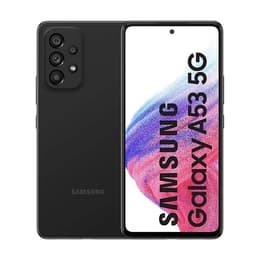
Galaxy A53 5G
Galaxy A53 5G
Starting at

Refurbished price:A$267.00

Versus A$991.00 new

See options
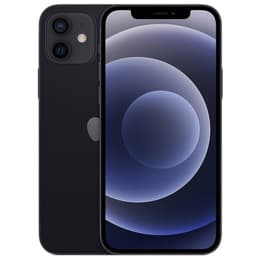
iPhone 12
iPhone 12
Starting at

Refurbished price:A$303.00

Versus A$1,129.00 new

See options

Ratings

The Samsung Galaxy A53 5G (released March 2022) and the iPhone 12 (released October 2020) are both capable smartphones, though they originate from different ecosystems and target slightly different user experiences. While the Galaxy A53 5G offers a larger, high-refresh-rate display and a versatile camera system, the iPhone 12 counters with a compact design, a powerful processor, and a strong emphasis on its operating system's long-term support. These differences cater to distinct user preferences, from display technology to software environment.

Scores

Durability

When considering the practical lifespan of these devices, both offer substantial software support, though with varying timelines and approaches.

  • Release Timeline: The iPhone 12 was released in October 2020, making it approximately a year and a half older than the Galaxy A53 5G, which launched in March 2022. This age difference directly impacts their remaining software support windows.
  • OS Support Duration: Samsung typically provides 4 years of OS updates and 5 years of security updates for the Galaxy A53 5G. Apple generally supports iPhones with major iOS updates for around five to six years, with security updates often extending longer. For the iPhone 12, this means it is expected to receive major iOS updates until approximately 2026-2028, with security updates potentially lasting until 2028-2030. The Galaxy A53 5G, having launched later, will receive OS updates until around 2026 and security updates until 2027.
  • Expected Practical Lifespan: Both devices are built to last, with the iPhone 12 featuring a Ceramic Shield front cover for enhanced drop resistance and an IP68 rating for dust and water resistance. The Galaxy A53 5G has a Gorilla Glass 5 front and an IP67 rating, offering good protection against dust and water splashes. Users seeking the absolute longest software update period might find the iPhone 12 to have a slight edge due to Apple's extended support for its older models.

Release year

2022

2020

Compatible with latest Update

Yes

Yes

Operating system

Android

iOS

Foldable

No

No

Performance

The performance of a smartphone is crucial for daily tasks, from app usage to gaming and multitasking. Both devices offer capable performance for their respective ecosystems.

  • Processor Capabilities: The iPhone 12 features a powerful processor that handles demanding applications and multitasking smoothly, ensuring a responsive user experience even with intensive tasks like video editing or graphic-heavy gaming. The Galaxy A53 5G is equipped with a processor that provides adequate performance for everyday use, including social media, web browsing, and moderate gaming. While generally smooth, some users have noted occasional minor stutters or delays when navigating the interface or opening apps.
  • System Responsiveness: The iPhone 12 maintains a high level of system responsiveness, allowing for quick app launches and fluid transitions between applications. The Galaxy A53 5G offers a generally smooth experience, though it may not always match the consistent fluidity of the iPhone 12, particularly under heavy load.
  • Storage Options: Both devices offer various internal storage configurations. The iPhone 12 is available with 64GB, 128GB, and 256GB options. The Galaxy A53 5G comes with 128GB or 256GB of internal storage and also includes a microSD card slot for expandable storage up to 1TB, a feature not present on the iPhone 12.
  • Battery Behavior: The Galaxy A53 5G is equipped with a larger 5000 mAh battery, which often translates to extended usage times, with many users reporting more than a full day of power even with moderate to heavy use. The iPhone 12, with its smaller battery capacity, typically provides a full day of moderate use, but heavy users might find themselves needing to recharge before the day ends.

Memory (GB)

6 GB

4 GB

Screen quality

The display is a primary interface for smartphone interaction, and both the Galaxy A53 5G and iPhone 12 offer distinct visual experiences.

  • Display Technology and Clarity: The iPhone 12 features a 6.1-inch Super Retina XDR OLED display, providing deep blacks, vibrant colors, and excellent contrast. The Galaxy A53 5G boasts a larger 6.5-inch Super AMOLED display, also known for its rich colors and deep blacks. Both offer sharp visuals with high pixel densities, making text and images appear clear.
  • Refresh Rate: A key differentiator is the refresh rate. The Galaxy A53 5G features a 120Hz refresh rate, which results in smoother scrolling and more fluid animations, enhancing the overall user experience, especially during gaming or fast-paced content consumption. The iPhone 12 has a standard 60Hz refresh rate, which is still smooth for most tasks, but does not offer the same level of visual fluidity as a higher refresh rate display.
  • Brightness Levels: Both displays offer good brightness for indoor and outdoor viewing. The iPhone 12 can reach a typical maximum brightness of 625 nits and a peak HDR brightness of 1200 nits, ensuring good visibility even in bright conditions. The Galaxy A53 5G also provides good brightness, with typical levels around 800 nits, making it comfortable for outdoor use.

Resolution

1080 x 2400

1170 x 2532

Screen type

Super AMOLED

Super Retina XDR OLED

Audiovisual

Camera capabilities are a significant factor for many users, and both smartphones offer competent systems for capturing photos and videos.

  • Rear Camera System: The Galaxy A53 5G features a versatile quad-camera setup, including a 64MP main sensor with optical image stabilization (OIS), a 12MP ultrawide lens, a 5MP macro lens, and a 5MP depth sensor. This provides flexibility for various shooting scenarios. The iPhone 12 has a dual 12MP camera system, consisting of a wide lens with OIS and an ultrawide lens. While the iPhone 12 has fewer lenses, its main sensor has a wider aperture, allowing more light capture.
  • Photography Performance: In everyday lighting, both phones capture detailed and colorful images. The Galaxy A53 5G's 64MP main sensor can produce sharp photos, and its ultrawide camera offers a broad perspective. The iPhone 12 excels in color accuracy and dynamic range, with its Night Mode significantly improving low-light performance across all cameras, including the ultrawide and front-facing cameras. The Galaxy A53 5G also has a Night Mode, which enhances low-light shots, though some users note that the iPhone 12's low-light processing can be more consistent.
  • Video Recording: Both devices are capable of recording 4K video at 30 frames per second (fps). The iPhone 12 also supports Dolby Vision HDR video recording, offering enhanced dynamic range and color in its video output. The Galaxy A53 5G can record 4K video at 30fps from its main, ultrawide, and front cameras, with stabilization available at 30fps.
  • Front Camera: The Galaxy A53 5G features a high-resolution 32MP front camera, capable of capturing detailed selfies and 4K video. The iPhone 12 has a 12MP TrueDepth front camera, which also supports Night Mode and 4K video recording.

Main camera

64 megapixels

12 megapixels

Front camera

32 megapixels

12 megapixels

Miscellaneous

Beyond core features, several practical elements contribute to the overall user experience and device utility.

  • Connectivity: Both the Galaxy A53 5G and iPhone 12 support 5G connectivity, enabling faster mobile data speeds where available. The iPhone 12 supports Wi-Fi 6, while the Galaxy A53 5G supports Wi-Fi 5. Both include Bluetooth for wireless accessories.
  • Port Types: The Galaxy A53 5G features a USB-C 2.0 port for charging and data transfer, but it lacks a traditional 3.5mm headphone jack. The iPhone 12 uses Apple's proprietary Lightning port and also does not include a headphone jack.
  • Biometric Security: The iPhone 12 relies on Face ID for secure facial recognition. The Galaxy A53 5G incorporates an under-display optical fingerprint sensor for biometric authentication.
  • Design and Materials: The iPhone 12 features a flat-edged design with an aluminum frame, a Ceramic Shield front cover, and a glass back. It weighs 164 grams. The Galaxy A53 5G has a plastic back and a Gorilla Glass 5 front, with a design that integrates the camera bump smoothly. It weighs 189 grams. The iPhone 12 is generally more compact and lighter.

Weight

189 oz

164 oz

Screen size (in)

6.5

6.1

Network

5G

5G

SIM card

Dual Physical SIM

Physical SIM + eSIM

Carrier compatibility

Unlocked

Unlocked

User feedback for the Galaxy A53 5G often praises its vibrant 120Hz AMOLED display and its long-lasting battery, which can comfortably last over a day for many users. The versatility of its quad-camera system, particularly the main and ultrawide lenses, is also frequently highlighted as a strong point for its segment. However, some users have noted that its performance can occasionally feel less snappy compared to some competitors, with minor stutters in interface navigation or app loading. The lack of wireless charging is another point of criticism for some.

For the iPhone 12, common praise points include its premium and compact design, the excellent Super Retina XDR OLED display with deep blacks, and its consistently strong camera performance, especially in low light with Night Mode. Its powerful processor ensures smooth operation and longevity in terms of software updates. Criticisms often revolve around the 60Hz refresh rate, which can feel less fluid than higher refresh rate displays on other devices, and the base storage option of 64GB being limited for some users.

Users prioritizing a large, high-refresh-rate display, extensive battery life, and expandable storage may find the Galaxy A53 5G well-suited to their needs. It offers a comprehensive Android experience with a versatile camera setup. Conversely, users who value a compact design, a consistently fluid operating system, robust long-term software support, and strong video recording capabilities, particularly with Dolby Vision HDR, may lean toward the iPhone 12. Both devices represent solid choices within their respective ecosystems, and considering a quality-assured refurbished option can be a sustainable choice for either model.

See all articles

Our recent comparisons