
Galaxy A51 vs Motorola Edge 30 Pro

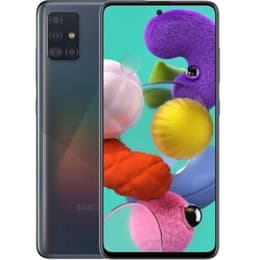
Galaxy A51
Galaxy A51
Starting at

Refurbished price:A$197.16

Versus A$592.00 new

See options
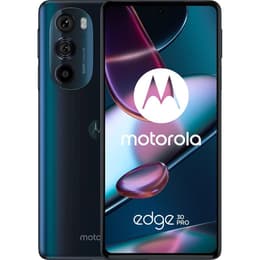
Motorola Edge 30 Pro
Starting at

Refurbished price:A$289.72

Versus A$2,709.00 new

See options

The Samsung Galaxy A51, released in late 2019 and early 2020 (for its 5G variant), and the Motorola Edge 30 Pro, launched in early 2022, are Android smartphones from different generations. While both devices offer a full Android experience, the Edge 30 Pro introduces a significantly more powerful processor and a higher refresh rate display, reflecting its newer release and different market positioning.

Scores

Durability

These two devices differ notably in their release timelines and, consequently, their expected software longevity and practical lifespan.

  • Release Timeline: The Galaxy A51 was first available in December 2019 (4G) and April 2020 (5G), making it an older device. The Motorola Edge 30 Pro, released in February 2022, benefits from a more recent launch.
  • Software Support: Samsung ended software updates for the Galaxy A51 in early 2024, meaning it no longer receives new Android versions or security patches. The Motorola Edge 30 Pro, being newer, will continue to receive software and security updates for a longer period, extending its usable life.
  • Repairability: The Galaxy A51 has a repairability score of approximately 6.5 out of 10. While some components like the battery and screen are individually replaceable, the presence of adhesive and numerous small parts can make repairs challenging for an average user. Information on the Motorola Edge 30 Pro's repairability is less readily available, but its newer design may incorporate similar or more complex construction methods.

Release year

2019

2022

Compatible with latest Update

No

Yes

Operating system

Android

Android

Foldable

No

No

Performance

Performance is a key area where the Motorola Edge 30 Pro distinguishes itself from the Samsung Galaxy A51, largely due to the difference in their internal components and release years.

  • Processing Power: The Motorola Edge 30 Pro features a high-end processor that delivers extremely fast and snappy performance, handling demanding applications and multitasking smoothly. Users report a fluid experience with quick app launches and seamless switching between tasks. In contrast, the Galaxy A51, with its mid-range processor, offers solid performance for everyday tasks like browsing and social media, but can experience sluggishness with more intensive applications or gaming.
  • Multitasking and Responsiveness: The Edge 30 Pro's more capable hardware and potentially higher RAM configurations allow it to keep more apps open in the background without slowdowns, contributing to an overall responsive user experience. The Galaxy A51 may require more frequent app closures to maintain optimal performance during heavy multitasking.
  • Gaming Experience: For mobile gamers, the Edge 30 Pro provides a significantly smoother experience with better graphics rendering and higher frame rates in graphically intensive games. The Galaxy A51 can run many games, but users may notice lower frame rates and occasional lag, particularly in newer or more demanding titles.

Memory (GB)

6 GB

8 GB

Screen quality

Both devices offer vibrant displays, but they differ in their underlying technology and refresh rate, impacting the visual experience.

  • Display Technology and Clarity: The Samsung Galaxy A51 features a 6.5-inch Super AMOLED Infinity-O display, providing deep blacks and vibrant colors with a Full HD+ resolution (1080x2400 pixels). The Motorola Edge 30 Pro comes with a slightly larger 6.7-inch pOLED/AMOLED display, also offering a Full HD+ resolution (1080x2400 pixels) and excellent contrast. Both displays deliver sharp and well-defined images suitable for general viewing.
  • Refresh Rate: A significant difference lies in the refresh rate. The Galaxy A51 has a standard 60Hz refresh rate. The Motorola Edge 30 Pro boasts a high 144Hz refresh rate, which results in noticeably smoother scrolling, animations, and a more fluid overall user interface experience.
  • Brightness and Outdoor Visibility: The Edge 30 Pro's display has a maximum brightness of around 650 nits, which is generally adequate for most situations but can be challenging to view outdoors on very sunny days. The Galaxy A51's Super AMOLED display is also described as plenty bright and good with colors, offering decent outdoor visibility.

Resolution

1080 x 2400

1080 x 2400

Screen type

Super AMOLED

OLED

Audiovisual

The camera systems on these two smartphones offer different capabilities, with the Motorola Edge 30 Pro generally featuring more advanced hardware, though user experiences can vary.

  • Rear Camera System: The Galaxy A51 is equipped with a quad-camera setup: a 48MP main sensor, a 12MP ultrawide, a 5MP macro, and a 5MP depth sensor. It can record video up to 4K at 30 frames per second. The Motorola Edge 30 Pro features a dual 50MP main camera with optical image stabilization (OIS) and a 50MP ultrawide camera, alongside a 2MP depth sensor. The main camera on the Edge 30 Pro uses pixel binning technology to produce detailed 12.5MP images by default.
  • Photography Performance: The Galaxy A51's main camera produces good images with saturated colors and decent sharpness in good lighting, though low-light performance can be challenging. The Edge 30 Pro's 50MP main sensor with OIS generally delivers good photos with natural color reproduction and dynamic range in normal lighting. However, some users have reported mixed results with the Edge 30 Pro's camera, particularly in low-light conditions, describing images as grainy or noisy.
  • Front Camera: The Galaxy A51 has a 32MP front-facing camera. The Motorola Edge 30 Pro boasts a high-resolution 60MP front camera.

Main camera

48 megapixels

50 megapixels

Front camera

32 megapixels

60 megapixels

Miscellaneous

Beyond core performance and display, several practical elements contribute to the overall user experience of these devices.

  • Connectivity and Ports: The Motorola Edge 30 Pro supports 5G connectivity, Wi-Fi 6 (ax), and Bluetooth 5.2, along with a USB 3.1 Type-C port. It also features Motorola's 'Ready For' mode, which allows for a PC-like desktop experience when connected to an external display. The Galaxy A51 also has 5G variants, supports Wi-Fi, Bluetooth 5.0, and includes a USB-C port. A notable difference is the presence of a 3.5mm headphone jack on the Galaxy A51, which is absent on the Edge 30 Pro.
  • Build Materials and Durability: The Galaxy A51 features a plastic back and frame, with Gorilla Glass 3 protecting the front display. The Motorola Edge 30 Pro uses Gorilla Glass 3 on the front display and Gorilla Glass 5 on the back, with a plastic frame. The Edge 30 Pro also offers splash resistance with an IP52 rating.
  • Biometric Security: The Galaxy A51 includes an optical under-display fingerprint sensor, which users describe as functional but not exceptionally fast. The Motorola Edge 30 Pro integrates its fingerprint scanner into the power button.

Weight

172 oz

196 oz

Screen size (in)

6.5

6,7

Network

4G

5G

SIM card

Physical SIM

Dual Physical SIM

Carrier compatibility

Unlocked

Unlocked

The Samsung Galaxy A51 and Motorola Edge 30 Pro cater to different user expectations, largely due to their generational gap and design philosophies. Users often praise the Galaxy A51 for its vibrant Super AMOLED display and capable camera system for everyday photography, especially considering its original market positioning. However, common criticisms include its mid-range processing power, which can lead to sluggishness with demanding applications, and the cessation of software updates.

The Motorola Edge 30 Pro, on the other hand, receives commendation for its exceptionally smooth 144Hz OLED display and powerful performance, making it well-suited for heavy multitasking and gaming. Its fast charging capabilities and inclusion of wireless charging are also frequently highlighted as positives. Criticisms sometimes point to its camera performance, particularly in low light, and some users have reported heating issues under sustained heavy load.

Users prioritizing a highly responsive and fluid user experience, especially for gaming or demanding applications, will find the Motorola Edge 30 Pro better suited to their needs. Its faster charging and longer software support also contribute to a more modern experience. Conversely, users who value a traditional headphone jack and are content with solid everyday performance for basic tasks may still find the Galaxy A51 a practical choice, particularly as a quality-assured refurbished option. Both devices offer distinct advantages, and choosing between them depends on whether a user prioritizes cutting-edge performance and display fluidity or a more established, budget-conscious option.


See all articles

Our recent comparisons