Motorola Razr 40 vs Nokia G22

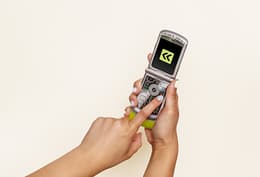
Motorola Razr 40
Motorola Razr 40
See options
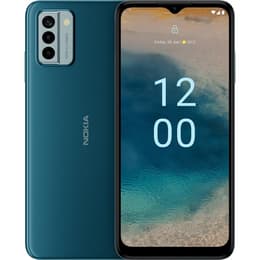
Nokia G22
Nokia G22
See options

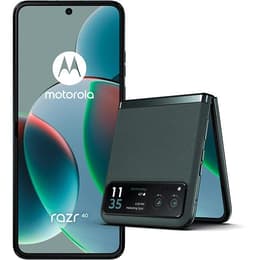
The Motorola Razr 40 (released June 2023) and the Nokia G22 (released February 2023) are distinct smartphones catering to different user preferences. The Razr 40 offers a unique foldable clamshell design with a focus on a vibrant main display and a compact form factor when closed, while the Nokia G22 prioritizes user repairability and extended battery life in a traditional slab design. Both devices run on the Android operating system, with the Razr 40 launching with Android 13 and the Nokia G22 with Android 12.

Scores

Durability

When considering the long-term usability of these devices, their release timelines and software support policies are key factors. The Motorola Razr 40, launched in June 2023, typically receives several years of Android OS updates, ensuring access to newer features and security patches for a reasonable period. The Nokia G22, released slightly earlier in February 2023, is notable for its emphasis on repairability, with HMD Global partnering with iFixit to provide parts and guides for common repairs like battery and screen replacements, potentially extending its practical lifespan through user maintenance.

  • Software Longevity: The Motorola Razr 40, being a newer device, is expected to receive Android updates for a longer duration compared to the Nokia G22, which typically offers two years of OS upgrades and three years of security updates.
  • Physical Durability: The Razr 40 features an IP52 splash-resistant rating and a robust hinge design, with its external display protected by Gorilla Glass Victus. The Nokia G22 also carries an IP52 splash and dust resistance rating and has its display protected by Corning Gorilla Glass 3.
  • Repairability Focus: The Nokia G22 stands out with its QuickFix design, making it easier for users to perform self-repairs on components such as the battery, charging port, and screen, which can significantly contribute to its overall practical lifespan.

Release year

2023

2023

Compatible with latest Update

Yes

No

Operating system

Android

Android

Foldable

Yes

No

Performance

The performance of a smartphone is crucial for daily tasks, from app usage to multitasking and gaming. These two devices offer different levels of responsiveness and capability for various user demands.

  • Everyday Responsiveness: The Motorola Razr 40 is equipped with a processor that handles demanding applications and multitasking smoothly, providing a fluid user experience. The Nokia G22, while capable of handling general tasks, may exhibit sluggishness with heavier apps and more intensive multitasking.
  • Battery Endurance: The Nokia G22 features a larger 5050 mAh battery, often reported to last up to two days with typical usage, and even longer with light use. The Motorola Razr 40, with its 4200 mAh battery, offers decent battery life for a foldable phone, often lasting a full day for many users.
  • Storage and Multitasking: The Razr 40 offers higher RAM configurations (8GB or 12GB) and storage options (128GB or 256GB), contributing to better multitasking and storage capacity. The Nokia G22 comes with 4GB or 6GB of RAM and 64GB or 128GB of internal storage, with the added benefit of microSD card expansion up to 2TB.

Memory (GB)

8 GB

4 GB

Screen quality

The visual experience is a primary interaction point with any smartphone, and the display technologies in these two models present distinct characteristics.

  • Display Technology and Clarity: The Motorola Razr 40 features a 6.9-inch foldable P-OLED main display with a high resolution of 2640 x 1080 pixels, offering deep blacks and vibrant colors. It also includes a 1.5-inch external OLED display for quick information. The Nokia G22 has a 6.52-inch IPS LCD display with a resolution of 1600 x 720 pixels, providing clear visuals for everyday use.
  • Brightness and Smoothness: The Razr 40's main display boasts a high refresh rate of 144Hz and a peak brightness of 1400 nits, resulting in very smooth scrolling and excellent visibility even in bright outdoor conditions. The Nokia G22 offers a 90Hz refresh rate for smoother animations and a typical brightness of 500 nits, which is generally sufficient for indoor and moderate outdoor use.
  • Viewing Experience: The foldable nature of the Razr 40 provides a large screen for media consumption when unfolded, while its compact folded form offers portability. The Nokia G22 provides a consistent, flat display experience, protected by Corning Gorilla Glass 3.

Resolution

1080 x 2640

720 x 1600

Screen type

Foldable LTPO AMOLED

IPS LCD

Audiovisual

For many users, the camera system is a critical component, and both phones offer different photographic capabilities for capturing moments.

  • Rear Camera System: The Motorola Razr 40 features a dual-camera setup on the rear, including a 64MP main sensor with optical image stabilization (OIS) and a 13MP ultrawide lens that also functions for macro shots. The Nokia G22 comes with a triple-camera system, comprising a 50MP main sensor, a 2MP macro lens, and a 2MP depth sensor.
  • Photography Performance: The Razr 40's main camera generally produces colorful and well-lit images in good conditions, with OIS aiding in low-light scenarios, though some reviews note it may not match high-end smartphone sharpness. The Nokia G22's 50MP main camera performs well in daylight, capturing decent detail, but its performance in low-light conditions and with its secondary lenses is less consistent.
  • Video and Front Camera: The Razr 40 can record 4K video at 30 frames per second (fps) and features a 32MP front-facing camera capable of 4K video recording. The Nokia G22 supports 1080p video recording at 30fps and has an 8MP front-facing camera.

Main camera

64 megapixels

50 megapixels

Front camera

32 megapixels

8 megapixels

Miscellaneous

Beyond the core features, several practical elements contribute to the overall user experience and daily convenience of a smartphone.

  • Connectivity and Ports: The Motorola Razr 40 supports 5G connectivity, Wi-Fi 6 (802.11ax), and Bluetooth 5.3, offering fast wireless communication. It features a USB-C port. The Nokia G22 supports 4G connectivity, Wi-Fi 5 (802.11ac), and Bluetooth 5.0. It includes a USB-C port and retains a 3.5mm headphone jack.
  • Biometrics and Sensors: Both devices include a side-mounted fingerprint sensor for secure unlocking. The Razr 40 also offers face unlock. Both phones come with standard sensors like accelerometers, ambient light sensors, and proximity sensors.
  • Design and Handling: The Motorola Razr 40's foldable design allows it to be compact when closed, making it highly portable, and features a vegan leather finish for a distinct feel. It weighs approximately 188.6 grams. The Nokia G22 has a traditional slab design with a back made from 100% recycled plastic and weighs around 195-196 grams.

Weight

189 oz

196 oz

Screen size (in)

6,9

6.5

Network

5G

4G

SIM card

Dual Physical SIM + eSIM

Dual Physical SIM

Carrier compatibility

Unlocked

Unlocked

The Motorola Razr 40 and Nokia G22 cater to different segments of the smartphone market, each with distinct strengths and user profiles. The Razr 40 is frequently praised for its stylish, compact foldable design, its vibrant P-OLED main display with a high refresh rate, and its generally smooth performance for everyday tasks. Users appreciate the novelty and portability of the flip form factor, along with a solid software experience. However, some common criticisms include its camera performance not always matching higher-end devices and the external display being smaller compared to its Ultra counterpart.

The Nokia G22, on the other hand, garners significant praise for its commitment to repairability, with an iFixit partnership that allows users to easily replace components, contributing to a longer potential lifespan. Its long battery life is another frequently highlighted positive, often lasting multiple days on a single charge. Criticisms often point to its more modest performance for demanding applications, a slower camera app, and a shorter software update commitment compared to some competitors.

Users prioritizing a unique, compact, and stylish device with a high-quality, fluid display for media consumption and general use may find the Motorola Razr 40 well-suited to their needs. Its foldable design offers a blend of a large screen experience and portability. Conversely, users who value sustainability, the ability to perform their own repairs, and exceptional battery endurance above raw processing power will likely lean towards the Nokia G22. It represents a practical and eco-friendly alternative for those seeking a quality-assured refurbished option that can be maintained over time. Ultimately, the choice depends on whether a user prioritizes a premium, innovative form factor or a durable, user-maintainable device with extended battery life.

See all articles

Our recent comparisons