
Galaxy A23 vs Motorola Edge 50

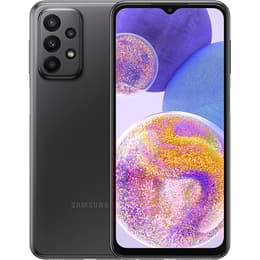
Galaxy A23
Galaxy A23
See options
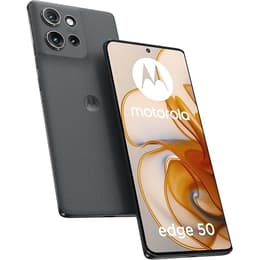
Motorola Edge 50
Motorola Edge 50
See options

The Samsung Galaxy A23 (2022) and the Motorola Edge 50 (2024) are both Android smartphones designed for different user expectations. While the Galaxy A23 focuses on essential features with a robust battery, the Motorola Edge 50 offers a more refined experience with a premium display and advanced camera capabilities. These devices cater to distinct preferences, with the Edge 50 being a more recent release and generally offering more contemporary specifications.

Scores

Durability

The practical lifespan of a smartphone is influenced by its release date, software support, and physical resilience. The Samsung Galaxy A23, released in March 2022, typically receives two major Android OS updates and four years of security updates from its launch. [6, 33] The Motorola Edge 50, launched in August 2024, generally offers two major Android OS upgrades and four years of security updates, though some Motorola models in the Edge series have seen promises of longer support in specific regions. [5, 27, 30]

  • Software Longevity: The Motorola Edge 50 benefits from a later release, potentially extending its period of receiving the latest Android features and security patches compared to the Galaxy A23. [5, 6]
  • Physical Durability: Both devices feature Corning Gorilla Glass 5 for screen protection. [13, 25, 26] The Motorola Edge 50 also includes an IP68 rating for dust and water resistance, a feature not present on the Galaxy A23. [4, 25]
  • Repairability: The Samsung Galaxy A23 has a reported repairability score of 6.75 out of 10, indicating a relatively accessible design for repairs. [10] The Motorola Edge 50 has a slightly lower repairability score, typically around 5.0 to 5.5 out of 10, suggesting that some components may be more challenging to replace. [2, 8, 9]

Release year

2022

2024

Compatible with latest Update

Yes

Yes

Operating system

Android

Android

Foldable

No

No

Performance

Performance in daily use is a key differentiator, with the internal components dictating how smoothly applications run and how efficiently the device handles demanding tasks. The Samsung Galaxy A23 is equipped with a processor designed for everyday usage, while the Motorola Edge 50 features a more capable chipset.

  • Processing Power: The Motorola Edge 50 offers a more responsive experience for demanding applications and multitasking due to its more recent and powerful processor. [4, 15, 38] The Galaxy A23 handles basic tasks adequately but may exhibit sluggishness with heavy multitasking or resource-intensive apps. [20, 39]
  • Battery Behavior: Both phones house a 5000mAh battery. The Galaxy A23 is often praised for its long-lasting battery, capable of extending to two days with moderate use. [25, 34] The Motorola Edge 50's battery life, while substantial, has been noted by some users to require more frequent charging for heavy usage. [24, 41]
  • Storage and Responsiveness: The Motorola Edge 50 typically comes with 256GB of internal storage and 8GB of RAM, contributing to smoother app loading and multitasking. [4, 15] The Galaxy A23 offers various configurations, including 64GB or 128GB storage and 4GB, 6GB, or 8GB RAM, with expandable storage via microSD. [3, 11]

Memory (GB)

4 GB

12 GB

Screen quality

The visual experience is largely defined by the display technology, resolution, and brightness, impacting everything from media consumption to outdoor visibility. There are notable differences in the screen quality between these two devices.

  • Display Technology: The Motorola Edge 50 features a 6.7-inch P-OLED display, known for its deep blacks, vibrant colors, and excellent contrast. [5, 15, 38] The Samsung Galaxy A23 utilizes a 6.6-inch PLS LCD panel, which provides clear visuals but does not offer the same level of contrast or color vibrancy as an OLED screen. [13, 25, 35]
  • Resolution and Refresh Rate: The Edge 50 boasts a 1.5K resolution (1220x2712 pixels) and a 120Hz adaptive refresh rate, providing sharp images and smooth scrolling. [4, 15, 41] The Galaxy A23 has a Full HD+ resolution (1080x2408 pixels) and a 90Hz refresh rate, offering a good balance for everyday viewing. [13, 25, 35]
  • Brightness and Clarity: The Motorola Edge 50 can reach peak brightness levels of up to 1600 nits, ensuring good visibility even in bright outdoor conditions. [5, 38, 41] The Galaxy A23's LCD panel offers sufficient brightness for indoor use, but outdoor visibility can be more challenging in direct sunlight. [39]

Resolution

1080 x 2408

1220x2712

Audiovisual

Camera capabilities are a significant factor for many users, encompassing the quality of photos and videos, especially in varying light conditions. Both devices offer multi-lens camera systems with distinct strengths.

  • Rear Camera System: The Motorola Edge 50 features a versatile triple-camera setup, including a 50MP main sensor, a 13MP ultrawide lens, and a 10MP telephoto lens with 3x optical zoom. [4, 15] The Samsung Galaxy A23 comes with a quad-camera array, featuring a 50MP main sensor with Optical Image Stabilization (OIS), a 5MP ultrawide, a 2MP macro, and a 2MP depth sensor. [3, 13, 28]
  • Photography Performance: The Edge 50 generally delivers detailed photos with balanced colors, and its telephoto lens provides optical zoom capabilities. [22, 41] The Galaxy A23's main camera with OIS can produce decent photos in good lighting, but low-light performance can be grainy, and the camera may struggle with focus. [39]
  • Video Recording and Audio: The Motorola Edge 50 supports video recording up to 4K at 30 frames per second (fps) and offers stereo speakers with good loudness and depth. [5, 15, 22, 41] The Galaxy A23 records video at a maximum of 1080p at 30fps and features a single bottom-firing speaker, lacking stereo audio. [28, 39, 42]

Front camera

8 megapixels

32 megapixels

Miscellaneous

Beyond core features, practical elements like connectivity, ports, and physical design contribute to the overall user experience. These aspects can influence daily convenience and device handling.

  • Connectivity and Ports: The Motorola Edge 50 supports 5G connectivity, Wi-Fi 6, and Bluetooth v5.2, offering faster wireless speeds and modern standards. [4, 15] It features a USB Type-C port but omits a 3.5mm headphone jack. [15, 24] The Samsung Galaxy A23 supports 4G LTE, Wi-Fi 5, and Bluetooth 5.0/5.1, and includes both a USB-C 2.0 port and a 3.5mm headphone jack. [11, 14, 25, 35]
  • Biometrics and Sensors: The Edge 50 incorporates an in-display fingerprint sensor for security. [15, 38] The Galaxy A23 uses a side-mounted fingerprint sensor. [3, 35] Both devices include standard sensors like accelerometers, ambient light sensors, and proximity sensors. [3, 4]
  • Design and Handling: The Motorola Edge 50 has a slimmer profile and lighter build, measuring 160.8 x 72.4 x 7.79 mm and weighing 180g, often featuring a PU leather body for a distinct feel. [4, 5] The Galaxy A23 is slightly larger and heavier at 165.4 x 76.9 x 8.4 mm and 195g, with a plastic back. [11, 13, 34]

Weight

195 oz

180 oz

Screen size (in)

6.6

6.7

Network

4G

5G

SIM card

Dual Physical SIM

Physical SIM

Carrier compatibility

Unlocked

Unlocked

User feedback for the Samsung Galaxy A23 often highlights its reliable battery life and the inclusion of a 3.5mm headphone jack and expandable storage as positive aspects. [25, 34] However, common criticisms include a sometimes sluggish user interface, particularly with demanding tasks, and a camera that performs best in well-lit conditions. [20, 39] Some users have also reported issues with overheating and a less premium feel due to its plastic construction. [36, 39]

The Motorola Edge 50 is frequently praised for its vibrant P-OLED display, premium design, and fast charging capabilities. [22, 38, 41] Users appreciate its smooth software experience, which is close to stock Android. [22] Conversely, some concerns have been raised regarding its battery life for heavy users, occasional camera stabilization issues, and the quality of its speakers. [19, 24, 41] The curved display, while aesthetically pleasing, can sometimes lead to accidental touches. [22]

Users prioritizing extended battery life, expandable storage, and a traditional headphone jack may find the Samsung Galaxy A23 a suitable option. It caters to those seeking essential smartphone functions without advanced features. Conversely, users who value a superior display, faster performance for more demanding applications, and a more refined design with water resistance will likely lean towards the Motorola Edge 50. It is well-suited for individuals seeking a more modern and feature-rich experience. For those considering either device, exploring quality-assured refurbished options can provide an eco-friendly alternative, offering a sustainable choice for acquiring technology.


See all articles

Our recent comparisons