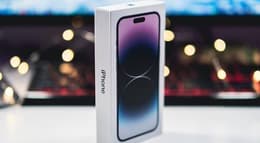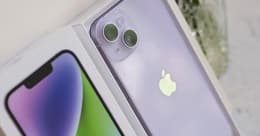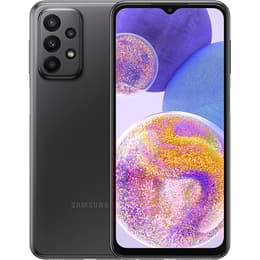
Galaxy A23 vs iPhone 14

Galaxy A23
Galaxy A23
See options
iPhone 14
iPhone 14
Starting at

Refurbished price:A$468.00

Versus A$1,049.00 new

See options

Ratings

The Samsung Galaxy A23, released in March 2022, and the Apple iPhone 14, launched in September 2022, represent distinct approaches to smartphone design and functionality. While both devices aim to provide a reliable mobile experience, they cater to different user preferences through their respective Android and iOS operating systems. Key differentiators lie in their performance capabilities, display technologies, and camera systems, offering users varied experiences depending on their priorities.

Scores

Durability

When considering the long-term usability of these devices, several factors contribute to their expected lifespan, including software support and physical durability.

  • Software Longevity: The iPhone 14, running on iOS, typically receives major software updates for approximately 5-6 years from its release, suggesting continued support well into the late 2020s. The Galaxy A23, an Android device, generally receives 3-4 major Android version updates, with security updates extending for a similar period, meaning its official software support may conclude sooner than the iPhone 14's.
  • Physical Resilience: The iPhone 14 features a Ceramic Shield front cover and an aluminum frame, contributing to its overall robustness and offering IP68 water and dust resistance. The Galaxy A23 uses Corning Gorilla Glass 5 on its front display and a plastic frame and back, which can be more forgiving with minor impacts but may show wear differently over time.
  • Repairability Considerations: While the iPhone 14 introduced internal design changes that initially suggested improved repairability, iFixit later revised its score downwards due to software authentication requirements for replacement parts, making independent repairs more challenging. The Galaxy A23 is generally considered more straightforward to repair, with components often being more modular and less reliant on proprietary software pairing.

Release year

2022

2022

Compatible with latest Update

Yes

Yes

Operating system

Android

iOS

Foldable

No

No

Performance

The responsiveness and processing power of a smartphone significantly impact daily usage, from navigating apps to handling demanding tasks.

  • Everyday Responsiveness: The iPhone 14 delivers consistently smooth performance, handling everyday applications, multitasking, and graphically intensive games with ease. Its optimized software and hardware integration contribute to a fluid user experience.
  • Multitasking and App Handling: The Galaxy A23, equipped with an octa-core processor and available with up to 8GB of RAM, is capable of managing typical daily tasks and moderate multitasking. However, some users have reported occasional slowdowns or lag, particularly with the 4GB RAM variant or when running multiple demanding applications simultaneously.
  • Storage Options: The iPhone 14 offers internal storage options of 128GB, 256GB, and 512GB, without expandable storage. The Galaxy A23 provides 64GB or 128GB of internal storage, with the added flexibility of a microSD card slot for further expansion, which can be beneficial for users with large media libraries.
  • Battery Behavior: The Galaxy A23 is known for its large 5000 mAh battery, often providing extended usage times that can comfortably last heavy users through a full day and beyond. The iPhone 14, while having a smaller battery capacity, is optimized for efficient power consumption, with many users reporting all-day battery life under typical usage.

Memory (GB)

4 GB

6 GB

Screen quality

The display is a primary interface for smartphone interaction, and both devices offer different visual experiences.

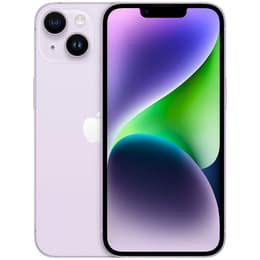
  • Display Technology: The iPhone 14 features a 6.1-inch Super Retina XDR OLED display, which provides deep blacks, high contrast, and vibrant colors, enhancing the viewing experience for photos, videos, and text. The Galaxy A23 comes with a larger 6.6-inch PLS LCD display.
  • Resolution and Clarity: Both phones offer a Full HD+ resolution, with the iPhone 14 having a resolution of 1170 x 2532 pixels and the Galaxy A23 at 1080 x 2408 pixels. The iPhone 14's smaller screen size with a higher pixel density results in a slightly sharper image, though both provide clear visuals for general use.
  • Refresh Rate: The Galaxy A23 features a 90Hz refresh rate, offering a smoother scrolling experience and more fluid animations compared to the iPhone 14's standard 60Hz refresh rate.
  • Brightness and Outdoor Visibility: The iPhone 14's OLED display generally achieves higher peak brightness levels, making it more comfortable to view content in bright outdoor conditions. The Galaxy A23's LCD panel provides adequate brightness for most indoor and outdoor scenarios.

Resolution

1080 x 2408

1170 x 2532

Screen type

PLS LCD

Super Retina XDR OLED

Audiovisual

Camera capabilities are a significant consideration for many users, and these devices offer distinct photographic strengths.

  • Rear Camera Systems: The iPhone 14 features a dual 12MP camera system, including a main wide-angle lens with optical image stabilization (OIS) and an ultrawide lens. It is known for its consistent image processing, excellent video recording capabilities, and strong low-light performance. The Galaxy A23 boasts a quad-camera setup, with a 50MP main sensor (also with OIS), a 5MP ultrawide, a 2MP macro, and a 2MP depth sensor. Its higher megapixel count on the main sensor can capture detailed images in good lighting.
  • Photography Performance: Users generally find the iPhone 14's camera to produce reliable, true-to-life colors and sharp details across various conditions, with a particular strength in video capture. The Galaxy A23's main camera performs well in bright conditions, but its ultrawide and auxiliary lenses offer more limited utility, and low-light performance is generally less refined than the iPhone 14.
  • Front-Facing Cameras: The iPhone 14 includes a 12MP front camera with autofocus, delivering sharp and detailed selfies and clear video calls. The Galaxy A23 has an 8MP front camera, suitable for everyday selfies and video conferencing.
  • Audio Experience: The iPhone 14 provides clear and balanced stereo speaker output, suitable for media consumption and calls. The Galaxy A23 offers a single loudspeaker, providing adequate audio for general use. Both devices offer good microphone quality for calls and recordings.

Main camera

50 megapixels

12 megapixels

Front camera

8 megapixels

12 megapixels

Miscellaneous

Beyond core features, several practical elements contribute to the overall user experience and daily convenience.

  • Connectivity Standards: The iPhone 14 supports 5G cellular connectivity, Wi-Fi 6, and Bluetooth 5.3, offering faster wireless speeds and improved efficiency. The Galaxy A23 supports 4G LTE, Wi-Fi 5, and Bluetooth 5.0, providing reliable but slightly older generation wireless capabilities.
  • Physical Ports: The iPhone 14 utilizes Apple's proprietary Lightning port for charging and data transfer and does not include a 3.5mm headphone jack. The Galaxy A23 features a more universal USB-C port for charging and data, alongside a traditional 3.5mm headphone jack, which can be a convenience for users with wired headphones.
  • Biometric Security: The iPhone 14 relies on Face ID for secure facial recognition and authentication. The Galaxy A23 incorporates a side-mounted fingerprint sensor for biometric security.
  • Design and Handling: The iPhone 14 has a compact 6.1-inch display and a relatively lighter build, making it comfortable for one-handed use. The Galaxy A23 is a larger device with a 6.6-inch display, which offers more screen real estate but may require two hands for comfortable operation for some users.

Weight

195 oz

172 oz

Screen size (in)

6.6

6,1

Network

4G

5G

SIM card

Dual Physical SIM

Physical SIM + eSIM

Carrier compatibility

Unlocked

Unlocked

User sentiment for the Samsung Galaxy A23 often highlights its strong battery life, the inclusion of a 3.5mm headphone jack, and expandable storage as significant advantages. Some users appreciate its performance for everyday tasks, especially considering its market positioning. However, common criticisms include its LCD screen, which some find less vibrant, and occasional reports of performance lag, particularly with lower RAM configurations.

For the iPhone 14, users frequently praise its powerful and consistent performance, the high quality of its camera system for both photos and videos, and the smooth, integrated iOS software experience. Its robust build quality is also a recurring positive point. Conversely, some users express disappointment with the 60Hz display refresh rate, the continued use of the Lightning port, and the challenges associated with third-party repairs due to software authentication.

Users prioritizing a long-lasting battery, expandable storage, and the flexibility of the Android ecosystem with a headphone jack may find the Galaxy A23 well-suited to their needs. This device could be a practical choice for students or professionals who require a reliable device for communication and media consumption without needing top-tier performance for demanding applications. Conversely, users who value a highly responsive operating system, a consistently excellent camera for photography and videography, and a compact design with a vibrant OLED display will likely lean towards the iPhone 14. This device is often preferred by those deeply integrated into the Apple ecosystem or who require strong performance for creative tasks and gaming.

Both models are available as quality-assured refurbished options, providing an eco-friendly alternative for consumers looking to make a sustainable choice while still acquiring a capable smartphone.

See all articles

Our recent comparisons