
Galaxy A15 5G vs iPhone 16 Pro

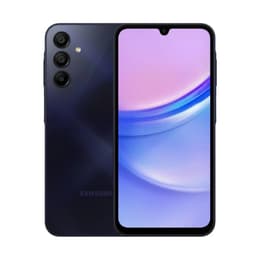
Galaxy A15 5G
Galaxy A15 5G
Starting at

Refurbished price:A$257.00

Versus A$329.00 new

See options
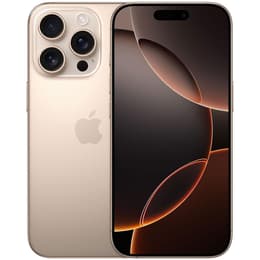
iPhone 16 Pro
iPhone 16 Pro
Starting at

Refurbished price:A$1,148.00

Versus A$1,999.00 new

See options

Ratings

The Samsung Galaxy A15 5G, released in late 2023, and the Apple iPhone 16 Pro, launched in September 2024, represent distinct segments of the smartphone market. While both are capable devices, they cater to different user expectations and priorities. The primary differentiators lie in their operating systems, overall performance capabilities, and camera systems.

The Galaxy A15 5G operates on Android, offering a customizable experience, whereas the iPhone 16 Pro runs on Apple's iOS, known for its integrated ecosystem and streamlined interface.

Scores

Durability

When considering the practical lifespan of these devices, several factors come into play, including software support, physical durability, and repairability.

  • Release Timeline and OS Support: The Galaxy A15 5G, released in December 2023, ships with Android 14 and is promised four years of major OS updates and five years of security updates from Samsung. This means it is expected to receive updates until around late 2027 for OS and late 2028 for security. The iPhone 16 Pro, released in September 2024, was discontinued in September 2025 following the launch of its successor. However, Apple typically provides major iOS updates for its devices for approximately five to seven years, with security patches often extending even longer. This suggests the iPhone 16 Pro will continue to receive software support well into the early 2030s.
  • Physical Durability: The iPhone 16 Pro features a robust design with a titanium frame and Ceramic Shield front, offering enhanced resistance to drops and scratches, along with an IP68 rating for water and dust resistance. The Galaxy A15 5G utilizes a plastic frame and back with a glass front protected by AGC Dragontrail, but it does not carry an official IP rating for water and dust ingress.
  • Repairability: While specific repairability scores vary, Apple has made efforts to improve the repairability of its recent iPhone models, including the 15 Pro series which serves as a design precedent for the 16 Pro. The Galaxy A15 5G, being a more accessible device, may offer simpler component replacement in some cases, though official repairability metrics are less emphasized.

Release year

2023

2024

Foldable

No

No

Performance

The performance capabilities of these two smartphones differ significantly, impacting how smoothly they handle various tasks from everyday use to demanding applications.

  • Processor Capabilities: The iPhone 16 Pro is equipped with Apple's A18 Pro chip, featuring a 6-core CPU, a 6-core GPU, and a 16-core Neural Engine. This advanced processor is designed to handle intensive tasks, complex graphics for gaming, and advanced AI features with considerable efficiency. The Galaxy A15 5G is powered by the MediaTek Dimensity 6100+ chipset, which provides capable performance for general mobile tasks and everyday applications.
  • Overall System Responsiveness: Users of the iPhone 16 Pro can expect exceptionally fluid navigation, rapid app loading, and seamless multitasking, even with numerous applications running simultaneously. The A18 Pro chip's architecture is optimized for high-performance computing and graphics rendering. The Galaxy A15 5G offers a responsive experience for typical smartphone usage, such as browsing, social media, and light gaming. However, some users have noted occasional lag during day-to-day usage and when switching between apps, particularly with more demanding tasks.
  • RAM and Storage: The iPhone 16 Pro comes with 8GB of RAM, supporting its powerful processor in managing multiple applications and complex operations efficiently. Storage options range from 128GB up to 1TB. The Galaxy A15 5G is available with 4GB, 6GB, or 8GB of RAM and 128GB or 256GB of internal storage, which is expandable up to 1TB via a microSD card.

Memory (GB)

8 GB

8 GB

Screen quality

The visual experience on a smartphone is largely defined by its display, and both devices offer distinct screen technologies and features.

  • Display Technology and Clarity: The iPhone 16 Pro features a 6.3-inch Super Retina XDR OLED display with a resolution of 2622 x 1206 pixels, resulting in a sharp 460 pixels per inch. This OLED technology delivers deep blacks, high contrast, and vibrant colors. The Galaxy A15 5G sports a 6.5-inch Super AMOLED display with a 1080 x 2340 pixel (FHD+) resolution, offering good clarity and rich colors.
  • Brightness and Refresh Rate: The iPhone 16 Pro's display supports ProMotion technology, offering an adaptive refresh rate up to 120Hz for smooth scrolling and fluid animations. It achieves a typical brightness of 1000 nits and can reach a peak outdoor brightness of 2000 nits, ensuring excellent visibility even in bright sunlight. The Galaxy A15 5G has a 90Hz refresh rate, providing a smoother experience than standard 60Hz displays. Its display can reach up to 800 nits in High Brightness Mode, which is suitable for most indoor and outdoor conditions.
  • Viewing Experience: The iPhone 16 Pro includes features like Dynamic Island and an Always-On display, enhancing user interaction and information glanceability. The Galaxy A15 5G offers a large screen size that is well-suited for media consumption and general browsing.

Resolution

1080x2340

1206 x 2622

Audiovisual

The camera systems on these two phones are designed for different levels of photographic capability, from everyday snapshots to advanced creative capture.

  • Rear Camera System: The iPhone 16 Pro boasts a versatile triple-camera setup, including a 48MP Wide camera with sensor-shift optical image stabilization (OIS), a 48MP Ultra Wide camera, and a 12MP 5x Telephoto camera with 3D sensor-shift OIS and a tetraprism design for enhanced optical zoom. The Galaxy A15 5G features a triple camera system with a 50MP main sensor, a 5MP ultrawide lens, and a 2MP macro lens. The main camera lacks optical image stabilization.
  • Photography Performance: The iPhone 16 Pro excels in various lighting conditions, offering advanced computational photography, improved low-light performance, and the ability to capture high-resolution photos (24MP and 48MP). The 48MP Ultra Wide camera captures impressive detail, and the 5x telephoto lens allows for sharp zoomed-in shots. The Galaxy A15 5G's 50MP main camera performs well in good lighting, producing detailed images with balanced colors. However, the ultrawide and macro lenses have lower resolutions, which can limit their utility, especially in challenging light.
  • Video Recording and Features: The iPhone 16 Pro supports 4K video recording at up to 120 frames per second with Dolby Vision HDR and ProRes, along with Cinematic mode, Action mode, and Spatial video recording. It also introduces a new Camera Control button for easier access to camera functions. The Galaxy A15 5G records video at Full HD (1080p) at 30 frames per second.

Miscellaneous

Beyond core performance and display, several practical elements contribute to the overall user experience of these smartphones.

  • Connectivity and Ports: The iPhone 16 Pro supports the latest Wi-Fi 7 standard, Bluetooth 5.3, and features a USB-C port with USB 3 speeds (up to 10Gb/s) and DisplayPort support, enabling faster data transfer and external display connectivity. It relies on dual eSIM technology. The Galaxy A15 5G supports 5G networks, Wi-Fi 5 (802.11ac), Bluetooth 5.3, and includes a USB-C 2.0 port. It also retains a 3.5mm headphone jack, which is absent on the iPhone.
  • Sensors and Biometrics: The iPhone 16 Pro features Face ID for secure facial recognition and includes an Action Button for customizable shortcuts. The Galaxy A15 5G incorporates a side-mounted fingerprint sensor for biometric authentication.
  • Build Materials and Handling: The iPhone 16 Pro is constructed with a lightweight yet durable titanium frame and a textured matte glass back, offering a premium feel. It weighs 199 grams and measures 149.6 x 71.5 x 8.25 mm. The Galaxy A15 5G has a plastic build for its frame and back, contributing to its lighter feel, and weighs 200 grams with dimensions of 160.1 x 76.8 x 8.4 mm.

Weight

200 oz

199 oz

Screen size (in)

6.5

6.3

Network

5G

5G

SIM card

Physical SIM

Physical SIM + eSIM

Carrier compatibility

Unlocked

Unlocked

The Samsung Galaxy A15 5G and the iPhone 16 Pro cater to distinct user needs and preferences, reflecting their different positions in the smartphone market. User feedback for the Galaxy A15 5G often praises its vibrant Super AMOLED display and reliable battery life, making it a solid choice for everyday communication and media consumption. Some common criticisms point to its performance for demanding applications and the limited utility of its secondary camera lenses.

The iPhone 16 Pro, on the other hand, is frequently lauded for its powerful performance, advanced camera system, and premium build quality. Users appreciate its fluid iOS experience, high-resolution display, and robust durability features. While specific criticisms are less prevalent for such a high-end device, some users might find its ecosystem more restrictive compared to Android's open nature.

Users prioritizing a highly integrated ecosystem, top-tier performance for intensive tasks like gaming and professional content creation, and advanced photographic capabilities will find the iPhone 16 Pro well-suited to their needs. Its long software support and durable construction also appeal to those seeking a device with extended longevity. Conversely, users who value a customizable operating system, a large and bright display for general use, and expandable storage for media will likely lean towards the Galaxy A15 5G. It serves as a practical option for daily tasks without the need for flagship-level processing power.

Both devices, though different, can be excellent choices depending on individual requirements. Exploring quality-assured refurbished options for either model can provide an eco-friendly alternative, extending the life of these devices and offering a sustainable choice for consumers.


See all articles

Our recent comparisons