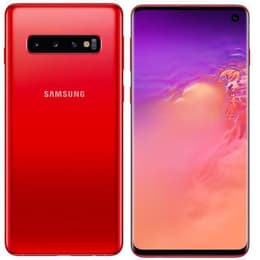


Galaxy S10 vs Google Pixel 7a

Galaxy S10
Galaxy S10
Starting at

Refurbished price:A$359.00

Versus A$849.00 new

See options
Google Pixel 7a
Google Pixel 7a
Starting at

Refurbished price:A$337.00

Versus A$749.00 new

See options

Ratings

The Samsung Galaxy S10, released in March 2019, and the Google Pixel 7a, launched in May 2023, represent different generations of Android smartphones. While both devices offer a comprehensive smartphone experience, they diverge significantly in their approach to software longevity, camera capabilities, and overall design philosophy. Both operate on the Android platform, but their respective manufacturers provide distinct user interfaces and update policies.

Scores

Durability

The practical lifespan of a smartphone is heavily influenced by its release date and the manufacturer's commitment to software and security updates.

  • Release Timeline: The Galaxy S10 was released in March 2019, making it an older device compared to the Pixel 7a, which launched in May 2023. This age difference directly impacts their remaining support windows.
  • Software Longevity: The Galaxy S10 received major Android updates up to Android 12, with security updates concluding around March 2023 for most models. In contrast, the Pixel 7a launched with Android 13 and is expected to receive five years of major OS upgrades and security updates, extending its software support significantly further into the future, potentially until 2028.
  • Repairability: The Galaxy S10 received a low repairability score of 3 out of 10 from iFixit, primarily due to extensive adhesive use, a soldered USB-C port, and a glued-down battery, making repairs challenging. The Pixel 7a, however, has a more favorable repairability score of 5 out of 10, with genuine parts available for DIY repairs, indicating a more accessible repair process.

Release year

2019

2022

Compatible with latest Update

No

Yes

Operating system

Android

Android

Foldable

No

No

Performance

Performance in daily use is a key differentiator, with both devices offering varying levels of responsiveness and efficiency for applications and multitasking.

  • Processor Capabilities: The Galaxy S10 is powered by an octa-core chipset that, at its release, provided smooth performance for everyday tasks and demanding applications. The Pixel 7a features a more recent generation processor designed by Google, which handles demanding apps and multitasking smoothly, particularly excelling in AI-based functions and image processing.
  • Battery Behavior: The Galaxy S10 is equipped with a 3400 mAh battery. The Pixel 7a has a larger 4385 mAh battery, which generally provides an average of 1.5 days or approximately 38 hours of use on a single charge, though heavy usage may require more frequent charging.
  • Storage and Responsiveness: Both devices typically offer 128GB of internal storage, with the Galaxy S10 also having a 512GB option. The Pixel 7a uses UFS 3.1 storage, contributing to faster app loading and data transfer speeds. The Pixel 7a also comes with 8GB of RAM, matching the Galaxy S10's standard configuration, which supports efficient multitasking.

Memory (GB)

8 GB

8 GB

Screen quality

The visual experience is central to smartphone usage, and both the Galaxy S10 and Pixel 7a offer distinct display technologies and features.

  • Display Technology and Resolution: The Galaxy S10 features a 6.1-inch Dynamic AMOLED display with a QHD+ resolution of 3040x1440 pixels, offering a high pixel density for sharp and detailed visuals. The Pixel 7a also has a 6.1-inch OLED display, providing vibrant colors and deep blacks, but with a Full HD+ resolution of 2400x1080 pixels.
  • Refresh Rate and Smoothness: The Galaxy S10 has a standard 60Hz refresh rate. The Pixel 7a offers a smoother visual experience with a 90Hz refresh rate, which makes scrolling and animations appear more fluid.
  • Brightness and Protection: Both displays support HDR for enhanced contrast and color. The Galaxy S10's screen is protected by Gorilla Glass 6, offering robust scratch and drop resistance. The Pixel 7a uses Corning Gorilla Glass 3 for screen protection.

Resolution

1440 x 3040

1080 x 2400

Screen type

Dynamic AMOLED

OLED

Audiovisual

Camera performance is a significant factor for many users, and both smartphones provide capable systems for capturing photos and videos.

  • Rear Camera System: The Galaxy S10 features a versatile triple-camera setup on the rear, including a 12MP wide-angle lens with dual aperture and optical image stabilization (OIS), a 12MP telephoto lens with 2x optical zoom and OIS, and a 16MP ultrawide lens. The Pixel 7a has a dual-camera system, highlighted by a 64MP wide-angle main sensor with OIS and dual-pixel phase-detection autofocus, alongside a 13MP ultrawide lens with a 120-degree field of view.
  • Front Camera Capabilities: For selfies and video calls, the Galaxy S10 is equipped with a 10MP dual-pixel front camera. The Pixel 7a offers a 13MP ultrawide front camera with a 95-degree field of view, suitable for group selfies.
  • Video Recording and Audio: Both devices are capable of recording 4K video. The Galaxy S10 supports 4K video recording and HDR10+. The Pixel 7a can record 4K video at 30 or 60 frames per second and 1080p video at various frame rates, with features like gyro-EIS and OIS for stable footage. The Pixel 7a includes stereo speakers, while the Galaxy S10 also offers a good media consumption experience.

Main camera

12 megapixels

64 megapixels

Front camera

10 megapixels

13 megapixels

Miscellaneous

Beyond core features, several practical elements contribute to the overall user experience and daily convenience of these devices.

  • Connectivity Options: The Galaxy S10 supports Wi-Fi 6E and Bluetooth, while the Pixel 7a offers Wi-Fi 6E, Bluetooth 5.3, and 5G connectivity, providing faster mobile data speeds where available.
  • Ports and Sensors: A notable difference is the presence of a 3.5mm headphone jack on the Galaxy S10, a feature absent on the Pixel 7a, which relies solely on its USB-C port for wired audio and charging. Both devices feature USB-C for charging and data transfer. The Galaxy S10 introduced an in-screen ultrasonic fingerprint sensor, along with face unlock. The Pixel 7a also includes an under-display fingerprint sensor and face unlock.
  • Build and Handling: The Galaxy S10 measures 149.9 x 70.4 x 7.8mm and weighs 157g, featuring a glass front (Gorilla Glass 6) and back. The Pixel 7a is slightly larger and heavier at 152 x 72.9 x 9mm and 193.5g, utilizing recycled glass and plastics for its construction, with Gorilla Glass 3 on the front. Both devices offer a premium feel, but the Pixel 7a's use of recycled materials aligns with a more sustainable approach.

Weight

157 oz

212 oz

Screen size (in)

6.1

6.1

Network

4G

5G

SIM card

Physical SIM

Physical SIM + eSIM

Carrier compatibility

Unlocked

Unlocked

User feedback for the Samsung Galaxy S10 often highlights its elegant design, comprehensive camera system, and the convenience of the 3.5mm headphone jack. Many users appreciated its display quality and overall performance during its prime. However, common criticisms revolve around its battery life degrading over time and the cessation of major software updates, which can impact long-term usability and security. Some users still find the Galaxy S10 to be a capable device for basic tasks, even years after its release.

The Google Pixel 7a generally receives praise for its exceptional camera quality, delivering consistent and high-quality photos, particularly with its computational photography strengths. Users also appreciate its clean Android experience and the smooth visuals provided by its 90Hz display. Mixed opinions exist regarding its battery life; while some users find it sufficient for a full day of moderate use, others report needing to charge it more frequently, especially with heavy usage.

Users prioritizing a device with a longer software support window and advanced computational photography features may find the Google Pixel 7a well-suited to their needs. Its newer processor and higher refresh rate display also offer a more modern user experience. Conversely, individuals who value a traditional headphone jack, a slightly lighter build, and a higher resolution display might lean towards the Samsung Galaxy S10, understanding its software support has concluded. For those considering either device, exploring quality-assured refurbished options can provide a sustainable choice, extending the life cycle of these electronic products.
See all articles

Our recent comparisons