
Compare models
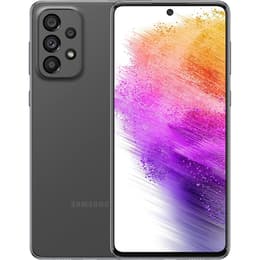
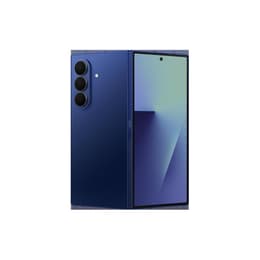
Galaxy A73 5G vs Galaxy Z Fold7
- 1-year warranty
- Free standard shipping
- Free 30-day returns
Differences at a glance
The Samsung Galaxy A73 5G (2022) and the Samsung Galaxy Z Fold7 (2025) represent two entirely different directions in modern smartphone design, contrasting a traditional candy bar build with an advanced book-style foldable format. While both devices run on the Android operating system with Samsung's interface layers, they cater to distinct device categories, form factors, and hardware eras.
Choosing between them involves weighing a familiar, lightweight slate layout against a multi-screen folding design that transforms into a tablet-sized workspace.
Available Models
Colour
Storage (GB)
Scores
Durability
These devices span different generation cycles, resulting in divergent software support timelines and hardware endurance profiles.
- Release timeline and support: The Galaxy Z Fold7 benefits from a newer release year and an extended software support window spanning multiple major operating system updates, whereas the Galaxy A73 5G occupies an older generation with a more finite remaining update schedule.
- Build endurance and repairability: The Galaxy A73 5G utilizes a conventional slab architecture with structured water resistance, while the Galaxy Z Fold7 employs complex hinge mechanisms and flexible display layers that require careful handling during long-term daily use.
- Practical lifespan: Both smartphones offer durable daily operation, though users seeking extended software relevance will find the newer flagship model provides a longer operational runway.
Release year
2022
2025
Operating system
Android
Android
Foldable
No
Yes
Performance
System capabilities differ significantly, reflecting the processing advancements and memory configurations of their respective release years.
- Multitasking and daily tasks: The Galaxy Z Fold7 handles demanding multi-window workflows and heavy applications smoothly thanks to its current-generation processor and ample RAM, whereas the Galaxy A73 5G comfortably manages standard daily browsing, messaging, and moderate apps.
- Battery behavior: The Galaxy A73 5G relies on a traditional cell capacity that reliably sustains standard use throughout a typical day, while the Galaxy Z Fold7 balances power across two separate displays, meaning intensive utilization of the larger inner screen results in more frequent charging.
- Storage capacity: Both models offer spacious configuration options to accommodate large media libraries and applications, with the foldable alternative extending into higher tier memory pairings.
Screen quality
Display engineering represents one of the most substantial contrasts between these two mobile devices.
- Display technology: The Galaxy A73 5G features a flat, vibrant screen suited for traditional media consumption, while the Galaxy Z Fold7 deploys a dual-screen setup with an expansive foldable inner panel that opens up workspace dimensions comparable to small tablets.
- Outdoor visibility: Both panels deliver high brightness levels for clear viewing under direct sunlight, though the reflective nature of flexible folding glass introduces subtle differences under harsh studio lighting.
- Refresh rate and smoothness: Both devices support high refresh rates, ensuring fluid scrolling through web pages, system menus, and user interfaces.
Resolution
1080 x 2400
1968x2184
Audiovisual
Optics and media playback hardware cater to distinct photography styles and multimedia preferences.
- Camera versatility: The Galaxy A73 5G equips a high-resolution main sensor for everyday snapshots, while the Galaxy Z Fold7 integrates an advanced multi-lens array paired with processing software that supports creative framing options enabled by the folding posture.
- Video and low-light output: The newer flagship captures sharper detail and balanced exposures in challenging lighting conditions, alongside robust stabilization for handheld video recording.
- Media and audio output: The Galaxy Z Fold7 delivers an immersive stereo speaker arrangement tailored for media streaming, complemented by the expansive visual canvas of its primary screen.
Miscellaneous
Physical dimensions and connectivity features define how each device integrates into everyday travel and pockets.
- Handling and form factor: The Galaxy A73 5G presents a lightweight, slim profile that rests easily in one hand, whereas the Galaxy Z Fold7 features a narrower cover screen that unfolds into a wider body, carrying a heavier overall weight due to its mechanical hinge architecture.
- Connectivity and ports: Both models support rapid 5G cellular networks, modern Wi-Fi standards, and Bluetooth pairing, utilizing USB-C standards for charging and data transfer.
- Authentication sensors: Both devices incorporate secure biometric sensors, utilizing fingerprint recognition integrated into their respective power or display layouts.
Weight
181 oz
215 oz
Screen size (in)
6.7
8.0
Network
5G
5G
SIM card
Physical SIM
Dual Physical SIM + eSIM
Carrier compatibility
Unlocked
Unlocked
What the community thinks
User discussions across community platforms often highlight distinct preferences for each device style. Owners of the Galaxy A73 5G frequently praise its reliable battery longevity, lightweight everyday handling, and straightforward traditional format. Conversely, discussions surrounding the Galaxy Z Fold7 center on appreciation for its expansive multitasking workspace, premium engineering, and versatile dual-screen layout, though users occasionally note the heavier weight and premium maintenance considerations.
Users prioritizing a straightforward, lightweight smartphone experience for everyday communication and media will find the Galaxy A73 5G well-suited to their routine. On the other hand, users seeking an expansive multi-window workspace and advanced mobile computing capabilities will lean toward the Galaxy Z Fold7. For those exploring a quality-assured refurbished option, Back Market provides these devices as sustainable choices that support both environmental consciousness and informed technology decisions.