

Compare models
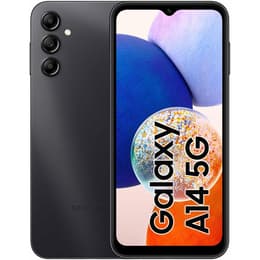
Galaxy A14 vs Google Pixel 9 Pro
- 1-year warranty
- Free standard shipping
- Free 30-day returns
Differences at a glance
The Samsung Galaxy A14 (2023) and the Google Pixel 9 Pro (2024) are Android smartphones serving different tiers and eras of mobile technology. While both devices run the Android operating system, they diverge significantly in design approach, processing hardware, and market positioning. Choosing between them involves evaluating practical differences in everyday usability, longevity, and feature sets rather than direct tier parity.
Available Models
Colour
Storage (GB)
Scores
Durability
Long-term usability depends heavily on hardware durability, software maintenance timelines, and structural design resilience for daily wear.
- Software and security update timelines: The Google Pixel 9 Pro benefits from an extensive multi-year software support commitment spanning multiple operating system generations, whereas the Galaxy A14 offers a more limited window of security patches and system updates.
- Build quality and structural materials: The Google Pixel 9 Pro features reinforced glass panels and a sturdy aluminum frame with high-tier water and dust resistance ratings, compared to the plastic frame and back construction utilized by the Galaxy A14.
- Expected practical lifespan: Users can anticipate the Pixel 9 Pro maintaining its performance headroom and software currency over a longer duration, while the Galaxy A14 is typically suited for shorter upgrade cycles or basic, low-demand operational lifespans.
Release year
2023
2024
Compatible with latest Update
No
Yes
Operating system
Android
Android
Foldable
No
No
Performance
System responsiveness, multitasking capabilities, and battery endurance vary markedly across these two distinct device classes.
- Everyday execution and multitasking: The Google Pixel 9 Pro handles intensive applications, rapid app switching, and advanced background processes smoothly via its high-capacity RAM and current-generation processor, whereas the Galaxy A14 manages basic daily tasks like messaging and web browsing at a more measured pace.
- Storage and memory configurations: The Pixel 9 Pro provides high-tier internal storage options paired with substantial RAM for demanding workflows, while the Galaxy A14 relies on entry-level memory allocations supplemented by expandable storage through a microSD card slot.
- Battery behavior and energy management: Both devices incorporate large battery capacities designed to navigate typical daily usage, though thermal efficiency and background power management differ based on their respective internal architectures.
Screen quality
Visual output characteristics define the media consumption and daily viewing experience on each smartphone display.
- Display technology and clarity: The Google Pixel 9 Pro utilizes an advanced LTPO OLED panel with high pixel density and deep contrast levels, while the Galaxy A14 features a standard LCD screen with conventional resolution and color reproduction.
- Brightness and outdoor visibility: The Pixel 9 Pro achieves high peak brightness levels for clear legibility under direct sunlight, whereas the Galaxy A14 requires more manual shade adjustment in bright outdoor environments.
- Refresh rate and interface fluidity: The Pixel 9 Pro supports a high adaptive refresh rate for smooth scrolling and animations, contrasting with the fixed, standard refresh rate standard on the Galaxy A14.
Resolution
1080 x 2408
1280x2856
Screen type
PLS LCD
LTPO OLED
Audiovisual
Imaging hardware and auxiliary audio-visual output shape how each device captures memories and consumes multimedia content.
- Camera system versatility: The Google Pixel 9 Pro equips a comprehensive triple-lens array featuring high-resolution main, ultra-wide, and dedicated telephoto optical zoom sensors, whereas the Galaxy A14 employs a simpler primary sensor accompanied by basic supporting lenses.
- Low-light and video capture: The Pixel 9 Pro leverages advanced computational photography for sharp low-light imagery and stable high-resolution video recording, while the Galaxy A14 performs adequately in standard daylight conditions.
- Media playback and audio output: The Pixel 9 Pro features robust stereo speakers for media consumption, whereas the Galaxy A14 includes a traditional 3.5mm headphone jack for wired audio accessories alongside its single speaker setup.
Main camera
50 megapixels
50 megapixels
Front camera
13 megapixels
42 megapixels
Miscellaneous
Physical dimensions, connectivity standards, and daily handling characteristics dictate practical portability.
- Connectivity and standards: The Pixel 9 Pro supports modern tri-band Wi-Fi standards and advanced Bluetooth protocols, while the Galaxy A14 covers standard cellular and wireless connection requirements depending on the regional model variant.
- Biometric security sensors: The Pixel 9 Pro utilizes an ultrasonic under-display fingerprint sensor and secure face recognition, compared to the side-mounted physical fingerprint scanner integrated into the power button of the Galaxy A14.
- Physical dimensions and handling: The Galaxy A14 presents a slightly larger and heavier plastic chassis, whereas the Pixel 9 Pro offers a more compact, balanced form factor with premium glass finishes.
Weight
201 oz
199 oz
Screen size (in)
6.6
6.3
Network
4G
5G
SIM card
Physical SIM
Physical SIM + eSIM
Carrier compatibility
Unlocked
Unlocked
What the community thinks
User feedback from online communities highlights distinct preference patterns for each device. Owners of the Google Pixel 9 Pro frequently praise its advanced camera capabilities, bright and fluid display, and extensive software update timeline, though some note that it commands a heavy physical presence and generates warmth during intensive tasks. Conversely, Galaxy A14 users commonly appreciate its dependable battery duration, inclusion of expandable storage, and straightforward functionality, while noting limitations in raw processing speed and screen brightness under harsh light.
Users prioritizing advanced photography, long-term software currency, and a vibrant high-refresh display will find the Google Pixel 9 Pro well-suited to their needs. Meanwhile, users focusing on straightforward daily communication, expandable storage flexibility, and basic media consumption may lean toward the Samsung Galaxy A14. For those seeking a quality-assured refurbished option, exploring sustainably restored models provides an eco-friendly alternative that reduces electronic waste without compromising on functional verification standards.