
Galaxy A53 5G vs Motorola Moto G53

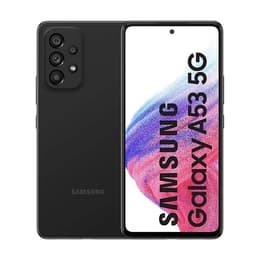
Galaxy A53 5G
Galaxy A53 5G
Starting at

Refurbished price:A$342.00

Versus A$624.00 new

See options
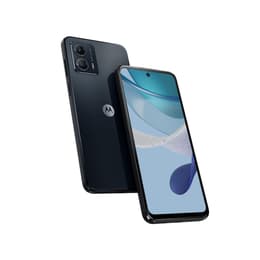
Motorola Moto G53
Motorola Moto G53
See options

The Samsung Galaxy A53 5G, released in March 2022, and the Motorola Moto G53, launched in December 2022, are both Android smartphones designed for everyday use. While both devices offer 5G connectivity and aim to provide a balanced user experience, they differentiate themselves primarily through their display technology, camera capabilities, and long-term software support. Both operate on the Android platform, offering a familiar interface for many users.

Scores

Durability

When considering the practical lifespan of these devices, factors like software updates, physical resilience, and repairability play a significant role. The Galaxy A53 5G and Moto G53 offer different approaches to longevity.

  • Software Support: The Samsung Galaxy A53 5G stands out with a commitment to four generations of Android OS upgrades and five years of security updates from its release, providing extended software longevity. The Motorola Moto G53 typically receives a few years of updates, which is less extensive than Samsung's offering.
  • Physical Durability: The Galaxy A53 5G features an IP67 rating for dust and water resistance, offering protection against immersion in water. The Moto G53 has a water-repellent design, providing basic splash protection but not full immersion resistance. The A53 5G's display is also protected by Corning Gorilla Glass 5.
  • Expected Lifespan: Users prioritising a device that remains current with software features and security patches for a longer period may find the Galaxy A53 5G more appealing due to its extended update policy.

Release year

2022

2022

Compatible with latest Update

Yes

Yes

Operating system

Android

Android

Foldable

No

No

Performance

The performance of a smartphone dictates how smoothly applications run and how efficiently it handles daily tasks. Both the Galaxy A53 5G and Moto G53 are equipped to manage common smartphone activities, though with varying levels of responsiveness.

  • Everyday Responsiveness: The Galaxy A53 5G is powered by an octa-core processor designed to handle multitasking and demanding applications with reasonable fluidity. Users generally report smooth navigation and app loading, though occasional stutters can occur with intensive use. The Moto G53, with its processor, capably manages daily tasks like web browsing and social media, but some users have noted micro-stutters during navigation or when running more resource-intensive applications.
  • Battery Behavior: Both devices feature a 5000 mAh battery capacity, which typically provides ample power for a full day of moderate to heavy use. The Galaxy A53 5G supports 25W wired charging, while the Moto G53 supports 10W wired charging, meaning the A53 5G recharges more quickly.
  • Multitasking Capabilities: The Galaxy A53 5G is commonly available with 6GB or 8GB of RAM, facilitating efficient multitasking and app switching. The Moto G53 offers configurations with 4GB, 6GB, or 8GB of RAM, with lower RAM variants potentially showing more limitations when running numerous applications simultaneously.

Memory (GB)

4 GB

4 GB

Screen quality

The display is a primary interface for smartphone interaction, and the visual experience can differ significantly between devices based on their underlying technology and specifications.

  • Display Technology and Clarity: The Samsung Galaxy A53 5G features a 6.5-inch Super AMOLED display, known for its vibrant colors, deep blacks, and high contrast. It offers a Full HD+ resolution (1080 x 2400 pixels), resulting in sharp and detailed visuals. In contrast, the Motorola Moto G53 comes with a 6.5-inch IPS LCD panel, which provides good color reproduction but does not achieve the same depth of blacks or contrast as an AMOLED screen. Its HD+ resolution (720 x 1600 pixels) means a lower pixel density, which can result in less sharp text and images compared to the A53 5G.
  • Brightness and Refresh Rate: Both devices offer a 120Hz refresh rate, contributing to smoother scrolling and a more fluid visual experience. The Galaxy A53 5G's display can reach up to 800 nits in high brightness mode, making it more visible in bright outdoor conditions. The Moto G53's display typically reaches around 450 nits, which is adequate for indoor use but may be less comfortable under direct sunlight.
  • Viewing Experience: Users prioritizing a display with rich colors, true blacks, and high detail for media consumption and general viewing will find the Galaxy A53 5G's Super AMOLED panel more immersive. The Moto G53's LCD, while offering a smooth refresh rate, provides a more standard visual experience.

Resolution

1080 x 2400

720x1600

Audiovisual

The camera systems on both smartphones are designed to capture everyday moments, but they differ in their versatility and performance across various lighting conditions.

  • Rear Camera Capabilities: The Samsung Galaxy A53 5G features a quad-camera setup, including a 64MP main sensor with Optical Image Stabilisation (OIS), a 12MP ultrawide lens, a 5MP macro lens, and a 5MP depth sensor. This configuration allows for a range of photographic styles, with the OIS aiding in clearer shots, especially in less ideal lighting. The Motorola Moto G53 has a dual-camera system, comprising a 50MP main sensor and a 2MP macro lens. It lacks an ultrawide lens and OIS, which can impact its flexibility and low-light performance.
  • Photography Performance: The Galaxy A53 5G generally produces bright, detailed photos in good lighting, with its ultrawide camera offering a broader perspective. Its night mode and OIS contribute to better results in dimmer environments. The Moto G53's main camera performs well in daylight, capturing decent snapshots, but its performance, particularly in low-light conditions, is noted to be less robust due to the absence of OIS and a smaller sensor.
  • Video Recording and Front Camera: The Galaxy A53 5G supports video recording up to 4K resolution at 30 frames per second from both its rear and 32MP front camera, offering high-quality video capture. The Moto G53 records video at 1080p at 30 frames per second and features an 8MP front camera, suitable for standard video calls and selfies.

Front camera

32 megapixels

8 megapixels

Miscellaneous

Beyond core specifications, several practical features contribute to the overall user experience and daily convenience of a smartphone.

  • Connectivity and Ports: Both devices support 5G connectivity, ensuring access to faster mobile networks. The Galaxy A53 5G uses a USB-C port for charging and data transfer and does not include a headphone jack. The Moto G53 also features a USB-C port and retains a 3.5mm headphone jack, which can be a significant advantage for users with wired audio accessories.
  • Biometric Security: The Galaxy A53 5G incorporates an in-display fingerprint scanner for convenient and secure unlocking. The Moto G53 opts for a side-mounted fingerprint sensor, integrated into the power button, which some users find intuitive.
  • Build and Handling: The Galaxy A53 5G has an IP67 rating for dust and water resistance and features a plastic back with a matte finish. The Moto G53 also has a plastic build with a water-repellent design, offering a comfortable grip.

Weight

189 oz

183 oz

Screen size (in)

6.5

6.5

Network

5G

5G

SIM card

Physical SIM

Dual Physical SIM

Carrier compatibility

Unlocked

Unlocked

The Samsung Galaxy A53 5G and Motorola Moto G53 cater to slightly different user priorities, reflecting their respective design philosophies and feature sets. User feedback often highlights the Galaxy A53 5G's vibrant Super AMOLED display and its versatile camera system as strong points, particularly for those who value media consumption and photography. However, some users have noted that its performance can occasionally feel less fluid compared to some competitors. The Moto G53 is frequently praised for its long battery life and a clean, near-stock Android experience, along with its smooth 120Hz refresh rate. Criticisms often revolve around its lower-resolution LCD display and less capable camera performance in challenging lighting conditions.

Users prioritizing a superior visual experience, a more comprehensive camera setup with OIS, and a longer commitment to software updates will likely find the Samsung Galaxy A53 5G to be a more suitable choice. This device is well-suited for individuals who consume a lot of media, enjoy photography, and plan to keep their phone for several years. Conversely, users who value extended battery life, a traditional headphone jack, and a generally smooth experience for everyday tasks, without needing the highest display resolution or advanced camera features, may lean towards the Motorola Moto G53. Both devices offer a pathway to sustainable tech consumption through quality-assured refurbished options, providing an eco-friendly alternative to purchasing new.


See all articles

Our recent comparisons