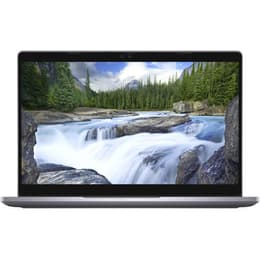
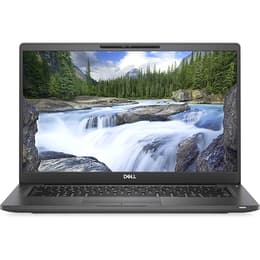
Dell Latitude 5310 13" vs Dell Latitude 7400 14"

Dell Latitude 5310 13"
See options
Dell Latitude 7400 14"
See options

The Dell Latitude 5310 13 and the Dell Latitude 7400 14 are business-oriented laptops designed for productivity and reliability. Released in 2020 and 2019 respectively, both models run on the Windows operating system and cater to professionals and students seeking dependable performance. The primary distinctions lie in their screen size, release year, and some internal specifications, which influence their overall user experience and suitability for different tasks.

Scores

Durability

When considering the longevity of these devices, several factors come into play, including their release timelines, software support, and repairability.

  • Release Timeline: The Latitude 7400 was introduced in 2019, making it slightly older than the Latitude 5310, which was released in 2020. This difference in age can impact the duration of future software updates and overall support from the manufacturer.
  • Software Longevity: Both laptops run on Windows, benefiting from Microsoft's ongoing operating system updates. However, the newer Latitude 5310 may receive official feature updates for a slightly longer period due to its later release.
  • Repairability: Dell's Latitude series generally offers good repairability. For instance, the Latitude 7400 is noted for its ease of disassembly, with captive screws that remain attached to the bottom panel, simplifying access to internal components like the battery and SSD. Similarly, the Latitude 5310 also features easily accessible internal components for maintenance and upgrades. This design approach contributes to a practical lifespan, as components can be replaced or upgraded to extend the device's usability.

Release year

2020

2018

Last Os Compatibility

Yes

Yes

Operating system

Windows 11

Windows 11

Performance

Both the Dell Latitude 5310 13 and the Dell Latitude 7400 14 are built to handle everyday business and productivity tasks efficiently, though their internal configurations offer varying levels of responsiveness.

  • Processor Capabilities: The Latitude 5310 typically features 10th Generation Intel processors, while the Latitude 7400 often comes with 8th Generation Intel processors. In practical terms, this means the Latitude 5310 generally offers a more current-generation processing experience, leading to slightly faster execution of demanding applications and smoother multitasking.
  • Storage and RAM: Both models commonly utilize fast NVMe SSDs for quick boot times and application loading. The Latitude 5310 can support up to 64GB of DDR4 RAM across two slots, which is notable for a 13-inch laptop and allows for substantial multitasking capabilities. The Latitude 7400 also supports up to 32GB of DDR4 RAM, ensuring smooth operation for most professional workloads.
  • Battery Behavior: User reports indicate that both laptops offer good battery life. The Latitude 7400 is particularly praised for its long battery life, with some configurations capable of lasting a full workday or even up to 18 hours in real-world usage scenarios. The Latitude 5310 also provides a long battery life, making it suitable for mobile use.

Memory (GB)

16 GB

8 GB

Processor

Core i5 - Gen 10 (U)

Core i5 - Gen 8 (U)

Graphic card

Integrated Graphics

Integrated Graphics

Screen quality

The display quality is a key differentiator, with both models offering options suitable for professional use, but with distinct characteristics.

  • Display Technology and Resolution: The Latitude 5310 typically features 13.3-inch Full HD (1920 x 1080) IPS panels, often with touch support and Gorilla Glass 5 protection. The Latitude 7400 offers a 14-inch display, with options including HD (1366x768) and Full HD (1920x1080) IPS panels, some with touch capabilities and privacy screen features.
  • Brightness and Clarity: Full HD configurations on both models generally provide clear visuals. The Latitude 5310's Full HD display can reach up to 300 nits of brightness. The Latitude 7400's Full HD options also offer around 300 nits of brightness, with some configurations reaching up to 400 nits. For outdoor use or brightly lit environments, higher brightness levels can improve visibility.
  • Screen Size and Viewing Experience: The Latitude 7400's slightly larger 14-inch screen provides a more expansive viewing area compared to the 13.3-inch display of the Latitude 5310, which can be beneficial for multitasking or working with detailed content. Both typically feature anti-glare coatings to reduce reflections.

Resolution

1920 x 1080

1920 x 1080

Screen type

IPS

LCD

Camera

Audiovisual

For communication and multimedia, both laptops include integrated audio and visual components designed for business use.

  • Camera System: Both the Latitude 5310 and Latitude 7400 are equipped with integrated webcams, typically 720p, suitable for video conferencing and online meetings. The Latitude 7400 may also feature an optional infrared (IR) camera for Windows Hello facial recognition, enhancing login security and convenience. The Latitude 5310 also includes a physical privacy shutter for its webcam.
  • Microphone Quality: Both models incorporate noise-reducing array microphones, designed to capture clear audio during calls and recordings.
  • Speaker Output: The Latitude 5310 is noted for having good speaker quality, described as clear and loud, making it suitable for media consumption. The Latitude 7400 also features high-quality speakers, providing a decent audio experience for business and general use.

Miscellaneous

Beyond core performance, several practical features contribute to the overall user experience and connectivity of these laptops.

  • Connectivity Options: Both laptops offer modern wireless connectivity. The Latitude 5310 supports Wi-Fi 6 (802.11ax) and Bluetooth 5, providing faster and more reliable wireless connections. The Latitude 7400 also supports Wi-Fi 5 (802.11ac) or Wi-Fi 6 (802.11ax) and Bluetooth 5.0, with optional LTE mobile broadband for connectivity on the go.
  • Port Types: Both devices offer a comprehensive selection of ports. The Latitude 5310 includes USB-A, USB-C (with optional Thunderbolt 3, DisplayPort, and Power Delivery), HDMI, a microSD card reader, and Gigabit Ethernet. The Latitude 7400 also features USB-A, USB-C (with Thunderbolt 3, DisplayPort, and Power Delivery), HDMI, a microSD card slot, and a universal audio jack.
  • Weight and Dimensions: The Latitude 5310, with its 13.3-inch screen, is generally lighter and more compact, weighing around 1.22 kg (2.69 lbs). The 14-inch Latitude 7400 is slightly heavier, typically around 1.35 kg (3 lbs) to 1.535 kg (3.38 lbs), reflecting its larger screen size and potentially more robust build options like carbon fiber or aluminum chassis.

Weight

7500 oz

1360 oz

Screen size

13

14

The Dell Latitude 5310 13 and Dell Latitude 7400 14 both stand as reliable business laptops, each with distinct advantages that cater to different user needs. Users frequently praise the Latitude 7400 for its robust build quality, excellent battery life, and comprehensive port selection, making it a strong contender for professionals who prioritize endurance and connectivity on the go. Some users have noted occasional fan noise under heavy load or specific driver-related issues, though these are often resolvable with updates. The Latitude 5310, being a slightly newer model, is often lauded for its more current-generation processing power, good speaker quality, and a physical webcam shutter for enhanced privacy. Its compact size and lighter weight also make it appealing for those who value portability.

Users prioritizing a slightly larger screen and potentially longer battery life for extended periods away from a power outlet may find the Latitude 7400 well-suited to their needs. Conversely, users who value a more recent processor, a slightly more compact form factor, and specific privacy features like a webcam shutter might lean towards the Latitude 5310. Both models offer solid performance for everyday productivity and business tasks. For those considering these dependable laptops, exploring quality-assured refurbished options can provide an eco-friendly alternative, extending the life cycle of these devices while offering a practical choice for various user profiles.

See all articles

Our recent comparisons